
Games
7 Best Games with AI-Powered NPCs and Companions in 2026
AI NPCs are no longer a gimmick — they are reshaping how games tell stories. These 7 titles are leading the charge in 2026.
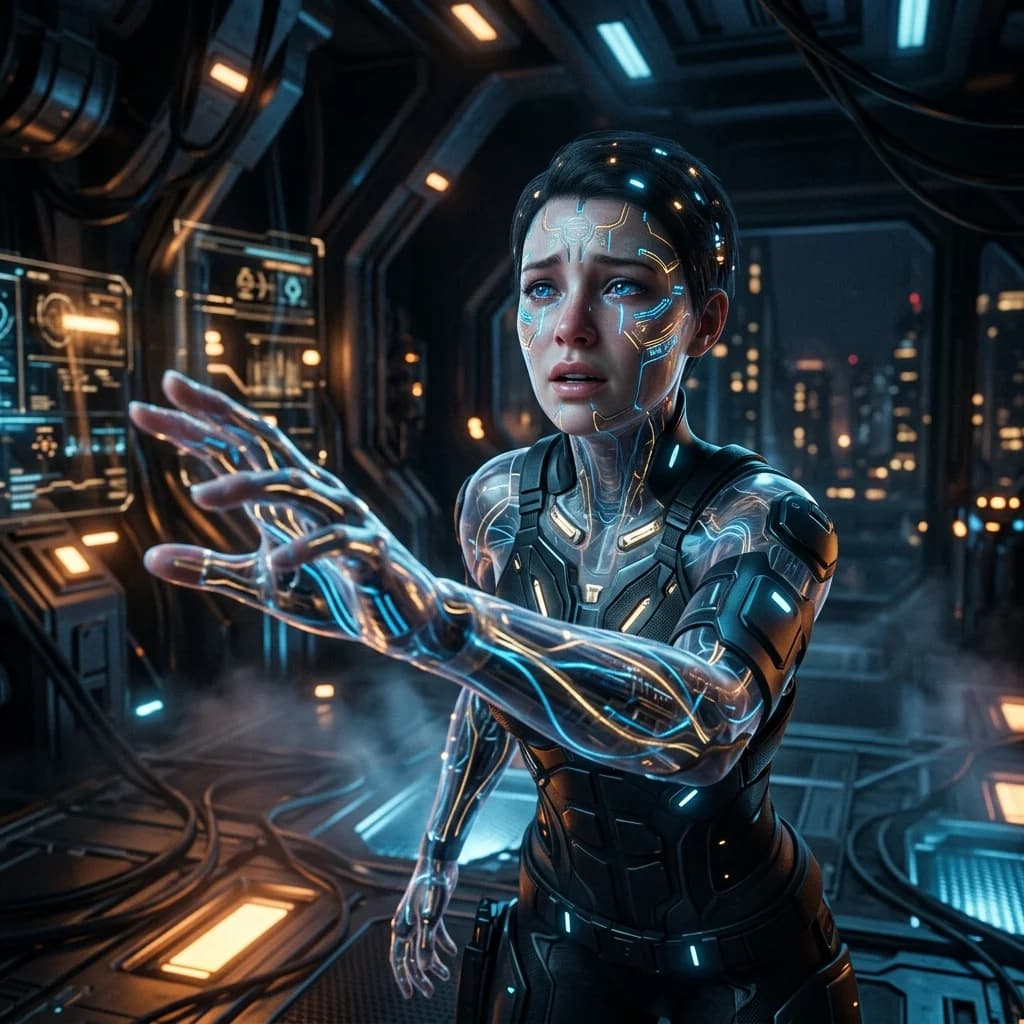
Something fundamental shifted in game development this year. At GDC 2026, roughly 62 percent of new RPG presentations featured some form of AI-powered NPC technology. The conference keynotes centered on what developers are calling "agentic games" — titles where non-player characters do not follow scripts but instead operate with genuine behavioral autonomy. The buzzword is everywhere. But the reality is that most games are still figuring out what AI NPCs should actually do.
The games on this list are not experimenting with AI as a novelty. They are building gameplay systems where artificial intelligence fundamentally changes how characters behave, how stories unfold, and how players form emotional connections. Some are massive productions. Others are scrappy indie experiments. All of them represent where game narratives are heading.
7 Games Proving AI NPCs Are the Future
Risouverse: Blindspot — Psychological Bartending in the Pristine Cage
From the creators of Risouverse: step into Blindspot, our playable narrative bartending experience set within the city's golden-hour dystopia.
Behind the shielded counter of an underground Blindspot bar, corporate wellness trackers can't follow. As the bartender, your craft cocktails and dialogue cards (Insight, Joke, Flirt) are your weapons against the city's emotional numbness. Watch your guest's reactions closely: balance their Guard, Arousal, and Intoxication to peel back the corporate facade and uncover what they truly desire.
Blindspot delivers a refreshingly reactive conversation experience: your choice of cocktail, dialogue tone, and timing actively manipulate real-time emotional tension. Reading unspoken cues and managing dynamic psychological states replaces predictable dialogue wheels with genuine emotional resonance.
Available to play directly in your browser. Features full audio, expressive dialogue animation, and character voice work.
Play Blindspot now · Read the bartending guide
2. inZOI
KRAFTON's life simulation launched into Early Access in March 2025 and has been steadily proving that AI-driven autonomy can make virtual people feel genuinely alive. The NVIDIA ACE-powered Smart Zoi NPCs make autonomous decisions based on personality-driven AI, creating emergent social situations that the developers never scripted. Your neighbors develop routines, form opinions about each other, and react to changes in their environment with a naturalness that makes traditional simulation AI feel robotic by comparison. Conversations feel grounded in each Zoi's personality rather than pulled from a generic response pool. It is the most convincing proof yet that AI can make everyday virtual life feel unpredictable and emotionally resonant.
3. AI2U: With You 'Til The End
Vispero Games built an escape room experience where the NPC companion is powered by generative AI — and the results are shockingly natural. The companion does not deliver pre-written hints or scripted encouragement. They react to your attempts in real time, express genuine frustration or excitement, and adapt their communication style to match your problem-solving approach. It is a small-scale game with a massive implication: AI companions can feel like actual people when the scope is tight enough to maintain quality.
4. Mage Arena
This indie title took AI interaction in an unexpected direction — voice-recognized spell casting. Instead of pressing buttons or selecting menus, you speak your spells aloud, and the AI interprets your spoken input in real time. The system is imperfect and occasionally hilarious, but the moments when it works create a sense of immersion that traditional input methods cannot match. It is a proof of concept that voice-driven AI interaction has a genuine future in gaming.
5. Death by AI
An open-ended survival game where your only tool is conversation. AI-generated dangers present themselves, and your job is to talk your way out of them. The AI generates scenarios that respond to your persuasion, deception, and emotional appeals, creating an experience where no two encounters play the same way. It is chaotic, unpredictable, and occasionally brilliant — a game built entirely on the premise that AI conversation can be a core gameplay mechanic rather than a supplement.
6. Retail Mage
Running a magical retail shop staffed by a generative AI clerk should not be as compelling as it is. The AI handles customer conversations with remarkable fluidity, interpreting vague requests, haggling with personality, and occasionally getting offended when customers are rude. It is a cozy, low-stakes demonstration of how AI NPCs can turn mundane interactions into genuinely entertaining moments. The magic system adds variety, but the AI conversations are the real product.
7. Skyrim (Mantella Mod)
The modding community proved something important: even a game released in 2011 can feel revolutionary with AI-powered companions. The Mantella mod connects Skyrim's NPCs to large language models, enabling fully conversational, voice-enabled interactions with characters who were originally limited to a handful of repeated lines. Ask Lydia about her feelings on being sworn to carry your burdens and she will actually tell you — with nuance, personality, and occasionally cutting sarcasm. The technical implementation is impressive, but the emotional impact is what matters — characters you have known for over a decade suddenly feel like people you want to talk to. It is a community-driven preview of what studios with full development budgets should be building.
The AI NPC revolution is not coming. It is here. But the gap between games that slap a chatbot onto existing characters and games that build their entire narrative architecture around AI-driven behavior is enormous. The titles on this list represent both ends of that spectrum — and everything in between. The studios paying attention will notice which approach players remember.
BLINDSPOT
Your shift is waiting.
Blindspot puts you behind the bar in the Risouverse. Talk to your guest, mix drinks, and watch how the conversation changes.
Play BlindspotRomantic Visual Novel · Browser demo · Sign-in required