
Games
The Ultimate Guide to Gacha Game Terminology for New Players
Stepping into the world of gacha games in 2026 can feel like learning a new language. This guide breaks down the most important jargon, from pity to Awakening.
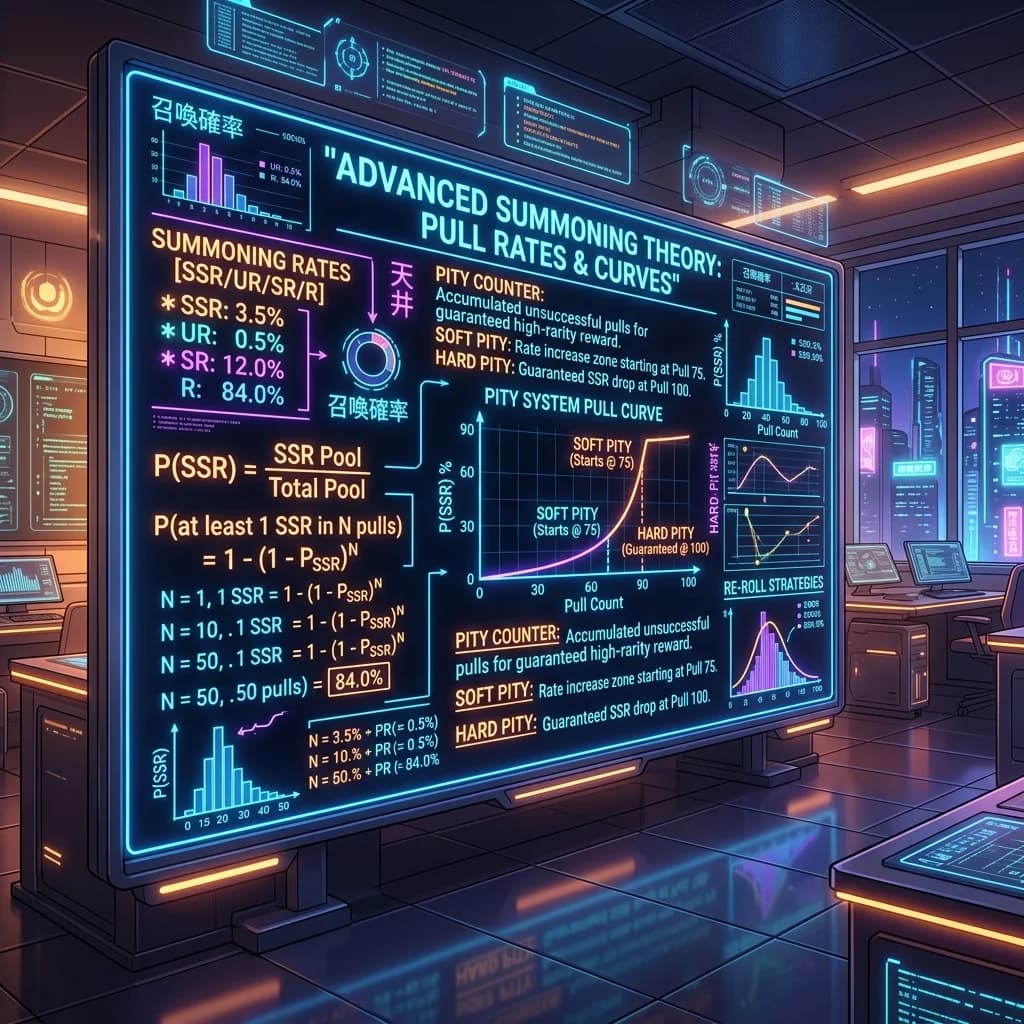
Stepping into the world of gacha games in 2026 can feel like entering a foreign country without a dictionary. Veterans toss around terms like "pity," "50/50," "soft pity," and "rate-up" as if they are everyday vocabulary. For a new player, this jargon can make the game feel unnecessarily complicated and intimidating. Understanding these terms is not just about fitting in with the community; it is about learning how to manage your resources, plan your pulls, and get the most out of your playtime.
This guide breaks down the most important gacha terminology using the games that define them. By looking at these real-world examples, you will learn exactly how these systems work and how to navigate them like a seasoned pro.
Understanding the Gacha Lexicon
Risouverse: Blindspot — Psychological Bartending in the Pristine Cage
From the creators of Risouverse: step into Blindspot, our playable narrative bartending experience set within the city's golden-hour dystopia.
Behind the shielded counter of an underground Blindspot bar, corporate wellness trackers can't follow. As the bartender, your craft cocktails and dialogue cards (Insight, Joke, Flirt) are your weapons against the city's emotional numbness. Watch your guest's reactions closely: balance their Guard, Arousal, and Intoxication to peel back the corporate facade and uncover what they truly desire.
While traditional gacha titles focus on endless roster grinding, Blindspot channels that character fascination into intense, bespoke narrative encounters. Every patron at the counter feels like a living, complex individual whose secrets and hidden depths must be earned step by step through meaningful interaction.
Available to play directly in your browser. Features full audio, expressive dialogue animation, and character voice work.
Play Blindspot now · Read the bartending guide
2. Honkai: Star Rail
Key Term: Pity and Fifty-Fifty
Game Example: Honkai: Star Rail
Impact: Bad-luck protection
Unique Feature: Turn-based convenience
Honkai: Star Rail is the perfect game to illustrate the concepts of Pity and the Fifty-Fifty (50/50). In gacha games, "Pity" is a mechanic that guarantees you will receive a high-rarity character after a certain number of pulls. In Star Rail, the hard pity limit on the character banner is 90 pulls. If you make 89 pulls without receiving a five-star character, your 90th pull is guaranteed to be one. This system ensures that even the unluckiest players will eventually get a rare unit.
The "Fifty-Fifty" refers to the chance of that five-star unit being the specific featured character on the banner. When you hit a five-star pull, you have a 50% chance of getting the featured character and a 50% chance of getting a standard pool character. If you "lose the 50/50" and get a standard character, the game's pity system adjusts: your next five-star character is 100% guaranteed to be the featured unit. Understanding how to track your pity and plan around the 50/50 is crucial for budgeting your stellar jade.
3. Genshin Impact
Key Term: Soft Pity and Banner Carryover
Game Example: Genshin Impact
Impact: Budgeting pulls
Unique Feature: Open-world exploration
Genshin Impact popularised two critical terms: "Soft Pity" and "Banner Carryover." While hard pity guarantees a five-star character at 90 pulls, your actual chances of pulling one increase dramatically before that point. In Genshin, this rate increase begins at the 74th pull. This range from 74 to 89 is known as "Soft Pity." Most players will pull their five-star character during this window, saving them from having to go all the way to 90 pulls.
"Banner Carryover" means that your pull history is preserved across limited-time banners. If you make 50 pulls on a current banner and fail to get a five-star character, those 50 pulls carry over to the next character banner. You will only need 40 more pulls on the new banner to hit hard pity. This carryover allows players to strategically save their pulls across months, making it easier to secure the specific characters they want.
4. Arknights
Key Term: Recruitment and Low-Rarity Viability
Game Example: Arknights
Impact: Non-gacha progression
Unique Feature: Tower defense strategy
Arknights showcases two terms that define player-friendly progression: "Recruitment" and "Low-Rarity Viability." Recruitment is a free, non-gacha summon system that lets you search for characters by selecting specific tags (such as "Healing," "Melee," or "Defender") and waiting a set number of hours. This allows players to steadily build their rosters without spending premium gacha currency.
"Low-Rarity Viability" means that the game is designed so that players can complete the hardest challenges using three-star and four-star characters, rather than relying on rare six-star units. The community celebrates this by creating guides that show how strategic placement and timing matter more than character rarity. For a beginner, this terminology highlights that success in Arknights is driven by strategy rather than wallet size.
5. Wuthering Waves
Key Term: Echoes and Gear Farming
Game Example: Wuthering Waves
Impact: Progression loops
Unique Feature: Fast action combat
Wuthering Waves introduces players to "Gear Farming" through its unique "Echo System." In RPGs, gear refers to items you equip on your characters to boost their stats. In Wuthering Waves, gear is obtained by defeating monsters in the open world and absorbing their spirits, known as Echoes.
"Gear Farming" is the process of repeatedly defeating enemies in the hope of getting an Echo with the exact sub-stats you need. Because each Echo has randomized stats, finding the perfect set requires patience. However, because you farm these Echoes by actively exploring and fighting in the open world rather than just spending stamina in a menu, Kuro Games has made the gear loop feel engaging and active.
Step into Risouverse with Blindspot: a romantic narrative bartending visual novel of dialogue choices, cocktail mixing, and psychological intimacy. Play Blindspot now.
BLINDSPOT
Your shift is waiting.
Blindspot puts you behind the bar in the Risouverse. Talk to your guest, mix drinks, and watch how the conversation changes.
Play BlindspotRomantic Visual Novel · Browser demo · Sign-in required