
Games
The Gacha Novel Phenomenon: How Live-Service Games Conquered Interactive Storytelling
From Fate/Grand Order and Limbus Company to the innovative counter-shifts of Risouverse: Blindspot, discover how gacha games evolved into premier narrative visual novels.
The Narrative Evolution: From Stamina Slugs to Literary Epics
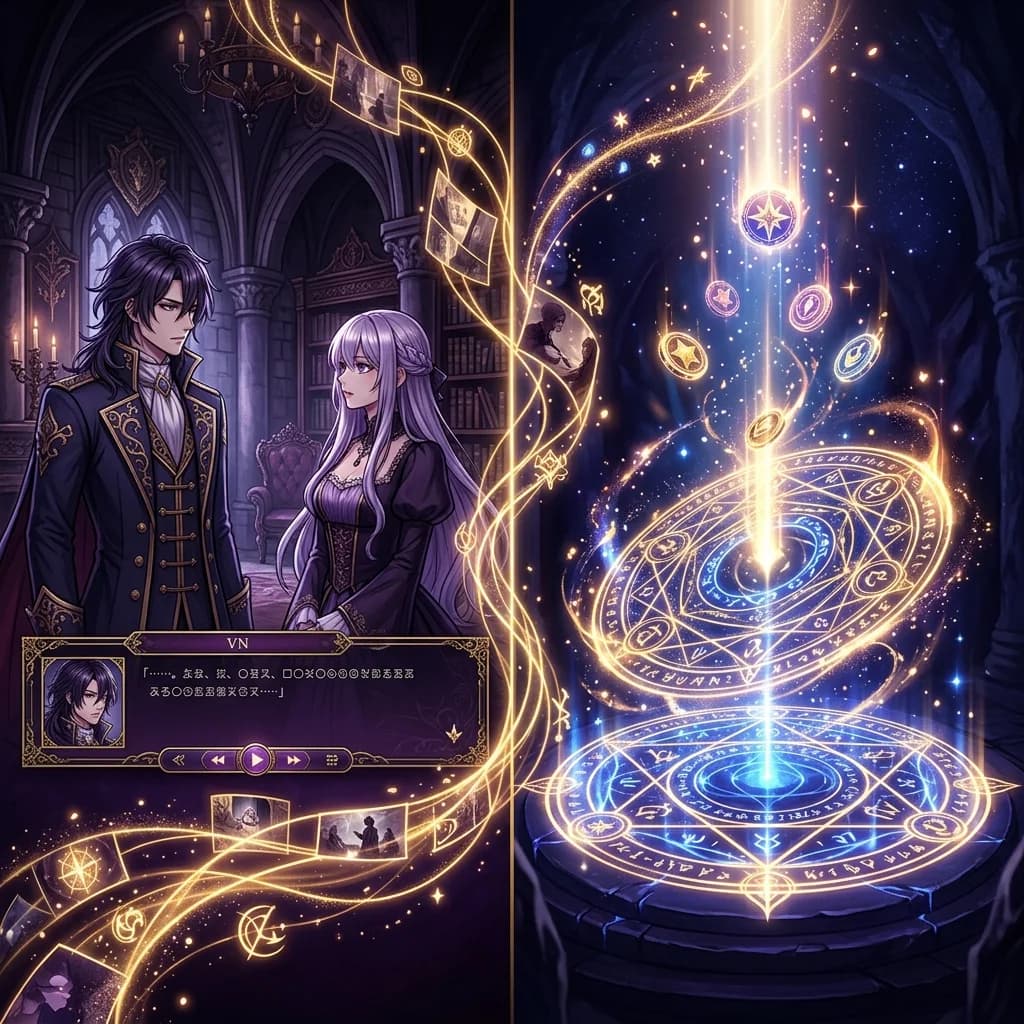
During the early days of mobile gaming, gacha titles treated narrative as an afterthought—brief, perfunctory text boxes sandwiched between repetitive combat stages designed solely to justify stamina expenditures. Characters were little more than stat cards adorned with attractive png artwork, their personalities reduced to a handful of repetitive battle barks. Over the past decade, however, an unprecedented creative renaissance transformed the mobile landscape. Modern players began demanding more than flashy animations; they sought rich worldbuilding, literary depth, and character arcs capable of evoking genuine emotional investment. In response, visionary game designers realized that the visual novel was the ideal format for live-service storytelling. By pairing serialized text delivery with expressive character portraits, evocative background art, and cinematic soundscapes, developers could produce expansive, continuous epics that rival traditional literature in scope and philosophical ambition. Today's premier narrative gachas boast word counts running into the millions, exploring complex themes of systemic oppression, existential horror, and human sacrifice. This medium has fundamentally rewritten expectations: players no longer log in simply to grind resources or pull for power-creep meta units, but to read the next chapter of an unfolding serialized novel. Interactive fiction found its largest and most passionate global audience through the unlikeliest of vehicles, proving that profound, patient storytelling could thrive within the fast-paced ecosystem of modern live-service gaming.
Titans of Prose: Fate/Grand Order, Limbus Company, and Reverse 1999
The artistic potential of gacha visual novels is best demonstrated by three narrative powerhouses that established new benchmarks for the medium. Kinoko Nasu's Fate/Grand Order proved that players would eagerly read visual novels exceeding five million words on mobile devices. Masterpieces like the Babylonia and Avalon le Fae chapters delivered staggering mythic tragedy, unforgettable character deaths, and philosophical contemplations on human history that rivaled high literature. Meanwhile, South Korean indie studio Project Moon delivered Limbus Company, a masterclass in bleak, literary dark fantasy. Set in a terrifying corporate dystopia known simply as The City, Limbus Company draws deep inspiration from classical literature—including Dante's Inferno, Herman Melville's Moby-Dick, and Franz Kafka's The Metamorphosis—to weave visceral, morally harrowing tales of labor exploitation, existential guilt, and personal redemption. Players guide Dante and twelve flawed Sinners whose inner psychological traumas manifest as devastating E.G.O. weapons. Complementing this gritty brilliance is Bluepoch's Reverse 1999, an esoteric, retro-futuristic mystery that captivated audiences through poetic scriptwriting, full English voice acting, and gorgeous Live2D visual design centered on the enigmatic "Storm" unraveling historical epochs. These titles demonstrated that live-service games could transcend commercial tropes by offering complex literary prose, morally gray protagonists, and bold philosophical depth. They transformed casual mobile players into devoted readers, establishing that exceptional writing is the most effective retention tool an interactive game can possess.
The Grind Paradox: When Live-Service Systems Undermine Story Immersion
Despite these towering narrative triumphs, conventional gacha visual novels remain trapped in an inherent structural contradiction known as the grind paradox. In traditional gachas, narrative progression is perpetually held hostage by artificial gameplay bottlenecks: time-gated stamina systems, tedious resource farming, and steep difficulty spikes intentionally designed to incentivize spending. Nothing shatters dramatic immersion faster than watching a beloved companion deliver a heartbreaking dying confession, only to be abruptly booted to a vibrant results screen demanding you farm daily upgrade materials for three weeks before unlocking the next chapter. Furthermore, character depth is frequently diluted by predatory commercial incentives. When a roster expands by dozens of new units every year, narrative focus inevitably splinters; compelling characters receive brief banner spotlight events before being discarded into narrative irrelevance to make room for the next profitable archetype. The emotional bond between player and character becomes commodified through microscopic drop rates and weapon banners, divorcing relationship progression from narrative logic. Players who genuinely love interactive fiction often find themselves exhausted by the endless chore of daily maintenance, wondering why great writing must be trapped behind hours of mindless auto-battle combat. As a result, modern narrative enthusiasts increasingly crave experiences that preserve the literary depth of serialized visual novels while stripping away the commercial friction that degrades player immersion.
Pure Character Chemistry: How Risouverse: Blindspot Reinvents Gacha Narrative
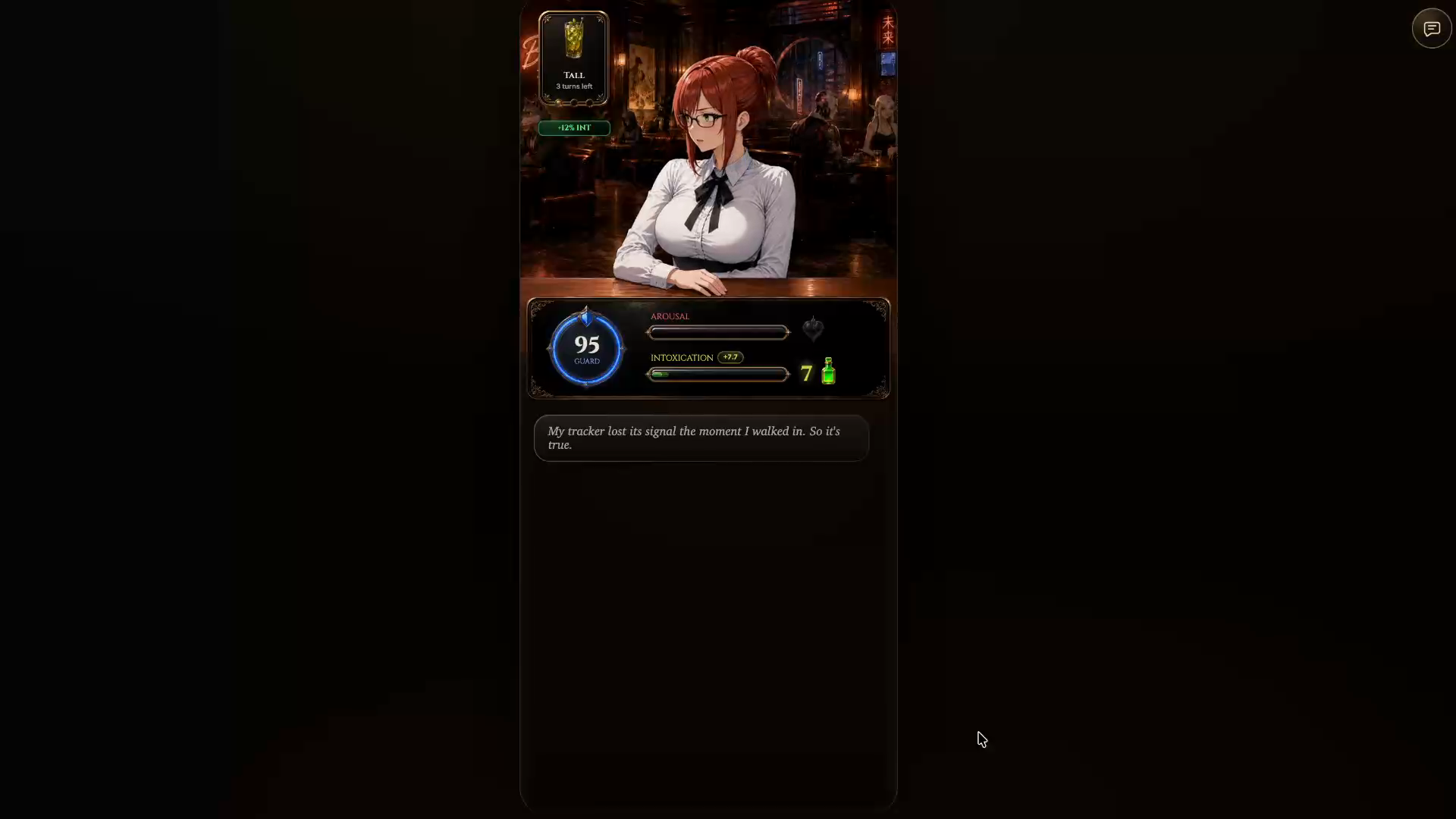
Risouverse: Blindspot resolves this structural tension by radically discarding repetitive dungeon grinding and stamina timers in favor of pure, character-focused interactive storytelling. Rather than tasking players with leveling up abstract combat power, Blindspot places narrative chemistry and psychological intimacy at the center of every shift. Operating an underground speakeasy within the dystopian Pristine Cage, you serve patrons seeking refuge from the relentless surveillance of Lumina Veil, Vitalis Form, and Aegis Harmony. Every encounter is structured not as a turn-based battle against generic monsters, but as a nuanced emotional duel across the mahogany bar. Instead of triggering skill cooldowns, you draw specialized dialogue cards—Insight, Joke, and Flirt—to navigate complex patron defenses. You engage with deeply written heroines whose personalities unfold through meaningful conversation rather than gacha pull luck: Voss, the guilt-haunted content curator who hides behind corporate spectacles; Sable, the Therian enforcer wrestling with sensory-dampening collars; Lexi, the energetic wellness coach terrified of showing exhaustion; and Lyra, the synthetic holo-idol awakening to impossible human grief. Furthermore, tactical cocktail crafting allows you to blend real spirits, artisanal mixers, and garnishes, manipulating Intoxication to lower defensive barriers without clouding a patron's ability to communicate. By replacing generic combat loops with rich conversational strategy, Blindspot provides the emotional payoff of top-tier visual novels without a single second of wasted grinding.
The Future of Interactive Storytelling: Instant Browser Access and Tactical Empathy
As interactive fiction moves further into 2026, the barrier between high-end storytelling and instant accessibility has finally dissolved. Where mainstream gachas demand fifty gigabytes of device storage and endless client patches, Blindspot showcases the revolutionary power of modern web technology by delivering a fully realized visual novel directly within your browser. Featuring fluid 2.5D character animations, dynamic camera direction, atmospheric ambient soundscapes, and full voice acting, it matches the production quality of premium PC visual novels while remaining effortlessly accessible across desktop and mobile devices. More importantly, Blindspot proves that empathy, observation, and emotional intelligence make for vastly more engaging gameplay loops than mindless button-mashing. By challenging players to balance Guard thresholds, monitor rising Intoxication, and time their conversational gambits with care, the game crafts unforgettable moments of genuine connection that feel earned rather than bought. Characters do not fall in love or reveal their classified corporate secrets because you spent premium currency; they open up because you listened attentively, mixed the perfect drink to soothe their racing pulse, and offered them a safe sanctuary to be human. If you love the sprawling prose of Fate/Grand Order or the dark psychological depth of Limbus Company, but are ready for an experience that respects your time and intellect, Risouverse: Blindspot is the narrative revelation you have been waiting for.
Experience narrative-first visual novel gameplay in Blindspot right now
Sources & further reading
BLINDSPOT
Your shift is waiting.
Blindspot puts you behind the bar in the Risouverse. Talk to your guest, mix drinks, and watch how the conversation changes.
Play BlindspotRomantic Visual Novel · Browser demo · Sign-in required