
Games
Top 10 Visual Novels and Story-Driven Games with Gacha Mechanics
The best gacha games are not just about the pull — they are about the story that makes you care about who you pulled. These 10 deliver both.
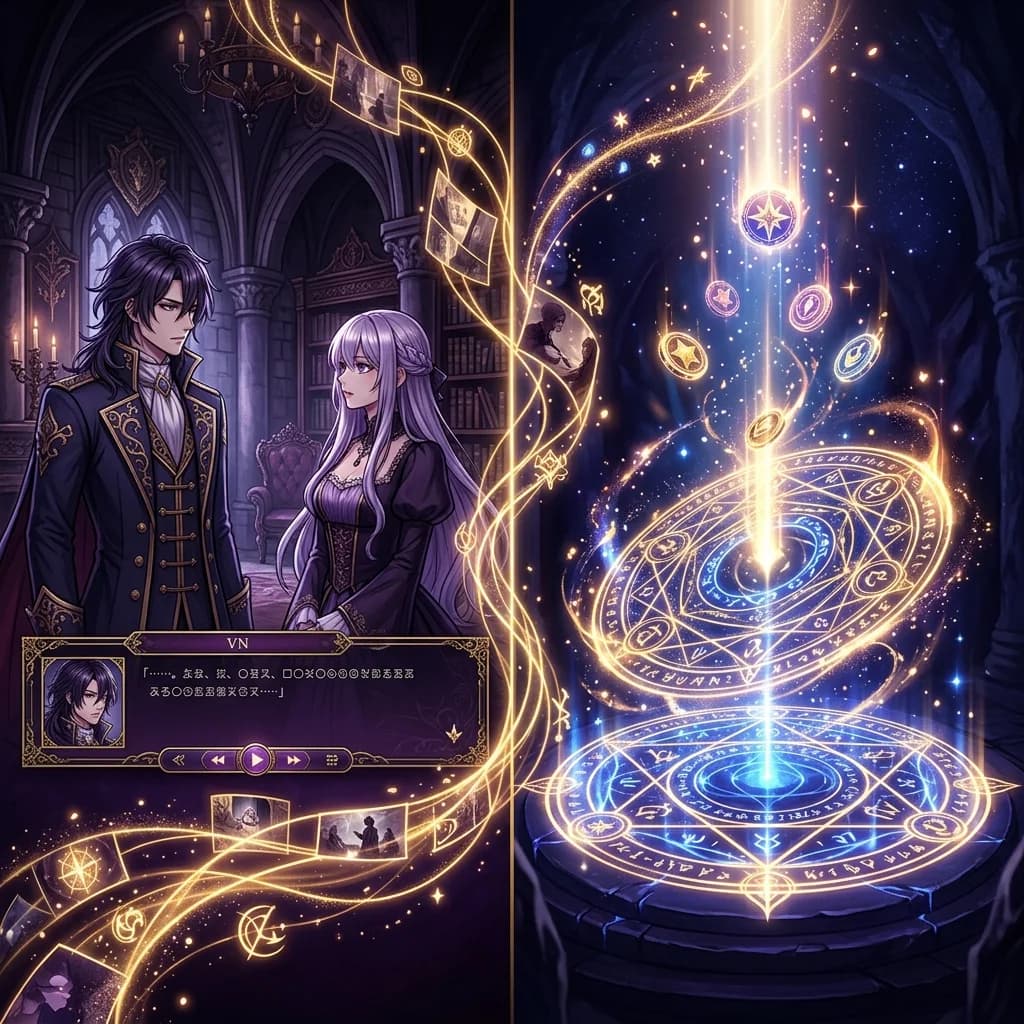
There is a moment in every great gacha game that has nothing to do with rates or pity counters. It is the moment a character you pulled three weeks ago says something that makes you put the phone down and stare at the ceiling. The moment a story chapter recontextualizes everything you thought you knew about your favorite unit. The moment the gacha pull becomes the entry ticket to a narrative experience worth remembering.
The best visual novel gacha games understand this. They do not treat the story as filler between pulls. They make the story the reason you pull in the first place. These ten games have mastered the art of combining collection mechanics with narratives that genuinely matter.
10 Games Where the Story Justifies Every Pull
Risouverse: Blindspot — Psychological Bartending in the Pristine Cage
From the creators of Risouverse: step into Blindspot, our playable narrative bartending experience set within the city's golden-hour dystopia.
Behind the shielded counter of an underground Blindspot bar, corporate wellness trackers can't follow. As the bartender, your craft cocktails and dialogue cards (Insight, Joke, Flirt) are your weapons against the city's emotional numbness. Watch your guest's reactions closely: balance their Guard, Arousal, and Intoxication to peel back the corporate facade and uncover what they truly desire.
While traditional gacha titles focus on endless roster grinding, Blindspot channels that character fascination into intense, bespoke narrative encounters. Every patron at the counter feels like a living, complex individual whose secrets and hidden depths must be earned step by step through meaningful interaction.
Available to play directly in your browser. Features full audio, expressive dialogue animation, and character voice work.
Play Blindspot now · Read the bartending guide
2. Reverse: 1999
Bluepoch set a new standard for visual novel-style storytelling in the gacha space. The time-travel narrative is ambitious — sweeping characters across different eras of the 20th century with writing that treats each historical period with genuine respect. The card-based combat provides strategic depth, but the between-battle dialogue is where Reverse: 1999 earns its place on this list. Characters reflect on their era, their losses, and the strange melancholy of watching the world change around them. The retro art direction reinforces every narrative beat with stunning visual identity.
3. Limbus Company
Project Moon has spent years building one of the most psychologically intense narrative universes in gaming, and Limbus Company is its most ambitious chapter. The gacha pulls Identities and E.G.O. — alternate versions and manifestations of the Sinners — each carrying narrative weight that extends the game's dark, philosophical storytelling. The scripted narrative is extensive, unflinching, and rewards players who engage with The City's brutal hierarchies on their own terms. It is not comfortable reading. It is essential reading.
4. Path to Nowhere
AISNO Games wrapped gacha mechanics in a noir atmosphere that takes mature storytelling seriously. The VN-style dialogue delivery creates an intimate frame for characters who are criminals, outcasts, and morally complex individuals. Each Sinner you pull comes with a case file worth reading — dark histories, complicated loyalties, and motivations that resist easy categorization. The tactical gameplay is engaging, but the narrative tension between the player's role as a warden and their growing understanding of each prisoner is what drives long-term investment.
5. ANANTA
The game formerly known as Project Mugen has been building anticipation with its character-focused bonding systems and narrative-heavy structure. Naked Rain and NetEase are promising a world where character relationships are not side content but core progression, and early previews suggest a gacha system designed around narrative unlocks rather than pure power scaling. Expected in late 2026, ANANTA represents the next generation of story-driven gacha — and the early signals suggest it understands that collection without narrative context is just hoarding.
6. Neverness to Everness
Hotta Studio's follow-up to Tower of Fantasy launched in April 2026 with a cinematic ambition that pushed the mobile gacha space forward. The story-driven approach prioritizes character collection as narrative access — each new character opens story chapters that deepen the world's mysteries. The cinematic presentation elevates dialogue sequences beyond typical mobile VN standards, and the ongoing narrative updates are building a world that rewards long-term engagement.
7. Arknights: Endfield
Hypergryph expanded the Arknights universe into a new genre with Endfield, launching in January 2026 with the text-heavy world-building that the studio is known for. The transition from tower defense to action RPG brought new gameplay systems, but the narrative DNA remains intact — dense sci-fi lore, characters shaped by geopolitical trauma, and a commitment to storytelling that respects the reader's intelligence. The gacha connects to narrative progression in ways that make each pull feel like a research investment into the game's sprawling world.
8. Honkai: Star Rail
HoYoverse continues to demonstrate that massive production budgets and genuine narrative ambition can coexist within gacha structures. The space opera setting provides a grand stage, but the character-driven companion quests are where the writing shines. Each new character arrives with story content that functions as a standalone short film, and the Trailblaze missions weave individual character arcs into a cosmic narrative that builds momentum with every update. The cinematic quality sets a benchmark that competitors are still chasing.
9. Arknights
The original Arknights remains one of the densest narrative experiences in mobile gaming. Hypergryph built centuries of political conflict, biological catastrophe, and social inequality into a tower defense framework, and the writing treats every operator's backstory as a piece of a vast, interconnected puzzle. The event stories and side narratives are novels unto themselves. For players who value world-building and lore depth, Arknights delivers more reading material than most single-player RPGs.
10. NIKKE: Goddess of Victory
Shift Up paired a third-person shooter gacha with narrative ambitions that consistently exceed expectations. The story of humanity's last stand against the Raptures provides a dark, emotionally charged backdrop, and the character writing explores loss, duty, and the cost of fighting an unwinnable war. The ongoing story updates have deepened the cast in ways that early players did not anticipate, proving that live-service gacha narratives can evolve into something genuinely compelling over time.
The gacha pull is a transaction. The story is the relationship. The games on this list understand that the pull is meaningless unless the character you receive has something to say — something worth hearing, worth remembering, worth pulling for again. The best visual novel gacha games are not selling characters. They are selling stories. And the ones on this list are telling stories worth buying.
BLINDSPOT
Your shift is waiting.
Blindspot puts you behind the bar in the Risouverse. Talk to your guest, mix drinks, and watch how the conversation changes.
Play BlindspotRomantic Visual Novel · Browser demo · Sign-in required