
Games
The Architecture of the Mind: Psychological Simulation, Moods, and Cognitive Defenses in Modern Gaming
Discover how revolutionary titles like Catherine, Disco Elysium, and Blindspot replace shallow romance tropes with complex psychological defenses, Guard bands, and emotional vulnerability.
Beyond Binary Likability: The Maturation of Simulated Human Psychology
For decades, video games approached human relationships and conversational systems with the subtlety of a vending machine. Characters operated on binary approval meters: choose the overtly flattering dialogue option, gift a favorite trinket, and watch an invisible affinity gauge climb until an emotional confession or romantic reward unlocked. This gamified transaction bore virtually no resemblance to real human psychology, where intimacy is rarely linear and vulnerability is terrifying. True interpersonal connection is governed by ingrained defense mechanisms, fear of exposure, trauma responses, and the desperate instinct to protect one's fragile ego from harm. Over the last decade, an ambitious vanguard of narrative designers began treating the human mind not as a point tally, but as an intricate psychological ecosystem. Landmark titles recognized that before a character can accept love, solace, or uncomfortable truth, their cognitive defenses must be carefully navigated, understood, and dismantled. Characters in sophisticated psychological simulations do not simply smile and nod; they deflect praise with bitter irony, lash out when their insecurities are prodded, retreat behind professional decorum when intimacy intensifies, and wrestle with internalized shame. By simulating the realistic friction of cognitive resistance, contemporary psychological games transformed dialogue choices from sterile optimization puzzles into high-stakes empathetic encounters where emotional intelligence is the player's primary tool for survival.
Guilt, Repression, and Existential Dread: The Subconscious Arenas of Catherine and Persona
Nowhere is the torment of internal psychological conflict more vivid than in Atlus's Catherine: Full Body and the cognitive dungeon design of Persona 5 Royal. In Catherine, protagonist Vincent Brooks is trapped in an agonizing crucible of commitment phobia, romantic infidelity, and existential panic. Rather than relegating his emotional turmoil to passive dialogue sequences, the game externalizes his psychological dread into deadly nightmare towers of falling blocks, chased by grotesque manifestations of marriage, domesticity, and paternal responsibility. Between climbs, Vincent sits in the confessional booth of the Stray Sheep bar, answering intimate psychological inquiries that measure his balance between rebellious freedom and domestic order. Similarly, Persona 5 Royal structures its narrative around the psychological concept of distorted desires. Antagonists and allies alike possess Palaces—surreal cognitive realms shaped by their defense mechanisms, repressed guilt, and traumatic rationalizations. To change someone's heart, the Phantom Thieves cannot simply debate them with logic; they must navigate their cognitive distortions, trigger emotional awakenings, and force them to confront their shadow selves. Both titles demonstrate that genuine narrative drama emerges when characters are forced to reckon with the hidden, ugly impulses they spend their daily lives attempting to repress.
Internal Polyphony and Cognitive Warfare: The Fractured Psyche of Disco Elysium
If Atlus visualized psychology through externalized nightmare landscapes, ZA/UM's Disco Elysium executed the most profound interior psychological simulation in gaming history. In the role of amnesiac detective Harry Du Bois, the player does not command a unified, rational mind. Instead, the game breaks down human consciousness into twenty-four distinct psychological and physiological attributes that constantly debate, contradict, and sabotage one another across the narrative canvas. Logic dissects clues with sterile detachment, while Inland Empire whispers paranoid, surreal poetic epiphanies. Volition acts as the beleaguered guardian of Harry's fragile ego, desperately attempting to maintain emotional morale and prevent a suicidal psychological collapse, while Half Light fires raw animal panic and aggressive adrenaline into routine conversations. Disco Elysium proved that an individual's psychological state is an ongoing internal war where cognitive defense mechanisms frequently work against long-term well-being. A character might use humor to evade agonizing grief, deploy intellectual arrogance to hide deep-seated inadequacy, or indulge in physical intoxication to silence the deafening roar of past mistakes. By giving voice to these internal defense mechanisms, the game established that true conversational realism lies in acknowledging the fragmented, self-deceptive nature of human thought.
Deconstructing Defensive Armor: Guard, Arousal, and Intoxication in Blindspot
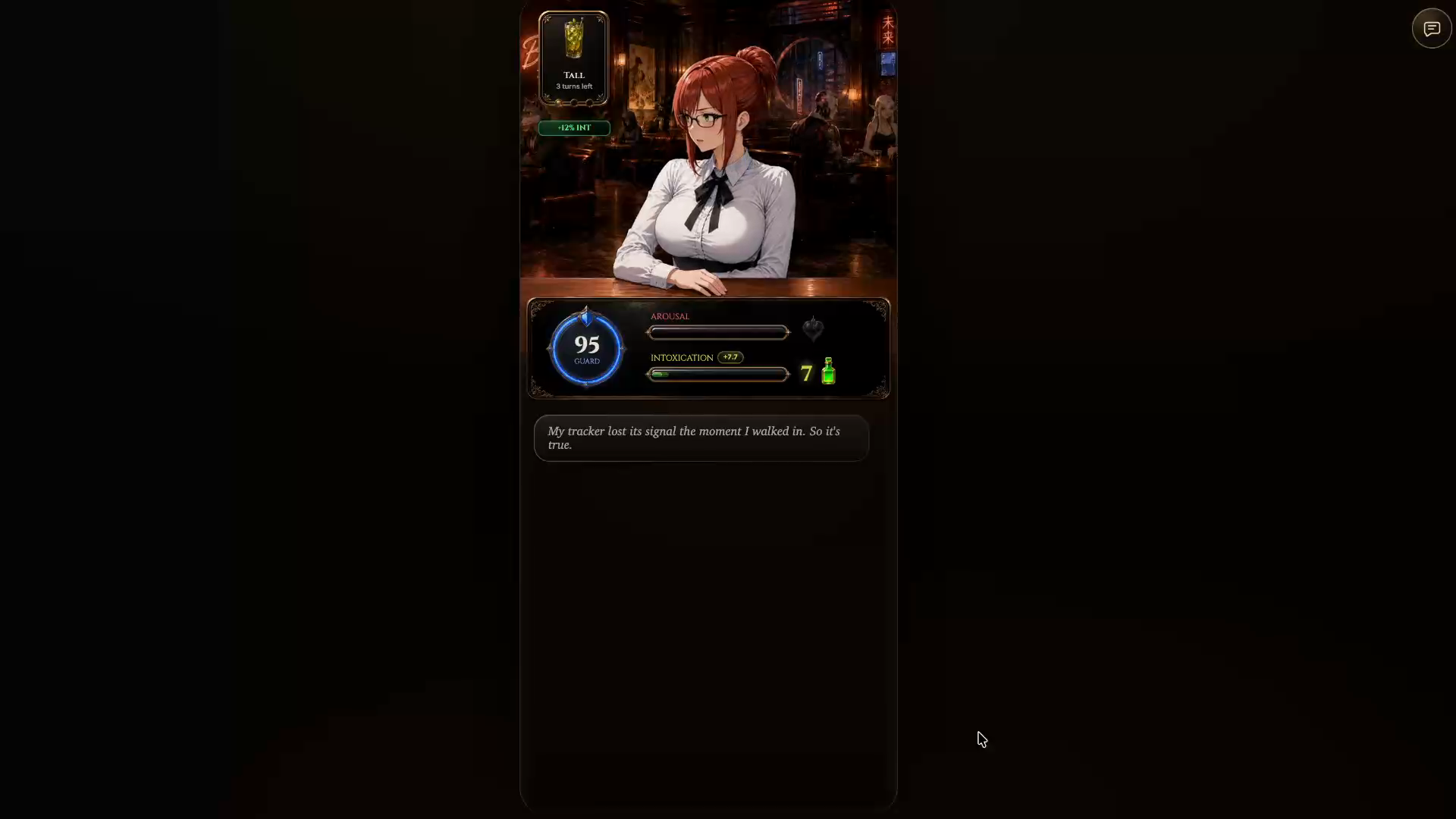
Risouverse: Blindspot brings this psychological lineage into sharp focus by translating defensive human cognition into an authentic, mathematically modeled gameplay system. Set within a hyper-curated cyberpunk society where citizens are trained by corporate wellness trackers to suppress all raw emotion, every patron who steps across your underground bar counter carries heavy emotional armor. As displayed in the game's intuitive interface, patron psychology is governed by three intertwined, dynamic metrics: Guard, Arousal, and Intoxication. Guard represents the patron's psychological perimeter—the corporate conditioning, cynical deflection, and emotional skepticism that prevents unauthorized vulnerability. When Guard is high, even the most profound romantic overtures or sympathetic observations bounce off like rubber bullets, met with frosty sarcasm or institutional compliance. Intoxication, managed through physical cocktail preparation, softens rigid cognitive barriers and dulls conscious executive control, making guarded thoughts accessible. Simultaneously, Arousal tracks visceral, emotional, and sensory resonance—the rising heat of genuine connection that threatens to shatter composure. Navigating these stat bands is a delicate balancing act: push Arousal too quickly while Guard is high, and the patron panics and retreats; induce excessive Intoxication without establishing rapport, and they collapse into stupor. True breakthrough occurs only when the player skillfully aligns these psychological currents.
Dialogue Cards as Psychological Keys: Navigating Insight, Humor, and Vulnerability
To interact with these dynamic psychological bands, Blindspot equips the player with three distinct dialogue card archetypes: Insight, Joke, and Flirt. Each card acts as a specialized psychological instrument designed to test and reshape the patron's cognitive posture. Deploying an Insight card directly challenges the patron's internal narrative, acknowledging their suppressed exhaustion or piercing the immaculate corporate facade of characters like the Celestial curator Voss. When timed correctly, Insight causes Guard to crater, opening an emotional window for genuine disclosure; when mistimed against an unyielding defense, it feels invasive, causing Guard to spike defensively. Conversely, a well-placed Joke serves as an emotional pressure-release valve, disarming acute tension and lowering defensive vigilance without triggering alarms. Finally, Flirt cards heighten Arousal and ignite visceral chemistry, but carry immense risk if deployed before trust has been established. Guiding a patron toward Lucid Authenticity—the courageous decision to abandon corporate mood dampeners and embrace raw emotional reality—demands empathetic observation of micro-expressions, conversational pacing, and chemical alchemy. Blindspot proves that when video games respect the psychological complexity of defense mechanisms, romance and connection cease to be cheap checklist fantasies and become thrilling, transformative human triumphs.
Step behind the counter and test your psychological intuition in Blindspot
Sources & further reading
BLINDSPOT
Your shift is waiting.
Blindspot puts you behind the bar in the Risouverse. Talk to your guest, mix drinks, and watch how the conversation changes.
Play BlindspotRomantic Visual Novel · Browser demo · Sign-in required