
Games
The Evolution of Visual Novel Mechanics: From Branching Textboxes to Reactive Conversational Systems
Trace the mechanical evolution of visual novels from static text boxes to dynamic dialogue card systems and somatic bartending, highlighting the leap from classic VN tropes to Risouverse: Blindspot.
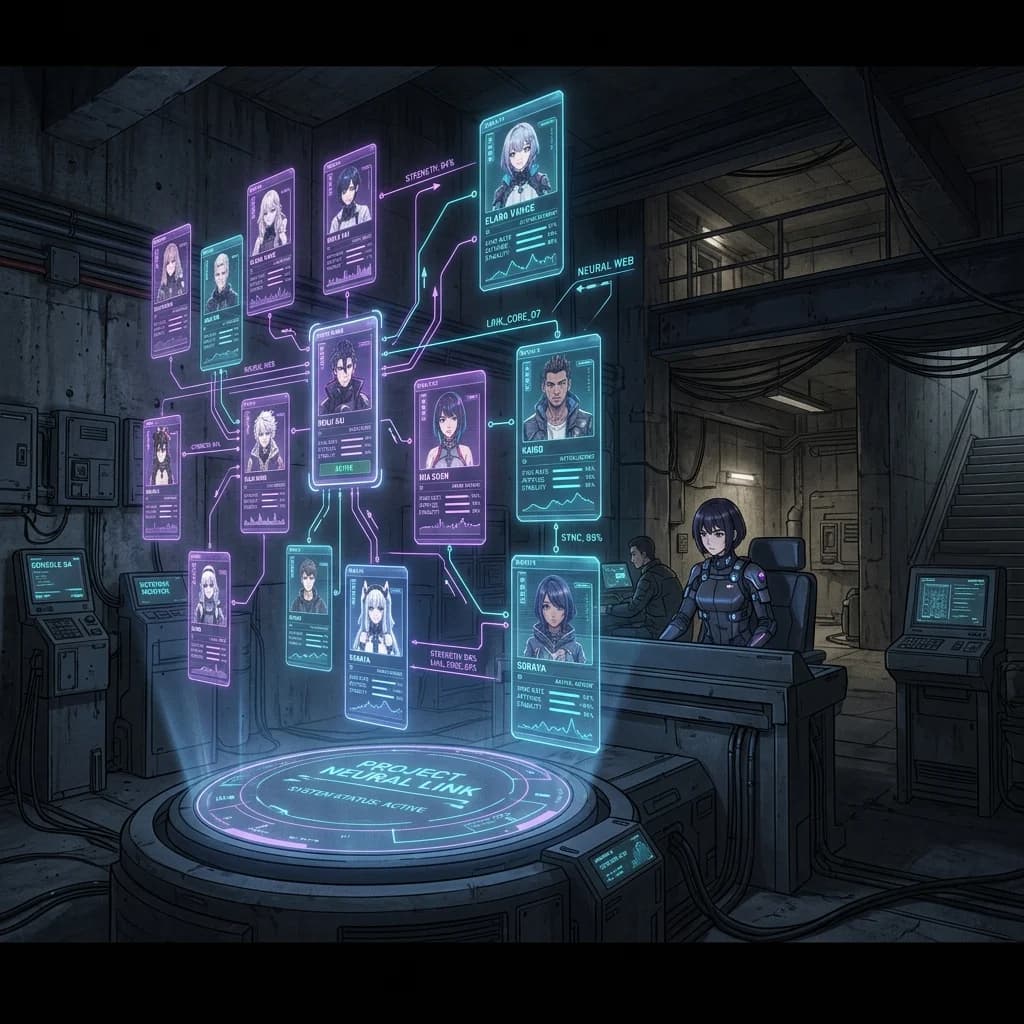
The Static Era: Textboxes, Sprite Overlays, and Branching Bottlenecks
For the first three decades of the visual novel genre, the user interface remained virtually unchanged across generations of hardware platforms. A rectangular dialogue box anchored the bottom of the screen, two-dimensional character sprites cycled through a handful of canned emotional expressions, and prose scrolled steadily across static background paintings. Seminal classics like Fate/stay night, Tsukihime, and Clannad achieved legendary status not because of mechanical complexity, but through exceptional literary ambition, worldbuilding depth, and profound emotional resonance. In these foundational works, the prose carried the entire cognitive load of the experience, relying on vivid psychological interiority to compensate for minimal player input.
The primary mechanic across this era was the branching junction: a player read thousands of words of linear text until presented with a choice between two or three options. While this formula allowed for sprawling branching trees and multiple endings, it also created significant ludonarrative friction. Players frequently fell victim to choice paralysis, consulted walkthrough guides to avoid arbitrary bad endings, or felt disconnected from characters whose reactions felt dictated by hidden script flags rather than dynamic psychological logic. The interaction was essentially discrete and turn-based, lacking the fluidity, tension, and moment-to-moment responsiveness that modern players expect from interactive digital media, leaving a vast design space unexplored.
The Intermediary Leap: Tactical Deduction and Somatic Rituals
Recognizing these structural limitations, innovative developers began introducing hybrid gameplay systems to revitalize the visual novel framework without abandoning its narrative heart. Capcom’s Phoenix Wright: Ace Attorney transformed courtroom cross-examinations into thrilling deductive puzzles by requiring players to spot logical contradictions between witness testimony and physical evidence presented from the court record. Spike Chunsoft’s Danganronpa took interactive debate even further, incorporating real-time reflex mechanics where players aimed and fired literal Truth Bullets to shatter falsehoods during high-stakes Class Trials, injecting tactile urgency into textual debates.
In the indie sphere, Sukeban Games’ VA-11 Hall-A pioneered the bartender visual novel, ingeniously replacing dialogue choices with drink mixing: altering a patron's cocktail recipe subtly shifted their mood, loosened their tongue, or altered the trajectory of the plot. Toge Productions’ Coffee Talk refined this somatic ritual, proving that brewing hot drinks fostered an intimate confessional atmosphere across the counter. These milestones demonstrated that physical rituals and tactical problem-solving could deepen emotional investment without sacrificing narrative weight. They proved that tactile player actions could elevate storytelling beyond the confines of traditional textboxes, laying the essential conceptual groundwork for truly systemic conversation design where physical interaction directly influences emotional receptivity and narrative flow. By transforming dialogue and deductive reasoning into tangible player interventions, these titles proved that game mechanics could actively amplify narrative empathy rather than compete with it.
Card-Driven Discourse: The Conversational Deckbuilding of Blindspot
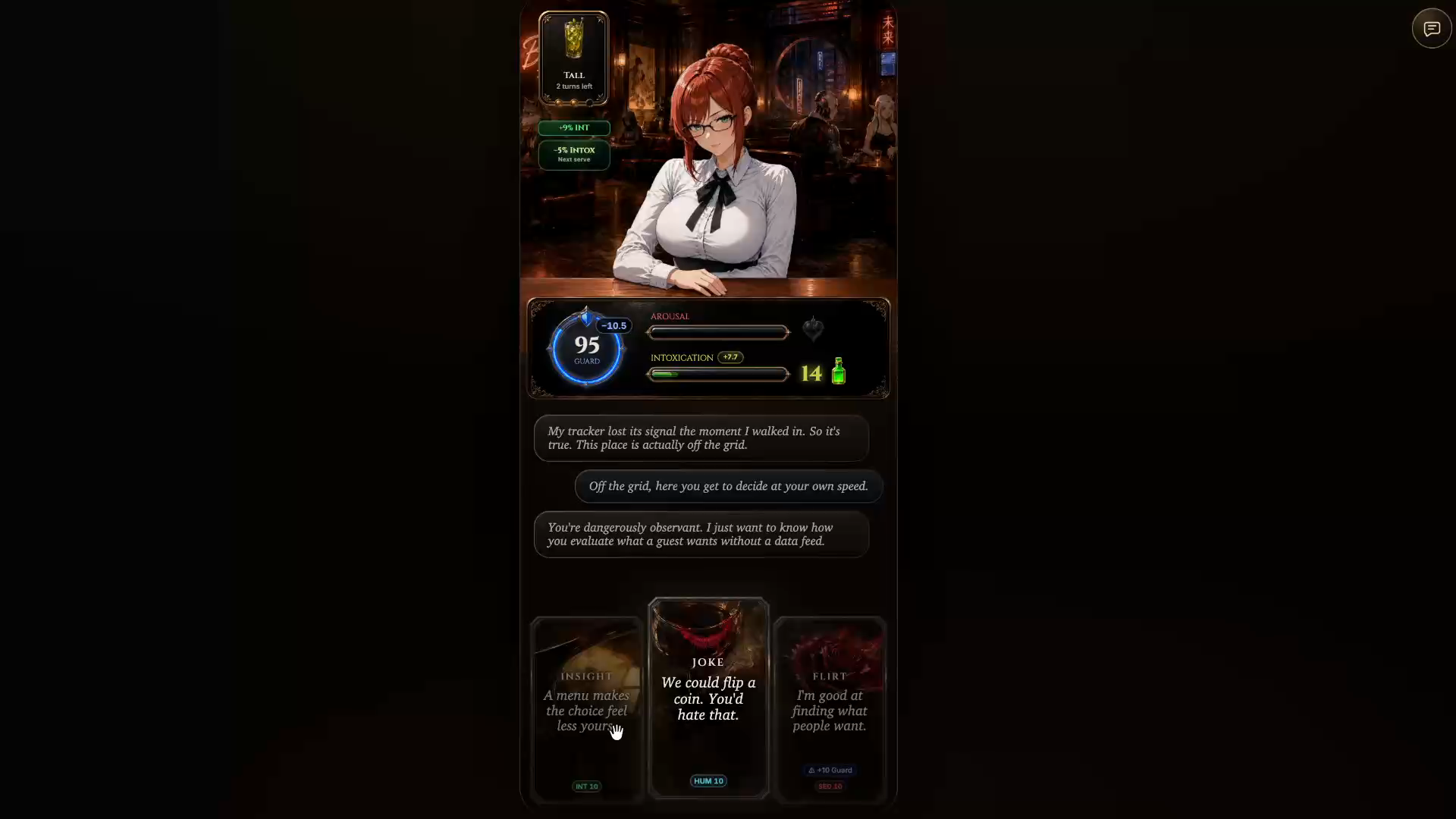
Risouverse: Blindspot represents the next evolutionary leap in visual novel mechanics by replacing static choice menus with a tactical, card-driven conversational engine. Operating behind an underground counter in the corporate dystopia of the Pristine Cage, the player manages a dynamic hand of dialogue cards categorized into Insight, Joke, and Flirt. Rather than clicking predetermined lines from a static list, players must evaluate the emotional posture, eye contact, and somatic metrics of their guest before playing a card from their hand, turning conversation into an active tactical discipline.
Each card archetype serves a precise psychological purpose. An Insight card demonstrates keen perception, unpicking corporate rhetoric to erode the patron's defensive Guard. A well-timed Joke card diffuses escalating tension and resets volatile moods before defensive walls snap shut. A daring Flirt card ignites romantic chemistry and increases Arousal, but if played while the guest’s Guard remains elevated, the attempt backfires, triggering defensive withdrawal and conversational recoil. This card architecture creates tactical suspense: players must read nonverbal cues, plan conversational combos across multiple exchanges, and adapt to unpredictable guest reactions, turning every narrative scene into an engaging psychological encounter where player agency directly shapes character intimacy and conversational momentum. This creates an unprecedented layer of ludonarrative harmony: players are not simply reading about a character's guarded heart, but actively feeling the tactical friction of earning their trust one card at a time.
Liquid Somatics: How Mixology Replaces Passive Dialogue Options
In Blindspot, mixology is not an isolated minigame; it is a somatic catalyst directly intertwined with the dialogue system. Every cocktail mixed behind the bar combines spirits and mixers that manipulate the patron's physiological metrics: Guard, Arousal, and Intoxication. Pouring a drink with high-proof alcohol raises Intoxication, gradually softening inhibitions and causing Guard to degrade naturally over subsequent turns. Conversely, balancing a beverage with cooling mixers and aromatic bitters soothes physical agitation and stabilizes erratic emotional spikes before a guest cascades into distress, providing vital emotional stabilization.
This creates a deeply strategic interplay between glass and speech: a savvy bartender might prepare a guest's receptive state with a calming, citrus-infused cocktail before deploying a high-impact Insight card, or serve a warming, potent spirit to melt defensive walls before taking a romantic risk. By anchoring narrative outcomes in chemical and somatic simulation, Blindspot ensures that every drink poured carries real conversational consequence. Players are not merely selecting dialogue; they are actively orchestrating neurochemical environments that make vulnerable emotional breakthroughs possible, bridging physical mixology and narrative dialogue into a unified mechanic that rewards forethought, timing, and empathetic intuition. The counter becomes a laboratory of somatic vulnerability, where the temperature of a glass and the sweetness of a garnish subtly tilt the balance between emotional silence and life-changing revelation.
The Next Frontier: Systemic Intimacy and Browser Architecture
The technical architecture of modern visual novels must also reflect contemporary lifestyle demands and technological capabilities. Blindspot achieves this through seamless, web-native execution, allowing players to launch high-fidelity 2.5D visual novel shifts directly in their web browsers without hardware hurdles, platform locks, or extensive downloads. Expressive character animation, dynamic camera reframing, and reactive lighting bring patrons like Voss, Lexi, and Sable to life with remarkable fluidity, reacting in real time to shifting conversational meters.
More importantly, this mechanical evolution mirrors the franchise's core narrative theme: just as players use systemic gameplay to break through the curated facades of the Pristine Cage, the game itself breaks through the outdated technical bottlenecks of the VN medium. By marrying tactical deckbuilding, somatic mixology, and rich speculative fiction, Blindspot charts a compelling path forward for the future of interactive narrative entertainment, proving that romantic and psychological fiction can be as mechanically deep, reactive, and engaging as any tactical role-playing game on the market today. It stands as definitive proof that the visual novel medium has officially entered its systemic golden age, accessible instantly from any modern web browser. In an industry often divided between static visual novels and mechanics-heavy simulators, Blindspot demonstrates that thoughtful narrative games can offer both sublime literary prose and engaging, reactive systems.
Master the reactive conversational mechanics of Risouverse: Blindspot in browser today
Sources & further reading
BLINDSPOT
Your shift is waiting.
Blindspot puts you behind the bar in the Risouverse. Talk to your guest, mix drinks, and watch how the conversation changes.
Play BlindspotRomantic Visual Novel · Browser demo · Sign-in required