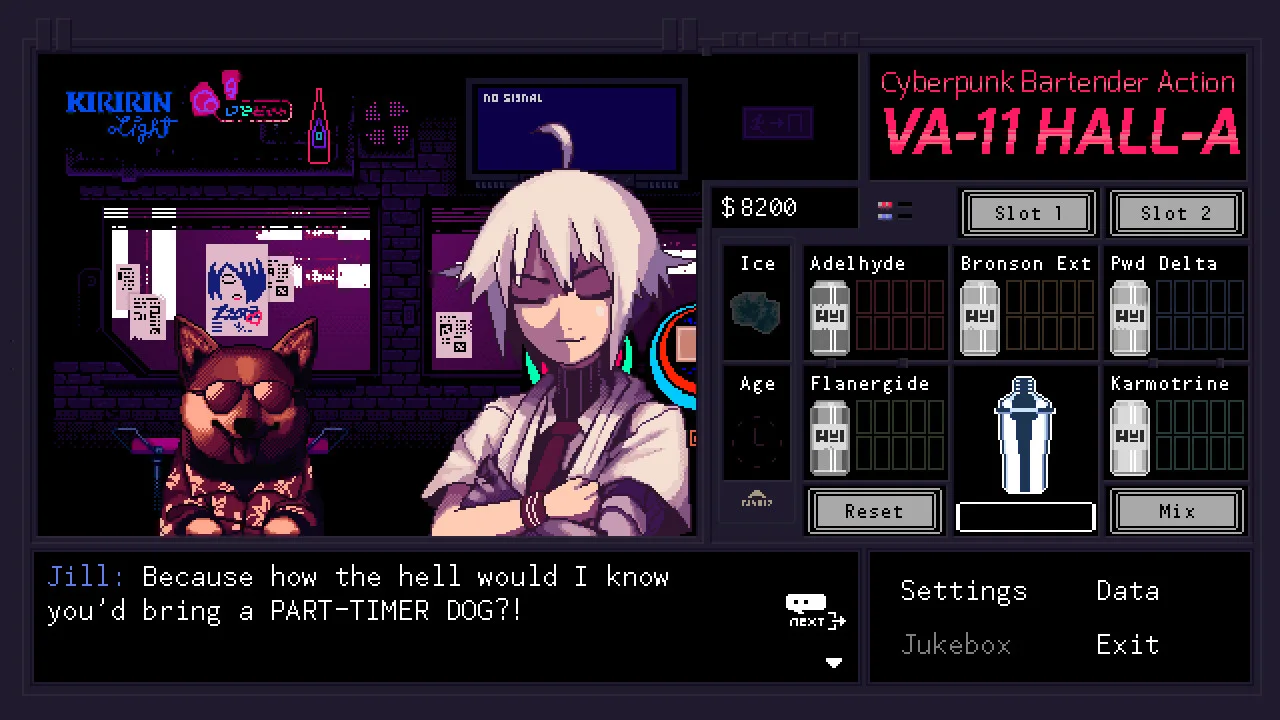
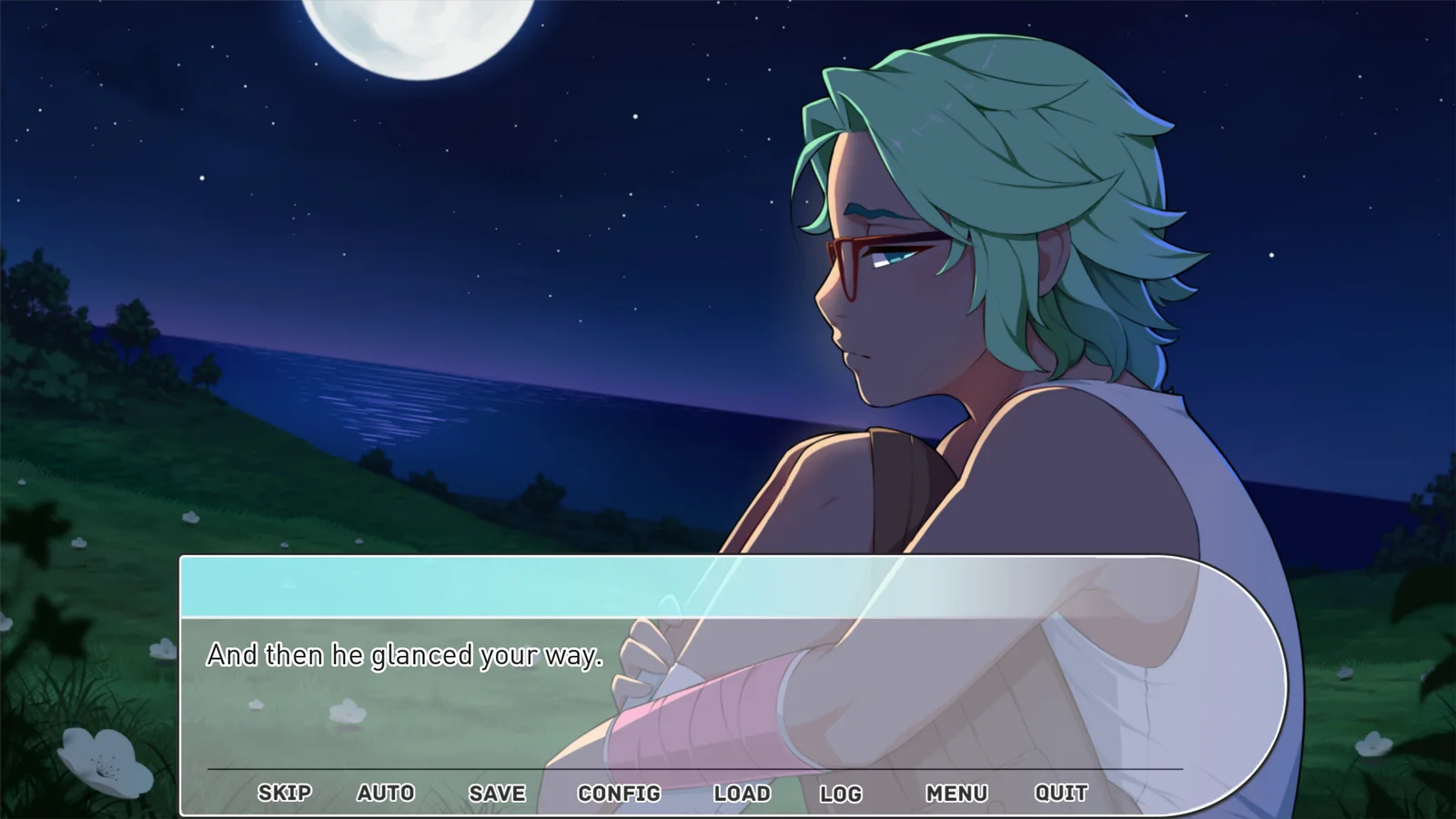
10 Visual Novels That Move Beyond Static Portraits
Animated characters, 3D mysteries, a browser bar and one FMV alternative: 10 visual novels and story games, with what moves and what you control.
 Risouverse Editorial10 min read
Game info updated
In this article
At a glance
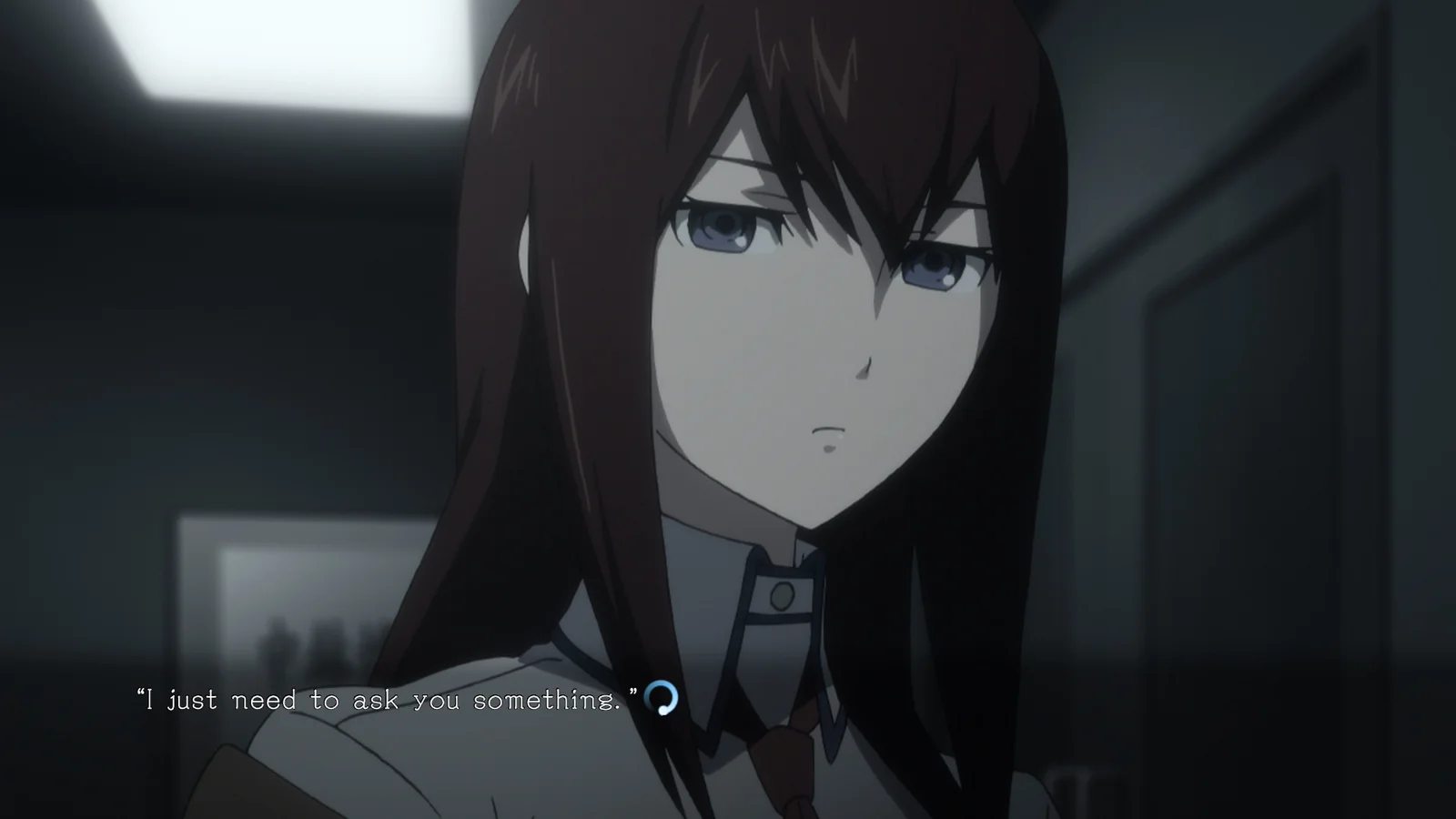
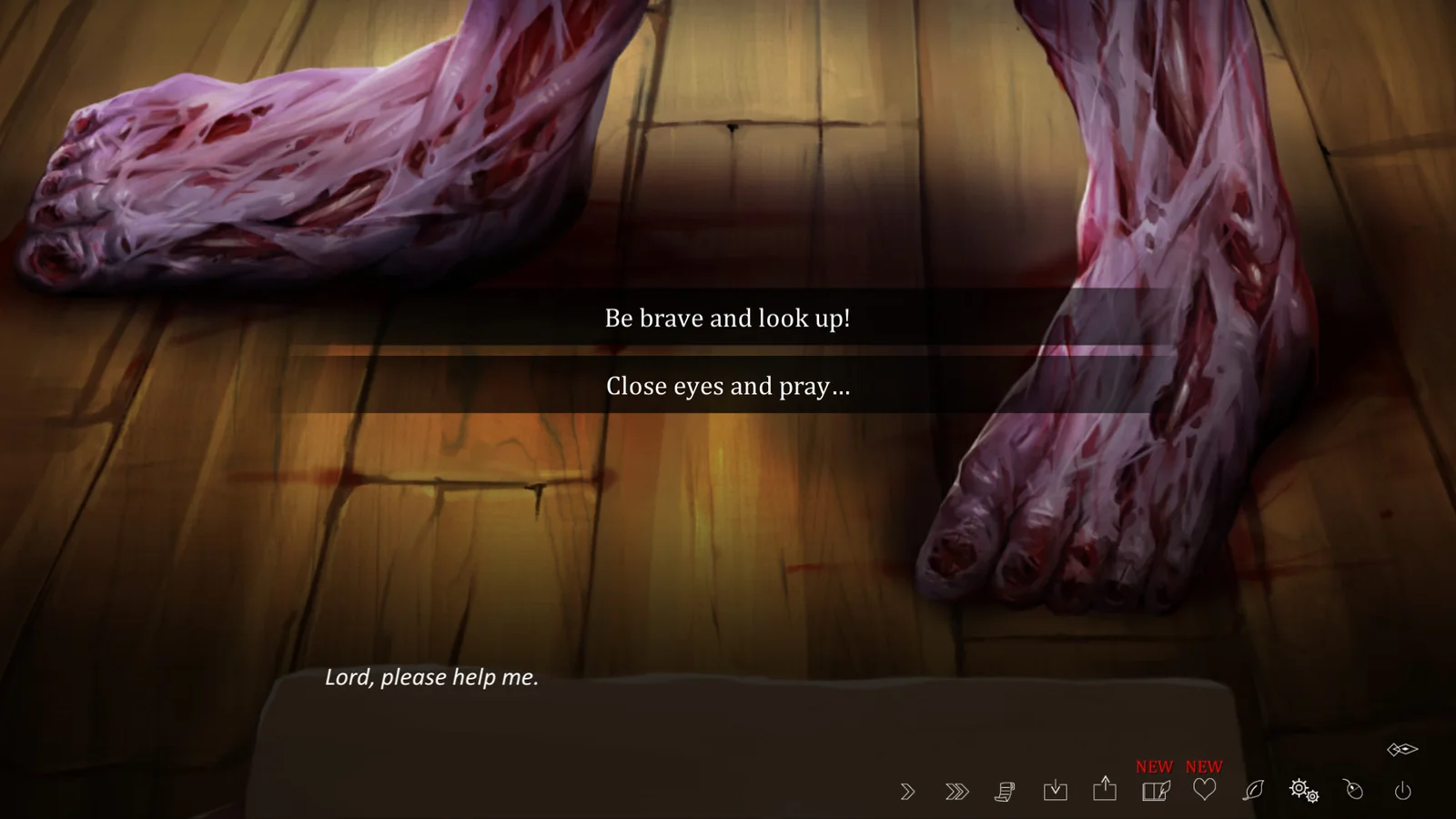
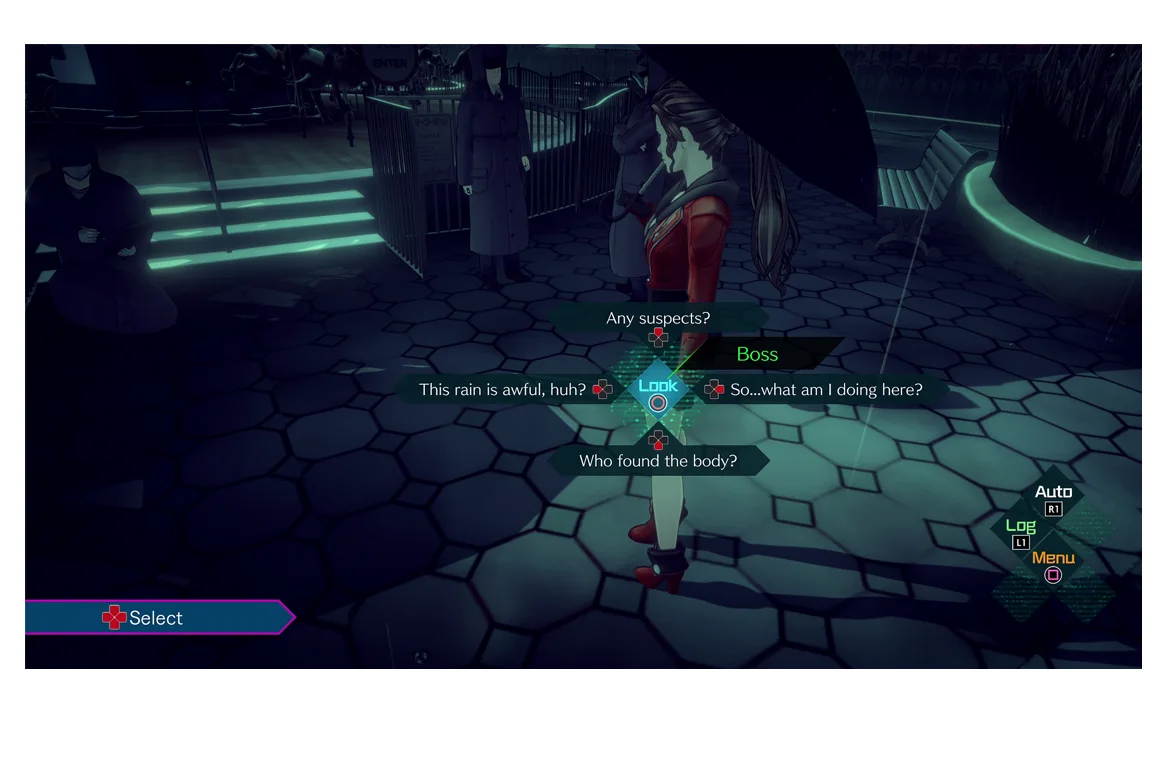

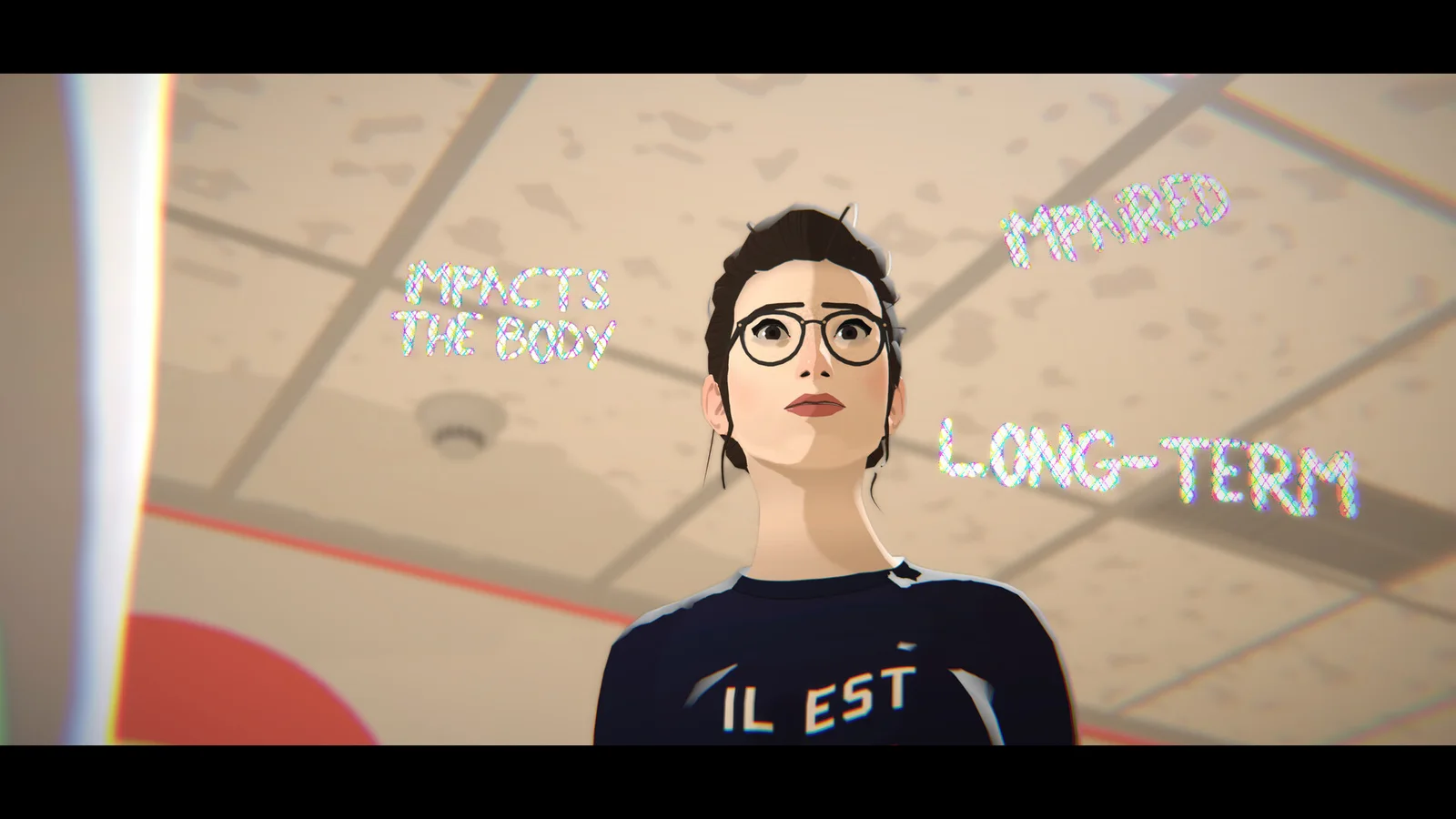
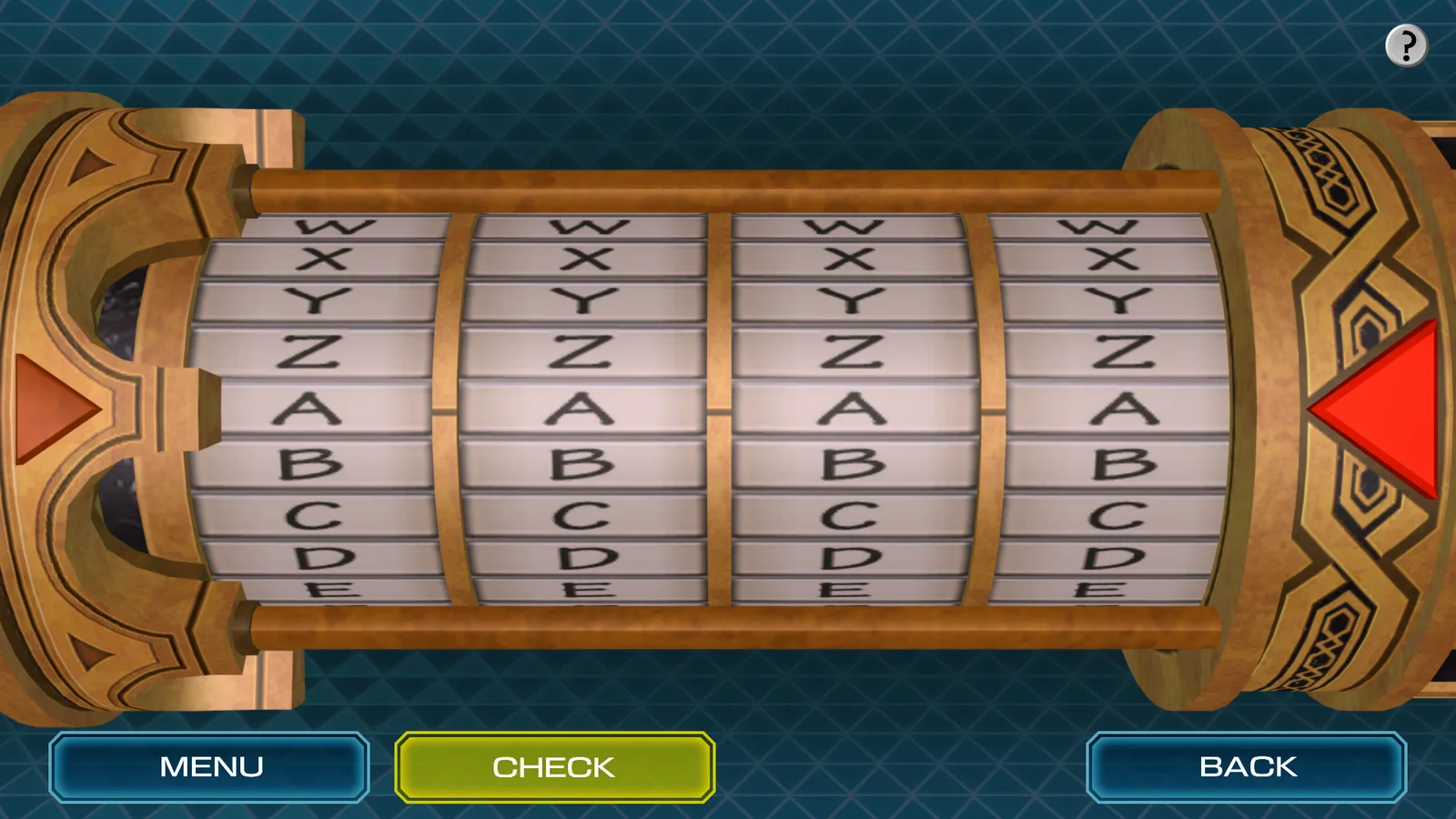
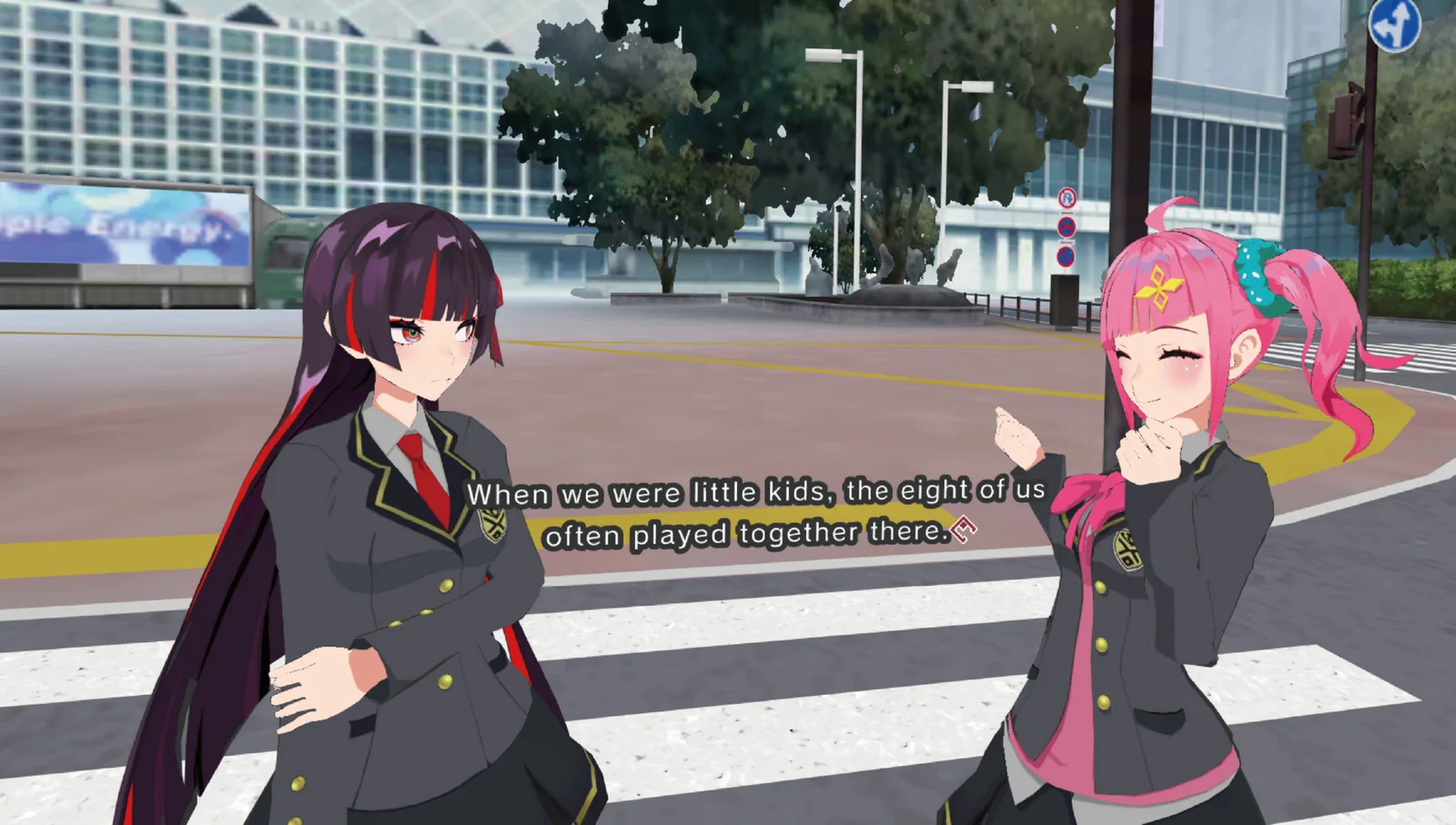
A suspect looks away. A bartender’s guest tilts her head before answering. A perfectly ordinary microwave develops an extremely unreasonable relationship with time. Movement can give a visual novel a little extra electricity, whether it comes from a few expressive gestures or a whole scene staged like an anime episode.
But a moving face and a branching story are two different promises. A spectacular opening movie tells you almost nothing about the next twenty hours. And choosing what to say is a different pleasure from exploring a dream, solving an escape room or deciding who gets out of a laboratory alive.
These ten picks bring both sides into focus: what moves, and what you actually control. Nine use animated presentation; the final pick is a clearly marked live-action alternative for readers who want their choices performed by actors.
About this selection: This is a publisher-curated reading order, not an independent league table. Blindspot is our game and appears at number three. Fit scores are feature-based editorial judgments, not playtest scores or user ratings: moving presentation earns up to four points, player control four, and fit for a motion-led story two. Scores need not follow the list order.
The shortlist
Platforms below refer to the linked editions, not every available port.
- 1
- Game
- STEINS;GATE ELITE
- What moves
- Anime sequences
- What you control
- Branching story and endings
- Linked edition
- Windows
- Fit /10
- 9.4
- 2
- Game
- The Letter
- What moves
- 2D sprites, backgrounds and illustrations
- What you control
- Relationships, survival and routes
- Linked edition
- Windows, macOS, Linux
- Fit /10
- 9.2
- 3
- Game
- Blindspot
- What moves
- Animated guest presentation
- What you control
- Authored replies and cocktail effects
- Linked edition
- Browser demo; sign-in required
- Fit /10
- 7.8
- 4
- Game
- Harmony: The Fall of Reverie
- What moves
- Animated 2D cast
- What you control
- Foresight board and branching outcomes
- Linked edition
- Windows
- Fit /10
- 9.0
- 5
- Game
- AI: The Somnium Files
- What moves
- 3D characters and dream scenes
- What you control
- Investigation and dream-puzzle branches
- Linked edition
- Windows
- Fit /10
- 9.1
- 6
- Game
- BUSTAFELLOWS
- What moves
- 2D character animation and scene staging
- What you control
- Romance routes and endings
- Linked edition
- Windows
- Fit /10
- 8.6
- 7
- Game
- The Wreck
- What moves
- Stylized 3D scenes
- What you control
- Memories and dialogue decisions
- Linked edition
- Windows, macOS
- Fit /10
- 8.8
- 8
- Game
- Zero Escape: Zero Time Dilemma
- What moves
- Animated 3D story sequences
- What you control
- Escape puzzles and life-or-death decisions
- Linked edition
- Windows
- Fit /10
- 9.0
- 9
- Game
- TOKYO CHRONOS
- What moves
- 3D characters in VR
- What you control
- Multiple-choice decisions and endings
- Linked edition
- Windows; VR headset required
- Fit /10
- 8.2
- 10
- Game
- The Complex
- What moves
- Filmed actors, not animation
- What you control
- Decisions and relationship outcomes
- Linked edition
- Windows, macOS
- Fit /10
- 8.2
1. STEINS;GATE ELITE — the anime route
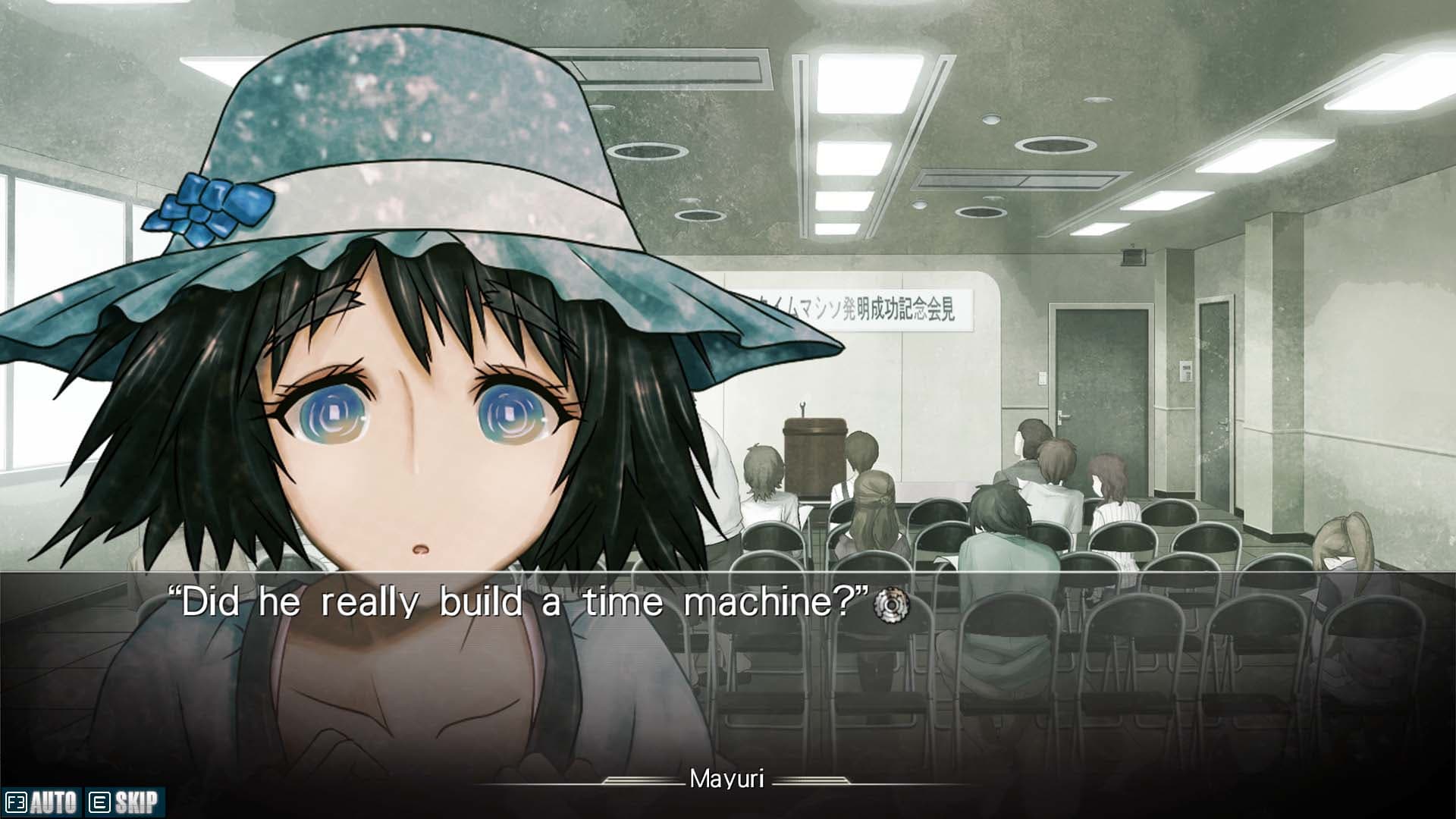
A modified microwave can send messages into the past. This is exactly the sort of discovery that should come with a very stern safety leaflet. Instead, a group of young experimenters in Akihabara keeps pushing, and the consequences spread far beyond their makeshift laboratory.
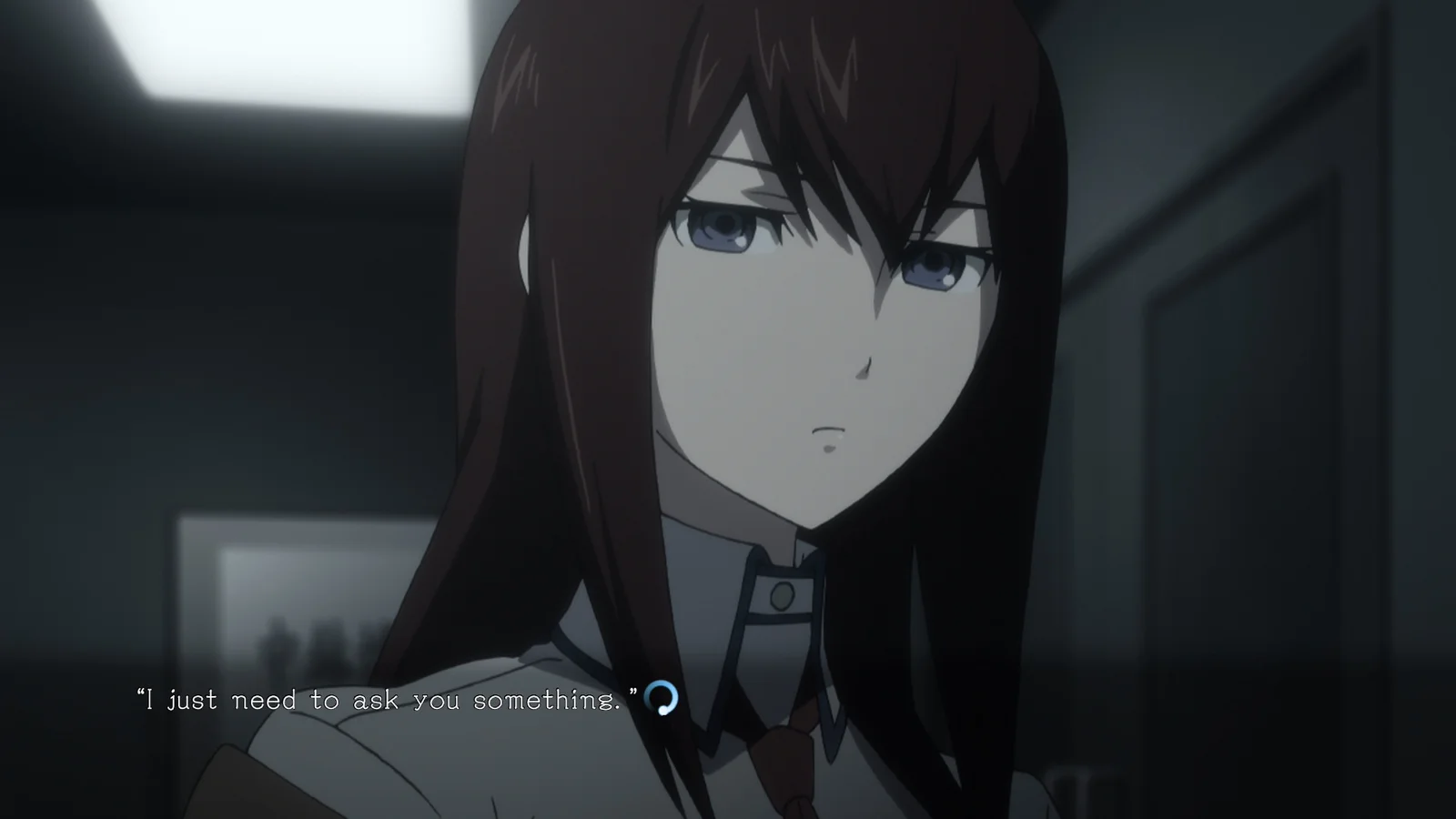
ELITE is the clearest answer here to “I want an animated visual novel.” It builds its presentation around footage from the anime, with newly animated material for certain endings, while retaining branching storylines. The attraction is the combination: a performed scene, followed by the uneasy knowledge that the story has other places to go.
Choose it for sustained anime-style storytelling rather than a portrait that occasionally blinks. Just remember that this is an adventure built around reading and decisions, not an action game disguised as television. Fit: 9.4/10. Official Steam page.
2. The Letter — a haunted house with a social life
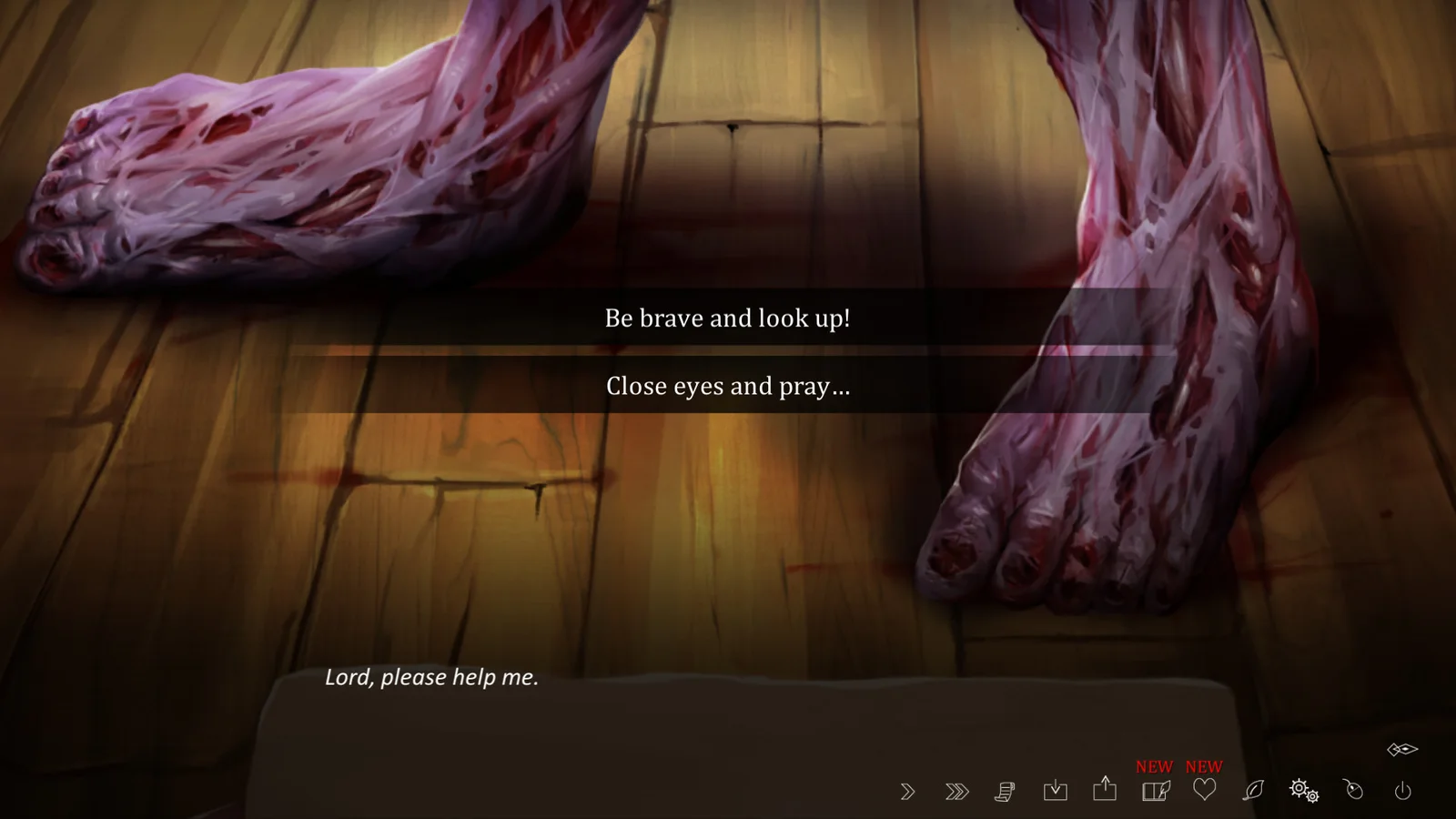
Seven people, one vicious curse, and enough interpersonal baggage to fill the mansion before the ghost arrives. The Letter makes room for friendships and romance alongside the horror, so keeping everyone alive is only part of the mess.
Its painted backgrounds, character sprites and event illustrations include animation. That preserves the familiar visual-novel layout while giving the people and places a less frozen presence. Decisions affect relationships and the branching narrative; a route tree helps keep the tangle readable.
The catch is scale. The publisher advertises more than 700,000 words, and the game includes disturbing violence. This is a long, dark reading commitment with movement woven through it, not a brisk horror film with occasional buttons. Fit: 9.2/10. Official Steam page.
3. Blindspot — watch the person across the counter
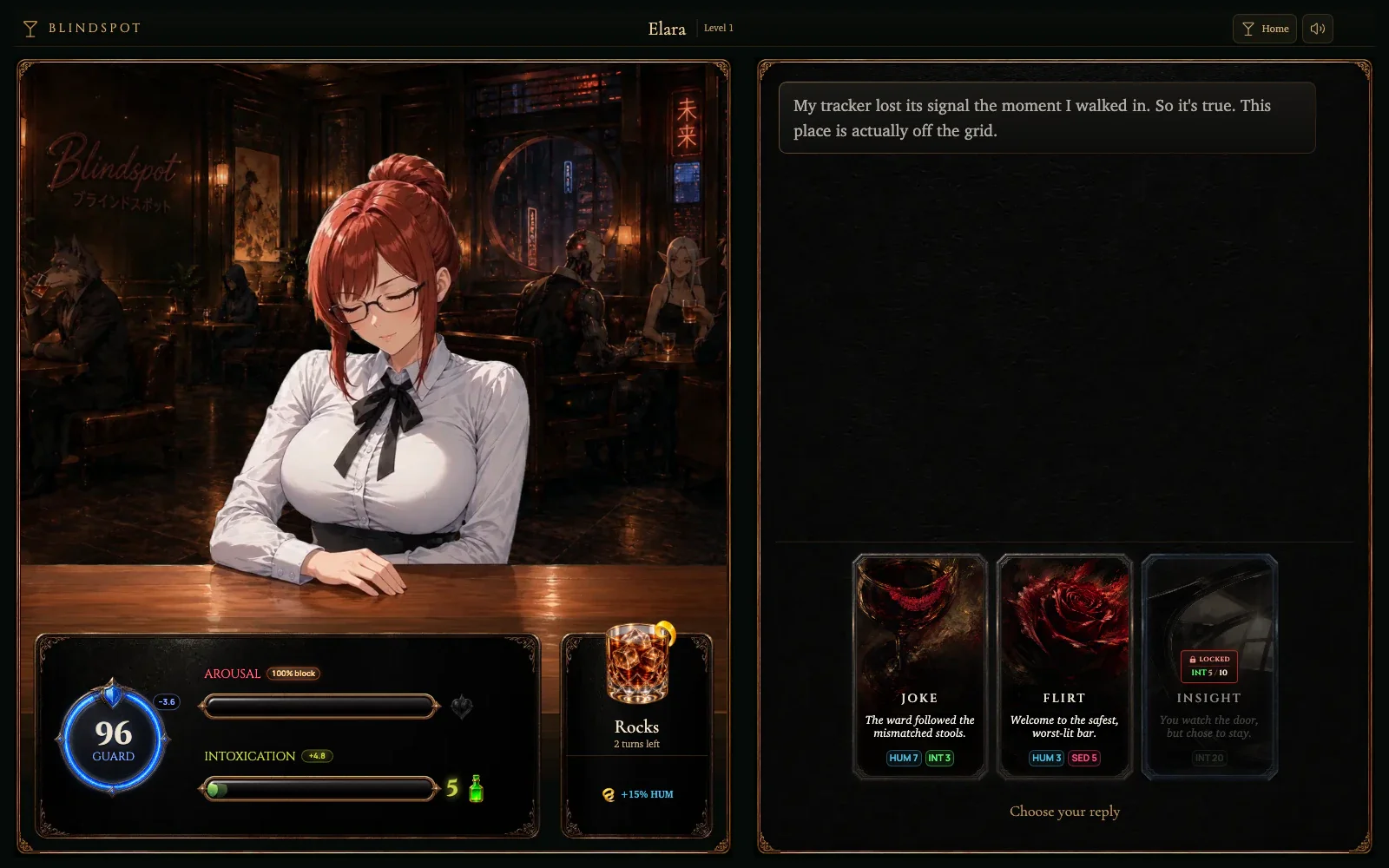
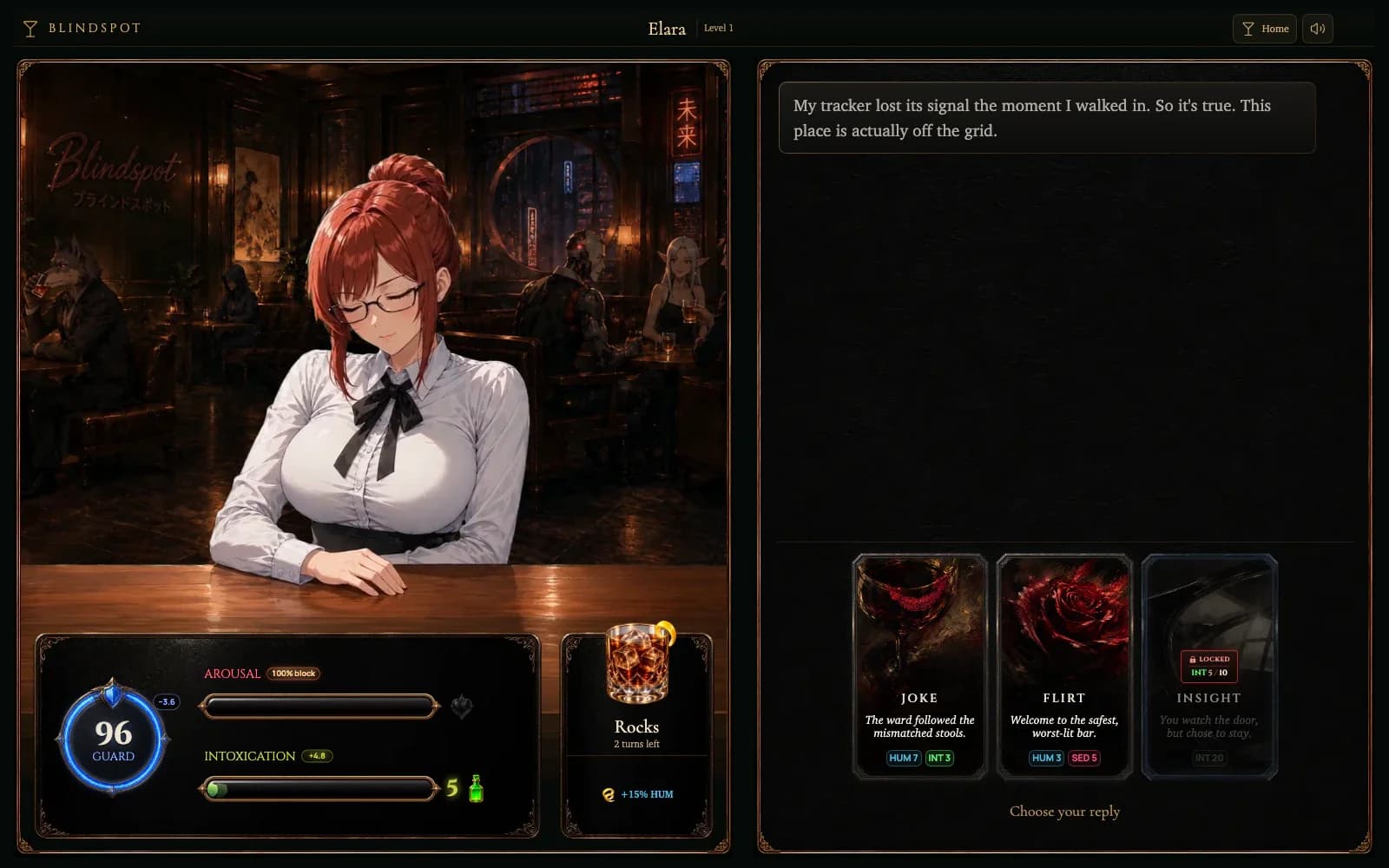
The guest has noticed that her tracker lost its signal. You could make a joke. You could ask a pointed question. You could flirt, although the mere existence of a flirt button has never made it a good idea.
Blindspot keeps its attention close: one guest, the bar between you, and the next exchange. The official demo footage shows the character turning her head, shifting her gaze and speaking while the conversation interface remains on screen. Your controls are authored response cards and drink ingredients; cocktail effects change the conditions under which the conversation continues.
That tight framing is its appeal. The limitation is equally straightforward: this is an early browser demo, not a whole campaign, and sign-in is required. Fit: 7.8/10. Watch the captured gameplay, or start with the bartending guide.
4. Harmony: The Fall of Reverie — inspect the future before breaking it
Polly comes home to find her mother missing and a corporation tightening its grip on the town. Then clairvoyance opens a second set of problems: a realm of personified human aspirations, each with an opinion about where humanity should go.
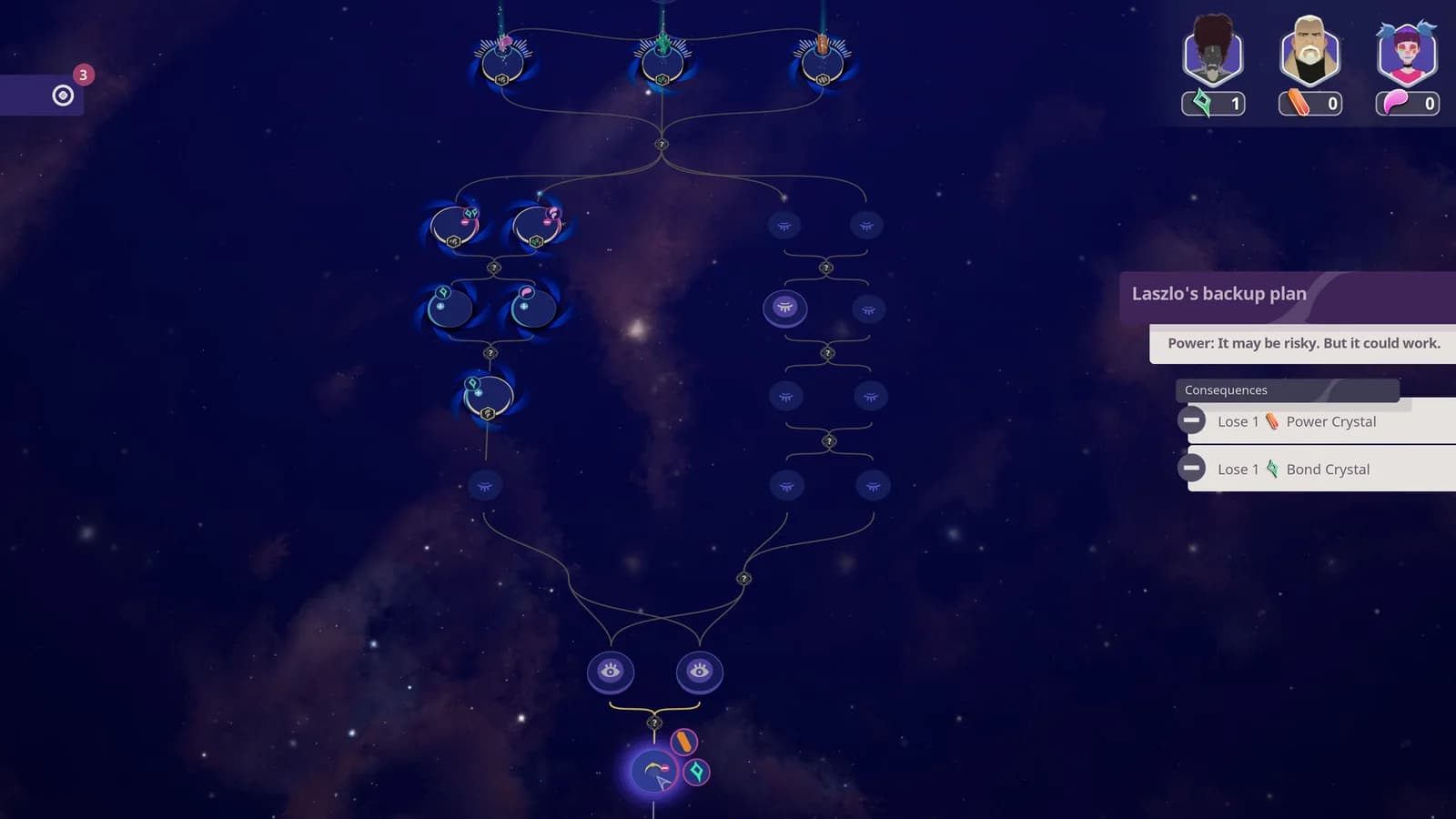
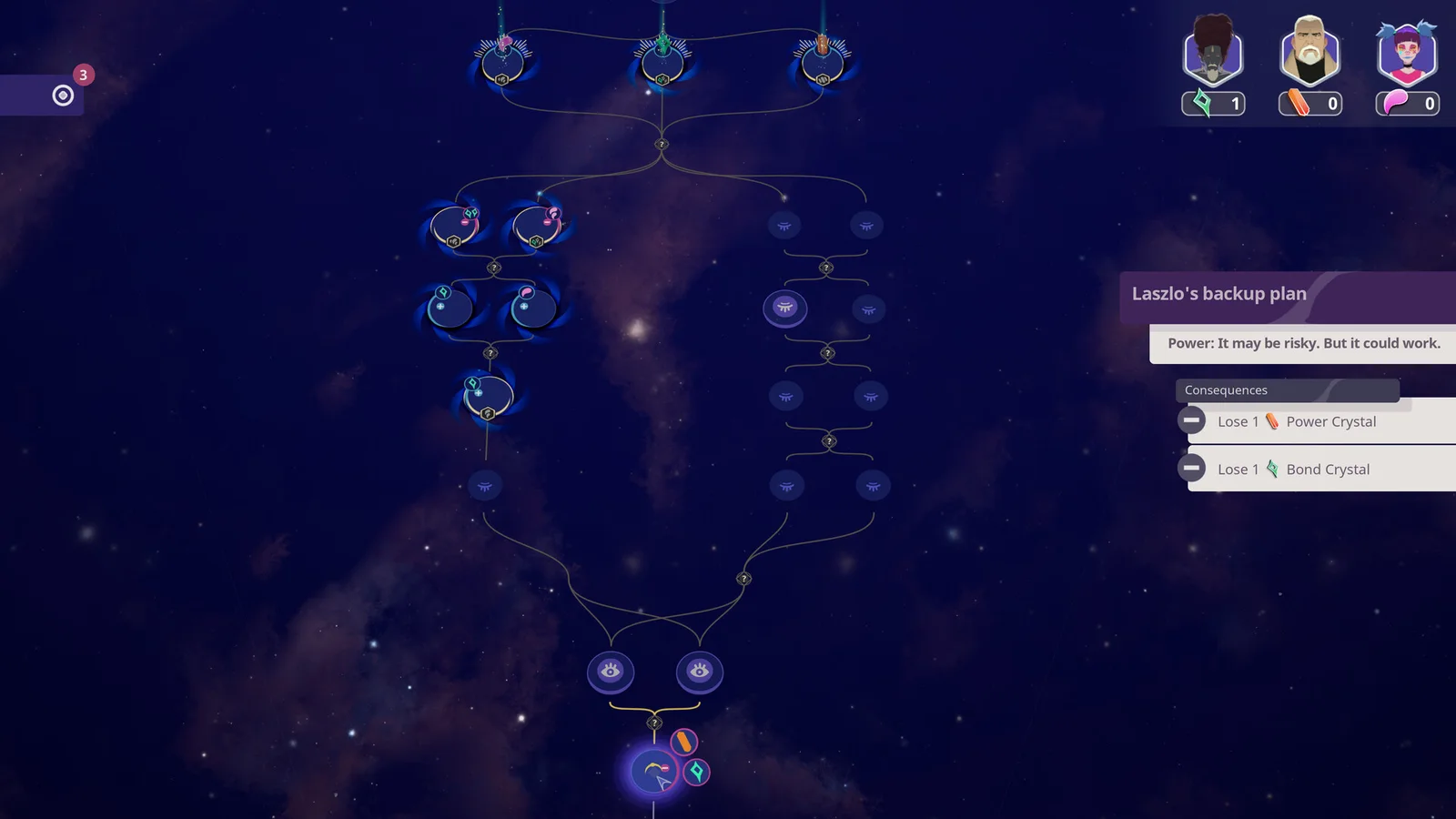
Harmony pairs an animated, fully voiced 2D cast with the Augural, a board that reveals possible consequences. Crystals earned through your allegiances unlock paths at important crossroads. The decision-making has a lovely practical hook: you can study a possible future before committing to it.
That visibility is also the trade-off. If you prefer to answer instinctively and discover the damage later, planning through a branching board may feel unusually deliberate. For readers who like to weigh a choice, it is the main attraction. Fit: 9.0/10. Official Steam page.
5. AI: The Somnium Files — the witness’s subconscious is a crime scene
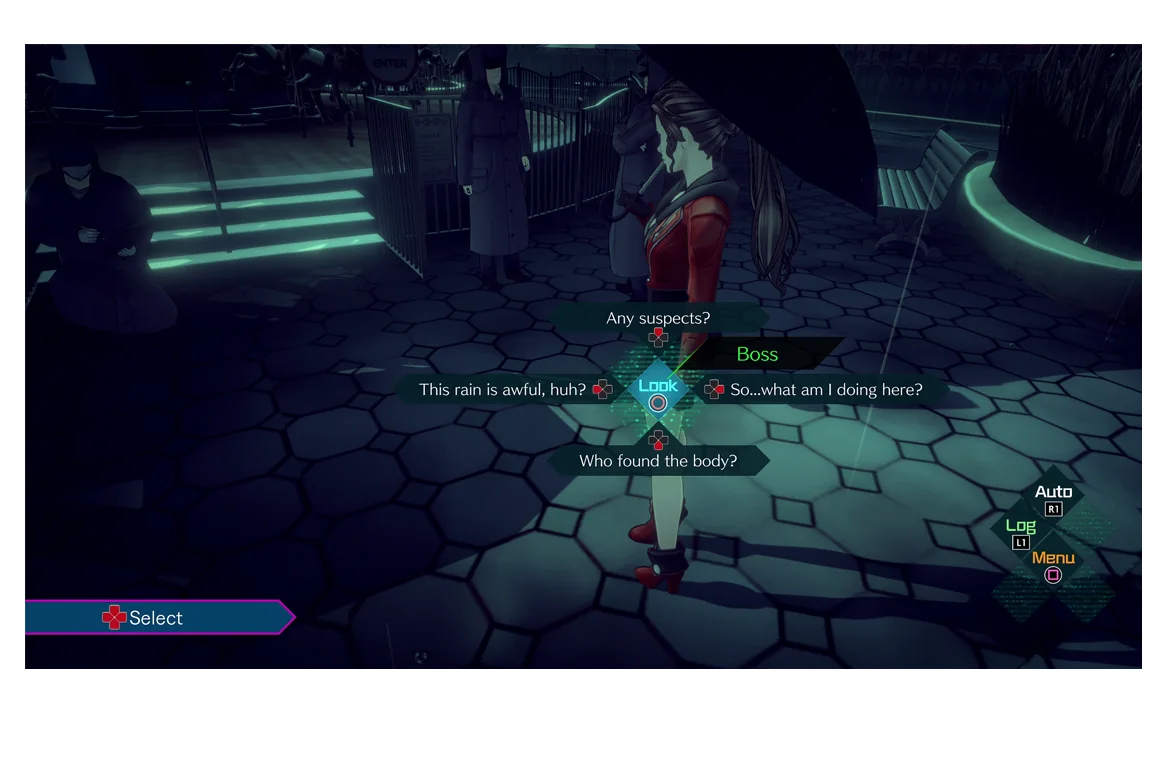
A murder investigation is complicated enough before someone hands you the keys to another person’s dreams. Detective Kaname Date works both sides of that divide: crime scenes in waking life, strange mental obstacles on the other side.
Animated 3D characters give this VN-adventure hybrid a staged, physical presence. More importantly, the Somnium sections put decisions into actions. Each action consumes time, and the results can send the story down different branches. You can return to a diverging dream to pursue another route.
Pick it when you want a mystery that interrupts its conversations with things to investigate. The six-minute dream budget makes it a less relaxed proposition than simply reading at your own pace, and the case involves graphic violence. Fit: 9.1/10. Official game page and Somnium system guide.
6. BUSTAFELLOWS — romance with a criminal timetable

Teuta witnesses a lawyer’s murder and uses her ability to leap briefly into the past, inside someone else’s body, to try to save him. A normal day at the newsroom this is not.
BUSTAFELLOWS gives its illustrated cast animated expressions and cinematic staging without abandoning the pleasure of a text-led otome adventure. Five romance possibilities and different endings provide the routes; the moving presentation gives the crime-and-romance setup a livelier surface.
The best reason to choose it is that particular combination of dangerous company and romantic possibilities. Don’t mistake the dramatic framing for a freely explored detective sandbox: this remains an authored visual novel, with routes to follow rather than a city to simulate. Fit: 8.6/10. Official Steam page.
7. The Wreck — a hospital corridor can hold an entire life
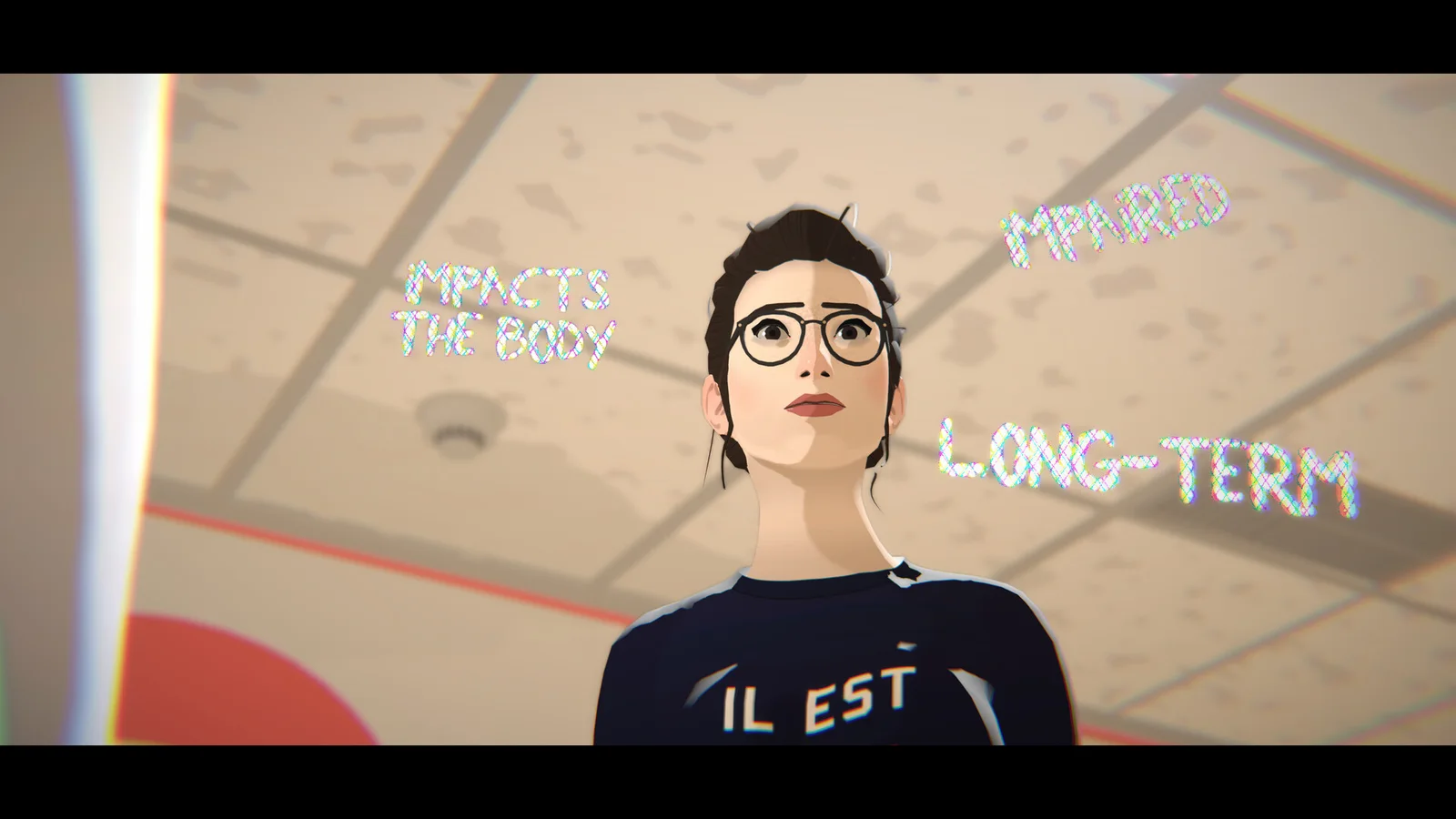
Junon’s mother is critically ill. Their relationship is difficult, her own life is falling apart, and the hospital has no intention of waiting for her to become a different person.
The Wreck uses stylized 3D scenes to connect an immediate crisis with the memories behind it. Exploring that past opens new dialogue possibilities in the present. Its interest is emotional revision: learning enough about Junon to see why a conversation might go differently.
This is the pick for people who want animation to carry an intimate drama rather than a conspiracy or a supernatural romance. Grief, family strain and trauma are the material, though the premise also leaves room for humor and hope. Choose the subject as carefully as the visual style. Fit: 8.8/10. Official Steam page.
8. Zero Escape: Zero Time Dilemma — bad options, beautifully organized
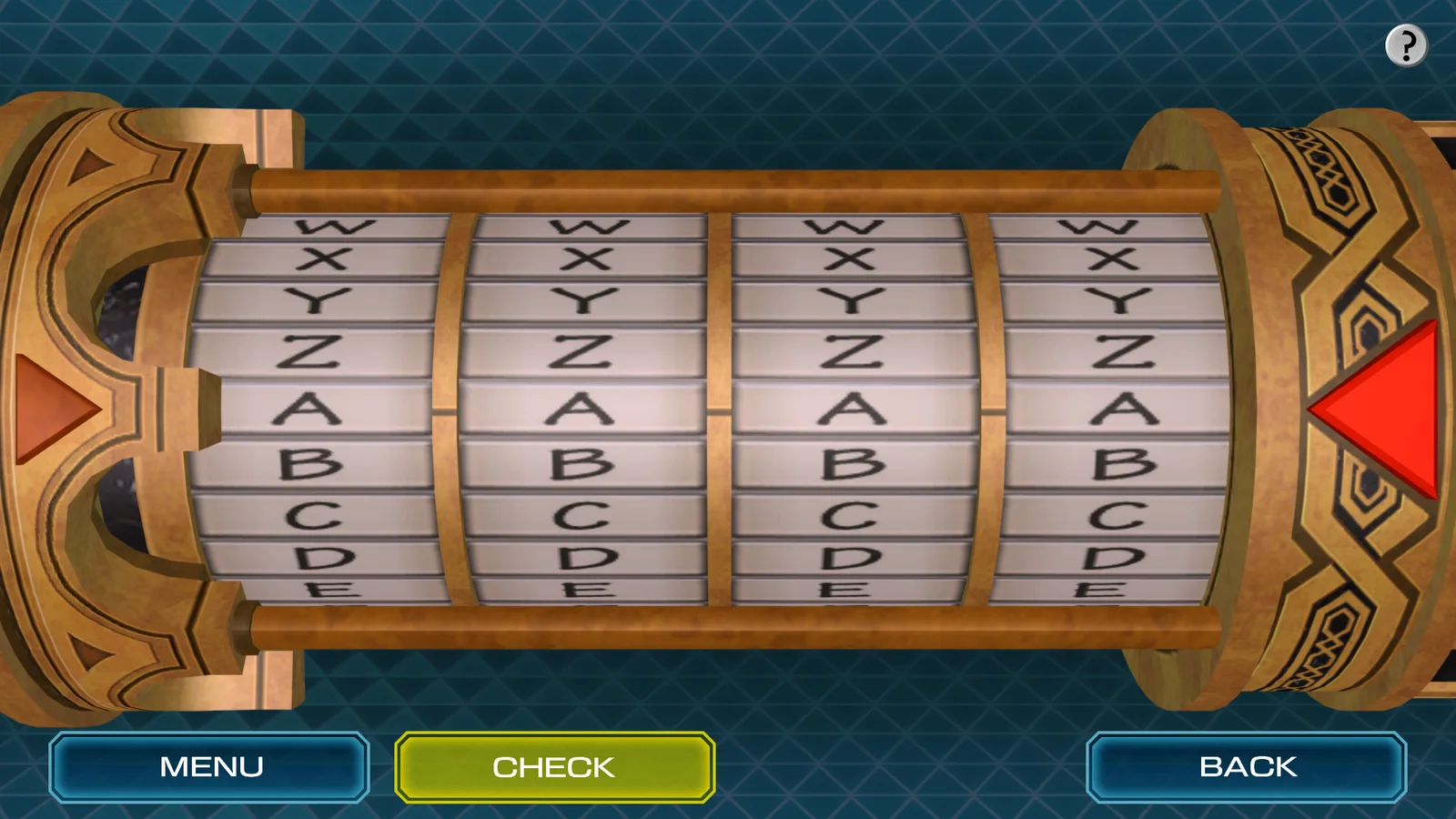
Nine people are trapped. The escape hatch will open after six die. Anyone offering you these rules is unlikely to accept a politely worded complaint.
Zero Time Dilemma alternates 3D escape-room exploration with fully voiced, animated story sections. Its decisions are blunt and often dreadful; the non-linear structure lets you move among events and characters, piecing together what happened across different paths.
The appeal is an unusually concrete mixture of watching, solving and choosing. The warning is that this is the conclusion to an existing series, not its gentlest introduction, and its life-or-death premise means exactly what it says. Come for the puzzle-box structure, not a comforting evening with attractive talking heads. Fit: 9.0/10. Official Steam page.
9. TOKYO CHRONOS — put the conversation around you
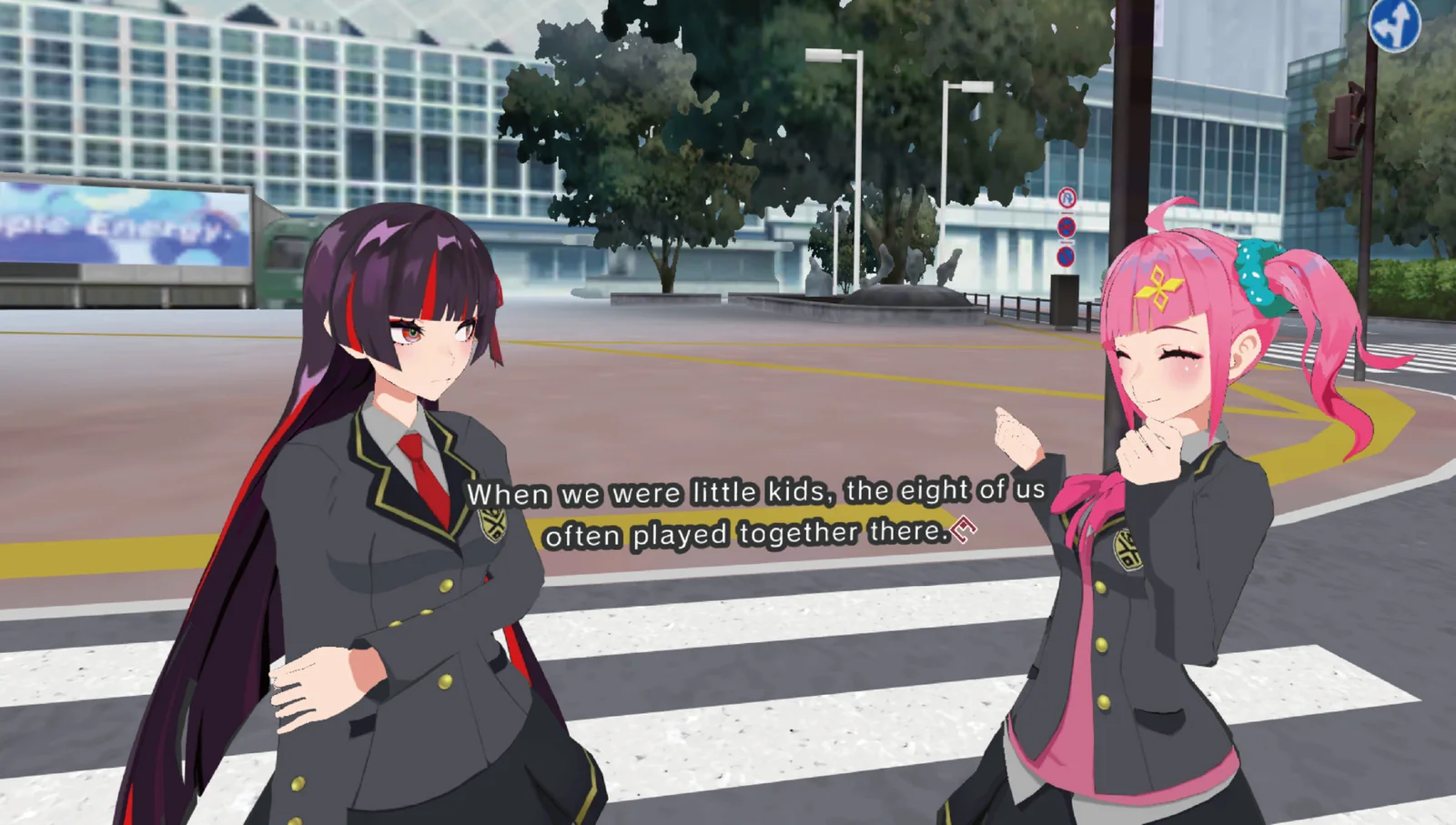
Shibuya has gone quiet. Eight people remain, and a message on a billboard turns their empty city into a mystery with a distinctly unpleasant question at its center.
TOKYO CHRONOS brings animated 3D characters into a VR visual novel. Instead of looking at a portrait framed by your monitor, you occupy a space with the cast. Multiple-choice decisions and more than one ending keep that change of viewpoint attached to an interactive story.
The linked Steam edition requires a VR headset. That is the crucial buying detail, not a footnote. Choose it because you want the physical closeness of a VR conversation; if you simply want to settle down with a laptop, the other entries make more sense. Fit: 8.2/10. Official Steam page.
10. The Complex — the live-action alternative
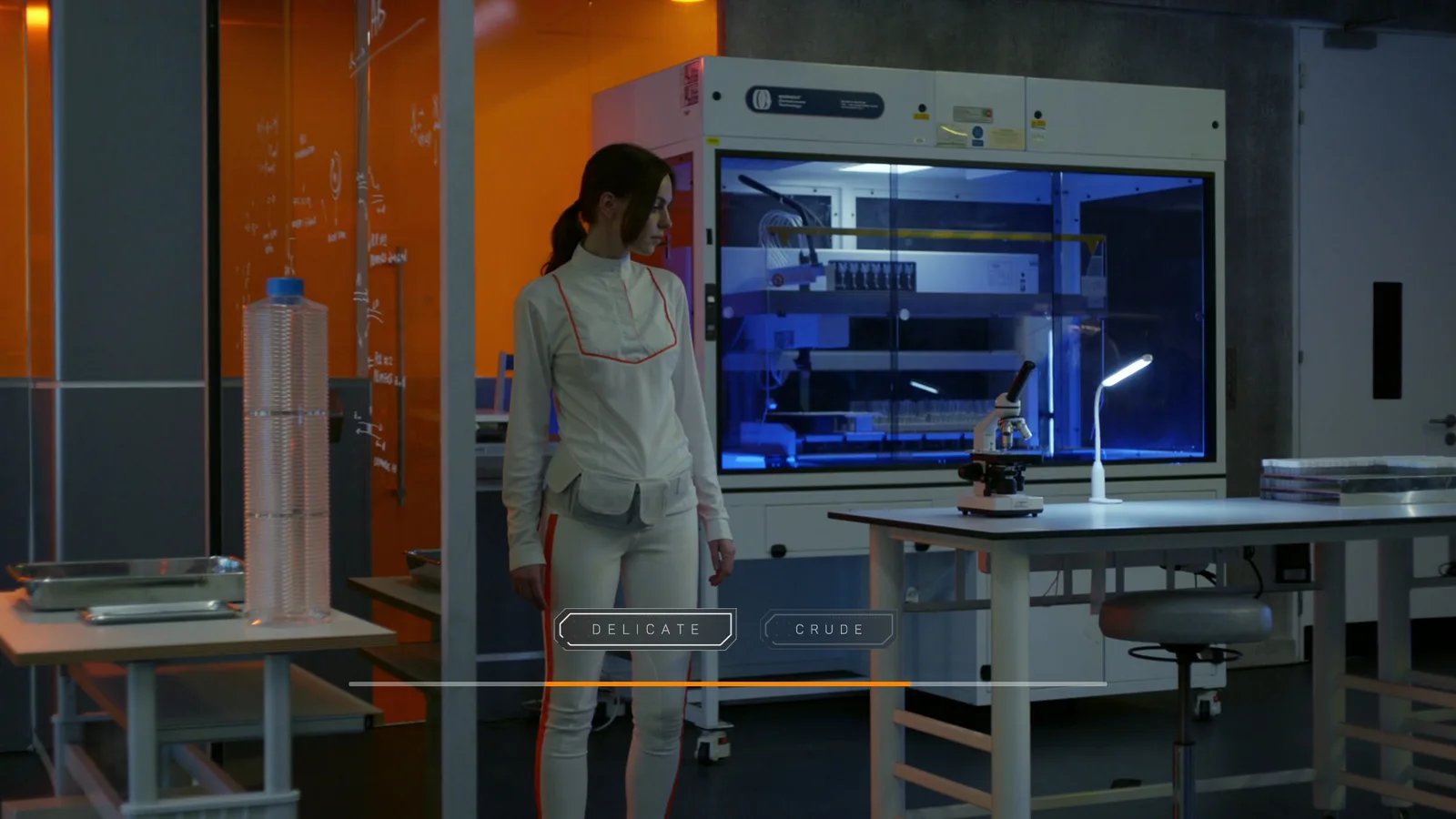
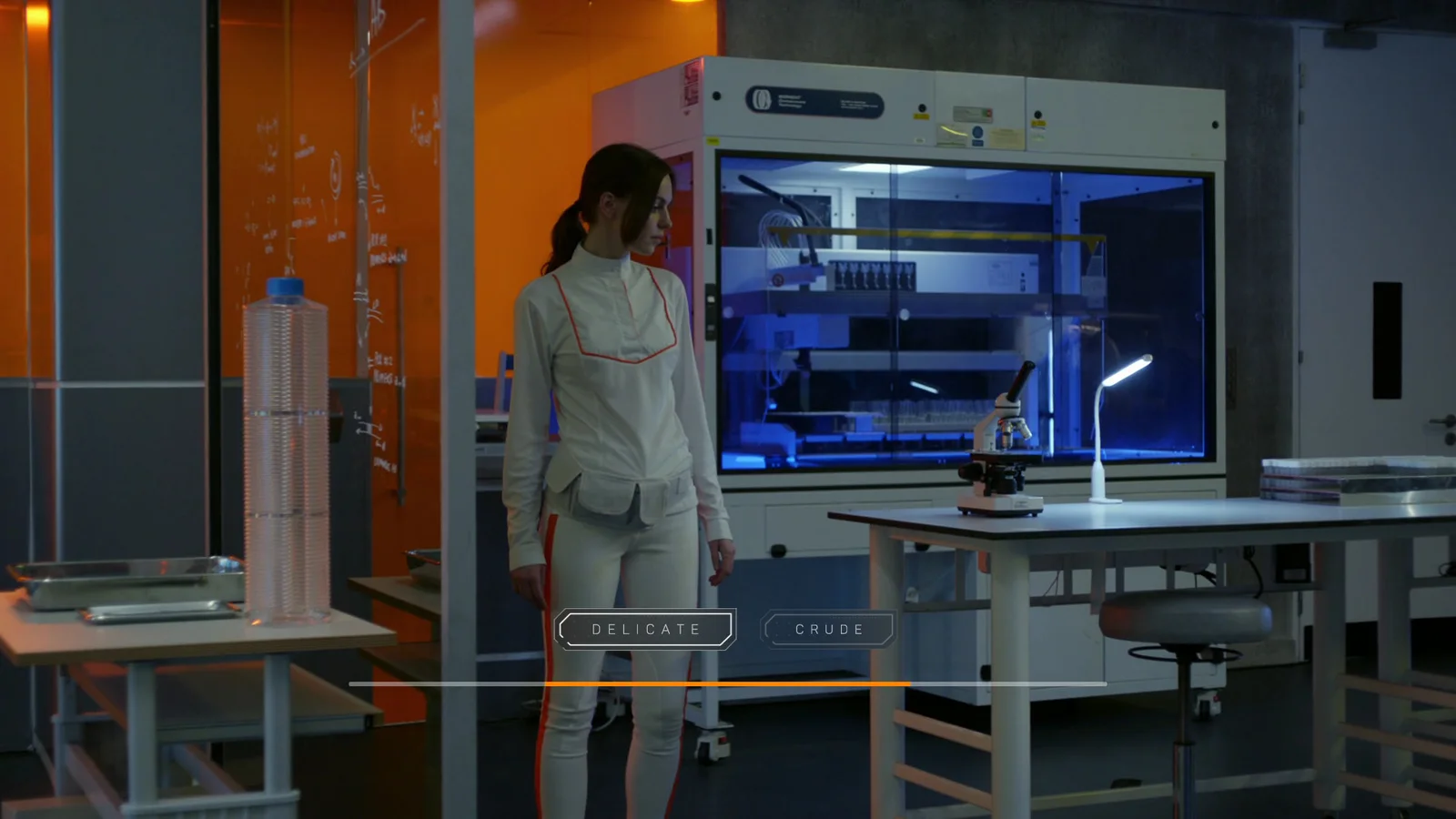
Two scientists are locked inside a laboratory, and both time and air are running out. Here the faces belong to filmed actors. The Complex is an FMV interactive movie, not an animated visual novel, but it offers a useful final fork for anyone who came looking for a story that visibly performs their decisions.
Choices shape relationships, influence later situations and lead toward eight outcomes. A pause-choices option lets you stop the decision clock, which is especially useful if the room has developed a committee.
Pick it for a compact cinematic setup and human performances. Skip it if the pleasure you want is specifically illustrated characters or anime art. The interaction may feel familiar; the medium is different. Fit: 8.2/10. Official Steam page.
A few questions before you choose
Is every animated portrait Live2D?
No. Live2D is a specific technology for animating drawings. A moving character might instead use other 2D animation, a 3D model or a prerecorded animated sequence. “Animated” describes what you see; “Live2D” names a particular way of making it.
Does more movement mean more control?
No. Watch the presentation, then check the verbs: choose replies, solve puzzles, explore memories, select routes. STEINS;GATE ELITE and The Letter both branch, but their moving imagery works very differently. A good-looking trailer alone cannot tell you how much agency a game offers.
Which one can I open in a browser?
Blindspot is the browser demo in this selection, with sign-in required. For a full campaign, start by choosing between anime storytelling, horror, romance or puzzle-heavy investigation, then check the linked store’s requirements.
For a wider look at interaction, continue to how visual-novel mechanics have evolved. If visual style matters more to you than branching, try our anime-games art shortlist.
Sources & further reading
- Official Steam page
- Official Steam page
- Watch the captured gameplay
- bartending guide
- Official Steam page
- Official game page
- Somnium system guide
- Official Steam page
- Official Steam page
- Official Steam page
- Official Steam page
- Official Steam page
- Live2D
- how visual-novel mechanics have evolved
- anime-games art shortlist
- STEINS;GATE ELITE
- The Letter
- Blindspot
- Harmony: The Fall of Reverie
- AI: The Somnium Files
- BUSTAFELLOWS
- The Wreck
- Zero Escape: Zero Time Dilemma
- TOKYO CHRONOS
- The Complex
Your shift is waiting.
Blindspot puts you behind the bar in the Risouverse. Talk to your guest, mix drinks, and watch how the conversation changes.
Play BlindspotRomantic Visual Novel · Browser demo · Sign-in required