
Games
High-Stakes Dialogue Choices: How Modern Games Shatter Emotional Armor
Explore how groundbreaking conversational systems in Disco Elysium, The Walking Dead, Oxenfree, and Risouverse: Blindspot transform spoken words into lethal psychological weapons.
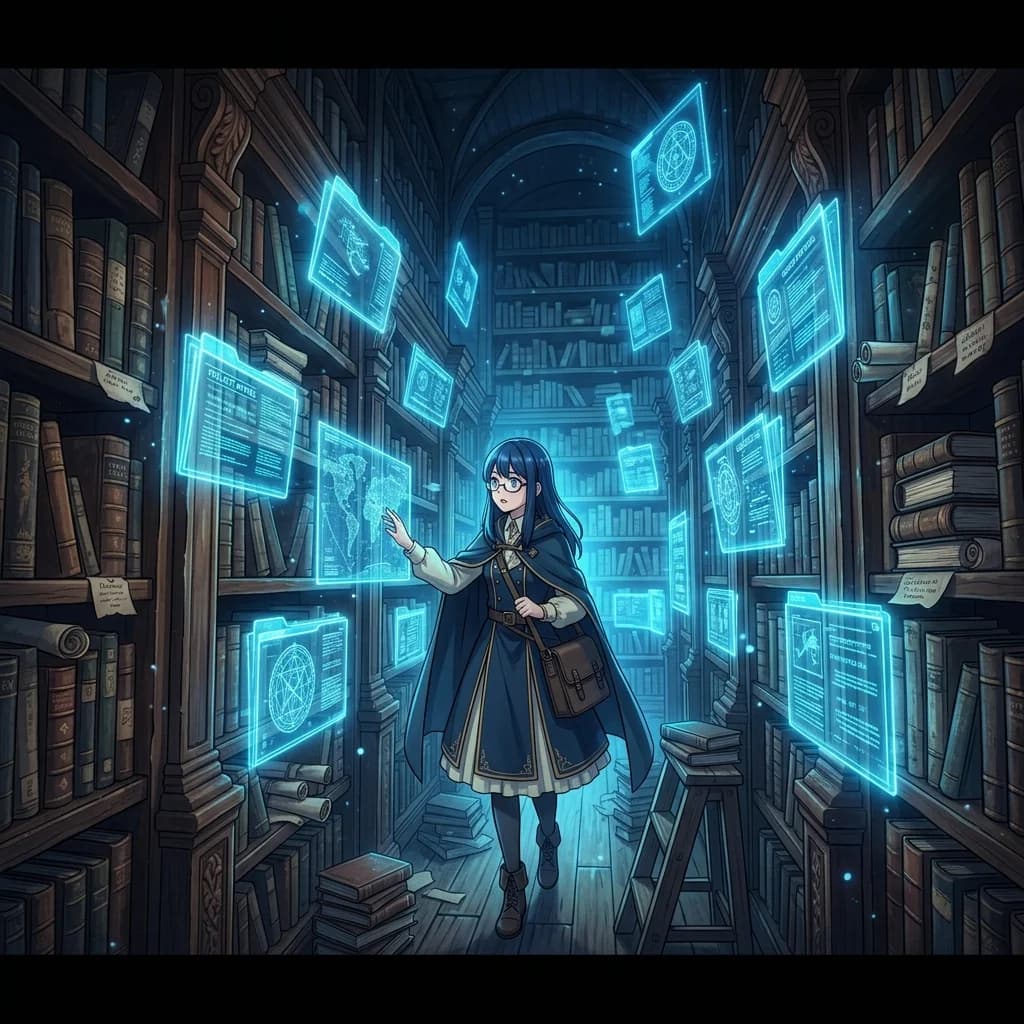
The Verbal Crucible: Why Modern Games Treat Dialogue as Lethal Combat
For decades, video game combat systems have consumed the lion's share of technical innovation: photorealistic ballistics, fluid parry windows, and elaborate combo strings designed to test physical dexterity. Yet in the realm of interactive narrative, the most devastating encounters rarely involve blades or firearms. They unfold across dining tables, dimly lit police interrogation rooms, and quiet bar counters. Spoken dialogue possesses an unmatched capacity to inflict irreversible damage. A single misplaced accusation, a cruel truth spoken in anger, or a desperate admission of guilt can alter the entire emotional landscape of a narrative, dismantling relationships and crushing character psyches in ways physical violence could never achieve.
Modern game designers are increasingly treating conversation not as passive exposition dumps, but as high-stakes psychological warfare. Characters enter conversations wearing heavy armor: cynical deflections, rehearsed professional facades, and deep-seated neuroses constructed to shield their most shameful vulnerabilities from external judgment. Breaking through that defense requires far more than picking the plainly virtuous dialogue option. It demands emotional intuition, tactical patience, and the willingness to risk personal vulnerability. When games design their conversational systems with true dramatic stakes, every dialogue prompt becomes a live grenade, forcing players to weigh whether pursuing the truth is worth the collateral damage of shattering someone's fragile self-delusion.
The Shattered Mind as Battleground: Disco Elysium
No title in gaming history has captured the visceral, agonizing complexity of conversational combat quite like ZA/UM's genre-defining masterpiece, Disco Elysium. In the rain-soaked, decaying streets of Revachol, dialogue is not an external mechanic; it is an unhinged civil war raging within the shattered psyche of detective Harry Du Bois. Instead of conventional skill trees, the player's mind is partitioned into twenty-four distinct psychological voices—from the cynical survivalism of Half Light and the pompous rhetoric of Drama to the empathetic tenderness of Empathy and the stoic resilience of Volition. Each voice constantly barks contradictory advice, desperately attempting to steer Harry's mouth toward salvation or self-destruction.
Conversations in Disco Elysium carry immense psychological stakes because Harry's defensive armor is already pulverized by addiction and unbearable heartbreak. Interrogating suspects like Titus Hardie or trading ideological barbs with Joyce Messier requires navigating high-stakes dice rolls and psychological vulnerabilities where a single catastrophic failure can trigger a public emotional breakdown or fatal heart attack. Furthermore, the game understands the tragic gravity of spoken confession; finally confronting the phantom of the ex-wife across an agonizing dream sequence proves that the most devastating dialogue choices are not those that defeat external enemies, but those that force you to confront the ruin you have made of yourself.
Panic, Silence, and the Cost of Hesitation: The Walking Dead and Oxenfree
Traditional role-playing games grant players infinite time to pause the universe, calmly analyze every branching dialogue choice, and select the optimal response. Yet in doing so, they divorce conversation from its most fundamental reality: temporal pressure. Telltale Games revolutionized dramatic pacing in The Walking Dead by introducing the relentless ticking timer beneath every decision. Faced with screaming survivors, advancing walkers, and moral crises, players are stripped of the luxury of rational calculation. You are forced to rely on instinct, often blurting out defensive lies or cruel ultimatums that permanently scar your companions, proving that hesitation is just as consequential as speech.
Night School Studio pushed conversational immersion even further in Oxenfree by pioneering its dynamic walk-and-talk interruption mechanics. Instead of waiting patiently for an NPC to deliver their scripted lines, the player can choose to speak over them, chime in naturally, or remain entirely silent as speech bubbles slowly dissipate into the misty night air. Choosing when to hold your tongue becomes an active, powerful conversational gambit. Oxenfree demonstrates that real human communication is messy, rhythmic, and competitive. Relationships are made or broken not by what is recorded on an immaculate character sheet, but by the quiet subtext, awkward pauses, and desperate interruptions that convey authentic emotional presence under supernatural dread.
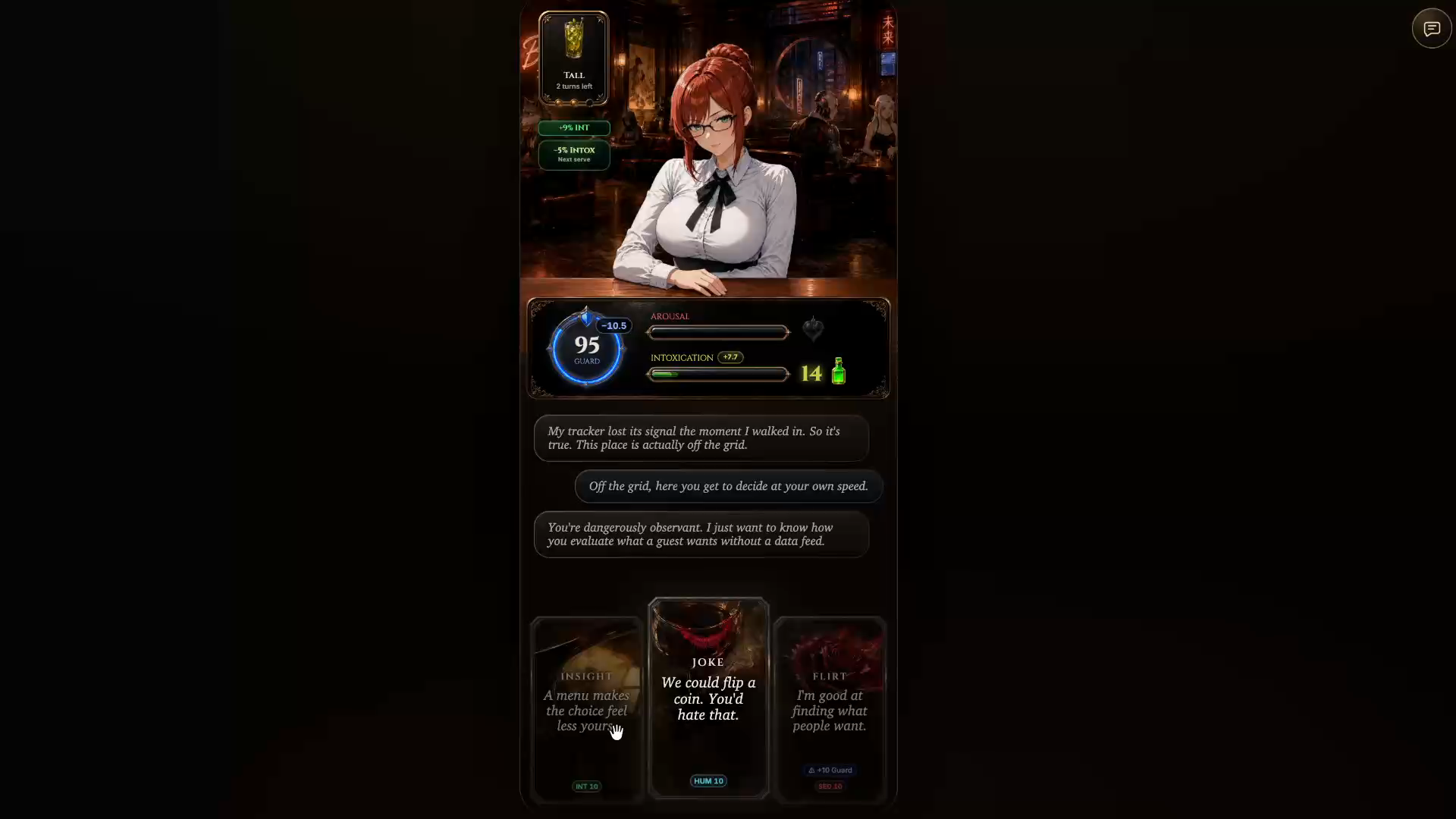
Biometric Tension Behind the Counter: Guard, Arousal, and Intoxication in Blindspot
Risouverse: Blindspot translates the psychological tension of high-stakes conversation into a brilliantly integrated mechanical loop. Set inside an off-grid underground lounge insulated from the corporate surveillance grid by Static Wards, players step behind the bar counter to interact with citizens desperate to drop their curated masks. However, these patrons do not simply open up upon command; they arrive armored in three generations of social conditioning, reflected in their real-time Guard meter. Rather than relying on static affection tallies, Blindspot simulates conversational chemistry through three dynamic, interconnected physiological metrics: Guard, Arousal, and Intoxication.
The interplay between these meters creates an exhilarating tactical dance during every counter shift. Before engaging in deep conversation, the player must utilize their craft mixology station, selecting from distinct spirits and artisanal mixers to brew cocktails tailored to the guest's biological profile. A stiff pour elevates Intoxication, clouding their rigid corporate inhibitions and softening their initial Guard, but over-serving risks dulling their emotional acuity or provoking sensory withdrawal. Meanwhile, escalating Arousal increases visceral tension and openness, but if pushed while Guard remains elevated, the patron's defense mechanisms flare violently, causing them to shut down the exchange entirely. In Blindspot, reading biometrics accurately is just as critical as choosing the right words.
Playing the Tactical Hand: Insight, Joke, and Flirt Under Surveillance Pressure
Once the cocktail is served and the patron sits across the counter, conversational combat begins through Blindspot's dialogue card system. Rather than presenting generic dialogue lines, the game equips players with distinct conversational intents: Insight, Joke, and Flirt. Each card represents a specific psychological vector designed to interact dynamically with the patron's current Guard, Arousal, and Lineage trauma. Insight cards strike directly at hidden hypocrisies and buried pain, slicing through Guard when the guest is sufficiently relaxed; Joke cards defuse mounting paranoia and reset escalating tension; Flirt cards weaponize romantic magnetism to ignite suppressed desire and spike intimacy.
Deploying these dialogue cards requires razor-sharp narrative intuition and emotional empathy. When speaking across the counter with Lexi, a Vitalis Form fitness coach whose relentless sunny optimism masks severe physical and mental exhaustion, playing an aggressive Flirt card too early bounces harmlessly off her trained professional persona. But deploying a well-timed Joke to disarm her corporate defenses, followed by an incisive Insight card regarding her suppressed fatigue, shatters her emotional armor entirely. Navigating this delicate conversational high-wire unlocks the game's ultimate narrative milestone: guiding the patron toward Awakening and Lucid Authenticity. Behind the Blindspot safehouse bar, every dialogue card you play is a calculated hammer blow against corporate conditioning, transforming an ordinary conversation into a revolutionary act of shared emotional liberation.
Test Your Conversational Intuition Behind the Counter in Blindspot Today
Sources & further reading
BLINDSPOT
Your shift is waiting.
Blindspot puts you behind the bar in the Risouverse. Talk to your guest, mix drinks, and watch how the conversation changes.
Play BlindspotRomantic Visual Novel · Browser demo · Sign-in required