
Games
Beyond the Desk: Top Narrative Simulator Games Where Professions Define Destiny
From border checkpoints and apothecary cauldrons to subversive cyberpunk speakeasies, discover how vocational simulators turn everyday labor into profound storytelling.
The Labor of Empathy: How Occupational Simulators Redefined Interactive Drama
For decades, video game protagonists were defined by violence, divine chosen-one prophecies, or interstellar conquest. Yet over the past decade, a quiet narrative revolution proved that the most gripping interactive dramas do not occur on sprawling battlefields; they unfold at dusty desks, broadcast switchboards, apothecary workbenches, and bar counters. Occupational and vocational simulators have transformed mundane labor into a profound narrative lens. By grounding player agency within the physical constraints of a specific profession, these games force us to navigate ethical minefields, bureaucratic compromises, and interpersonal tensions that grand space operas could never capture. When your entire universe is defined by a desk, an official ink stamp, or a cocktail shaker, every object on your workstation becomes an emotional conduit. Routine professional actions—scrutinizing an identification credential, tuning an audio transmitter, or measuring botanical tinctures—shift from mechanical busywork into high-stakes moral declarations. These titles do not merely ask what you are capable of doing; they ask who you become when economic necessity and professional obligation collide with basic human empathy. Players are no longer detached observers pressing buttons to trigger pre-rendered cinematics; we are working professionals whose livelihoods, legal standing, and personal integrity hang on every completed task. By framing narrative branching around the tactile rhythm of a daily shift, modern occupational simulators generate an intense, suffocating intimacy that redefines what interactive storytelling can accomplish.
Botanical Ledgers and Alchemical Cauldrons: Strange Horticulture and Potion Craft
In Bad Viking's Strange Horticulture and niceplay games' Potion Craft: Alchemist Simulator, craftsmanship functions as an intimate psychological confession. In Strange Horticulture, players inhabit the quiet routine of an occult plant shop proprietor in the rain-drenched Victorian town of Undermere. Customers approach the counter not with transparent quest prompts, but with cryptic symptoms, creeping madness, whispered fears, and veiled murderous intents. Identifying a specimen of St. John's Poppy or Cauldstare using an ancient illustrated herbarium requires deductive rigor, yet the true brilliance lies in the moral weight of the transaction. Handing a patron a lethal nightshade extract or a soothing sleep tonic is an occupational choice that quietly shapes the political and supernatural fate of the valley. Similarly, Potion Craft translates alchemy into a tactile, physics-based journey across a parchment map. Grinding dried ingredients in a stone mortar and stoking the cauldron fire is mesmerizing, but the narrative tension peaks when townspeople lean across your counter requesting remedies for illegal deeds or romantic obsessions. In both games, the player's workstation provides a physical barrier of professional detachment that paradoxically invites total vulnerability. Patrons treat the herbalist and the alchemist as secular confessors, revealing secrets they would never dare utter in church or court. By tying player success to artisanal competence rather than combat reflex, these simulators demonstrate that meticulous craft can serve as narrative gaming's most effective emotional catalyst.
Broadcasting and Bureaucracy Under Authoritarian Pressure: Papers, Please and Not For Broadcast
When an occupational simulator takes place under the shadow of a totalitarian state, routine vocational labor becomes an agonizing moral crucible. Lucas Pope's groundbreaking Papers, Please placed players inside the claustrophobic inspection booth of the Grestin border checkpoint in dystopian Arstotzka. Armed only with a rulebook, an inspection stamp, and a ticking clock, players must scrutinize travel documents while balancing the survival of their impoverished family against the desperate pleas of political refugees, separated spouses, and underground revolutionaries. Every denial stamp is an act of state complicity; every forged visa overlooked risks docked wages and starvation at home. The game's emotional triumph is its refusal to separate bureaucratic labor from ethical consequence. Taking this concept into dynamic live media, NotGames' Not For Broadcast seats the player behind the editing switcher of the National Nightly News during the rise of an authoritarian government. Managing four live camera feeds, bleeping profanity, dodging electronic interference, and selecting which public narratives to amplify or suppress creates a frantic, sweat-inducing occupational thriller. The television broadcast deck becomes an ideological battlefield where a split-second video cut can trigger a public riot or lull the populace into compliant stupor. Both Papers, Please and Not For Broadcast strip away romantic notions of heroism, proving that systemic authoritarianism is ultimately upheld—or bravely undermined—not by warriors on frontlines, but by ordinary working individuals manipulating levers, stamps, and switches during their daily shifts.
The High-Stakes Station of the Shadow Operator: Tactile Mixology in Blindspot
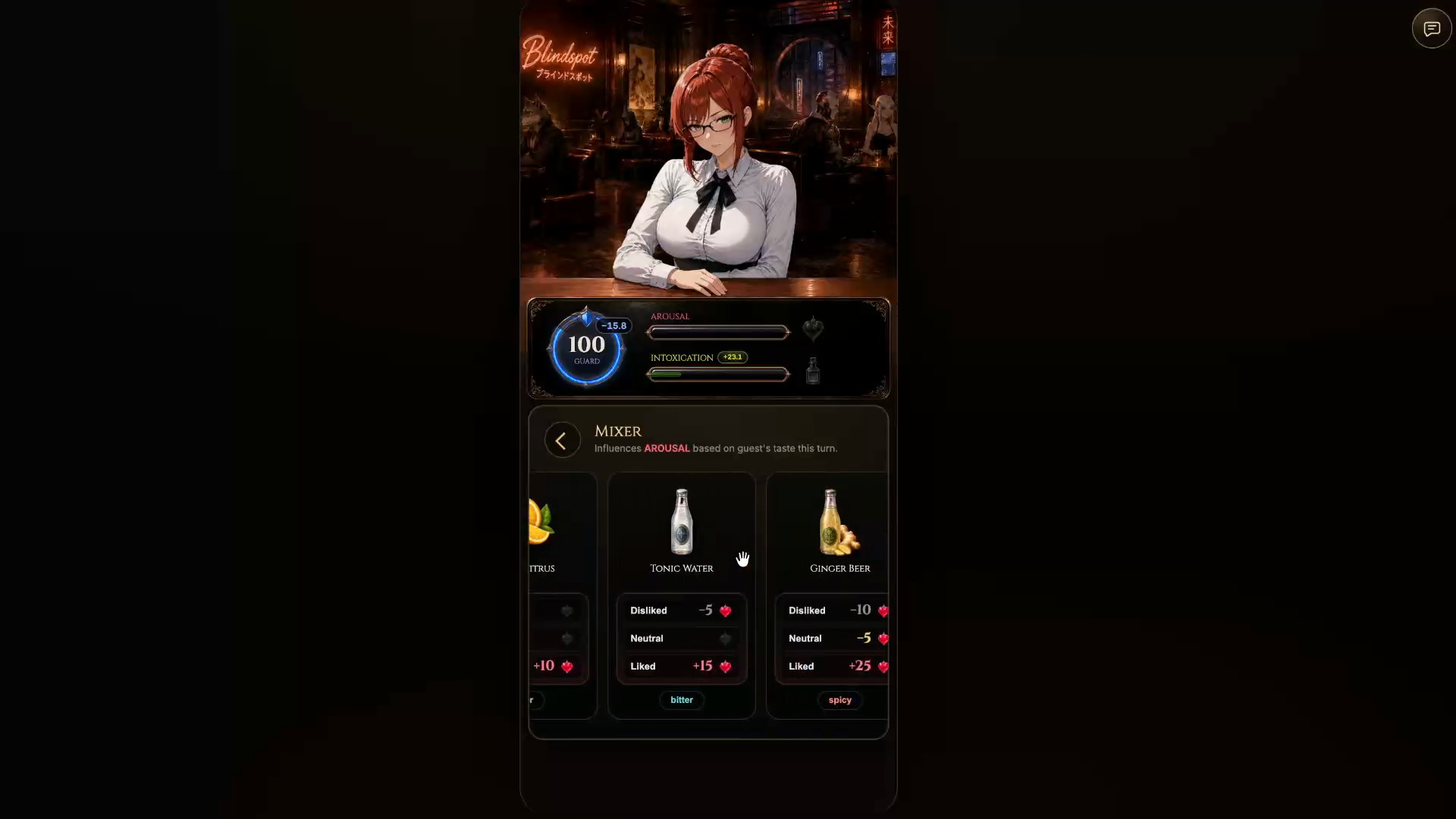
Risouverse: Blindspot elevates the vocational simulator by casting the player as a Shadow Operator managing a clandestine, off-grid bar shielded behind Static Wards. In a dystopian metropolis where the five ruling Megacorps—Lumina Veil, Vitalis Form, Vespera Serum, Aegis Harmony, and Nexus Forge—monitor every heartbeat and optimize human emotion into performative Radiance scores, your bar counter represents the only unmonitored space in existence. Here, mixology is not a cosmetic minigame; it is an authentic simulation of subversive psychological chemistry. As seen in in-game cocktail crafting interfaces, players manipulate physical spirits, bitter botanicals, aromatic modifiers, and precise ice ratios to craft bespoke drinks that directly manipulate patron biometrics. Every ingredient carries distinct physiological consequences: a smoky, peated spirit cuts through corporate numbness, while an effervescent herbal lift relaxes acute anxiety. These concoctions interface directly with the game's core psychological stats: Guard, Arousal, and Intoxication. Pouring a drink that is too potent can overwhelm an exhausted patron, triggering an embarrassing conversational collapse, while an under-crafted cocktail leaves their defensive corporate persona intact. Serving key figures like the conflicted Lumina Veil archivist Voss or the chemically restrained Aegis enforcer Sable requires the precision of an alchemist and the tactical composure of a secret agent. In Blindspot, vocational mixology is the delicate art of providing pharmacological and emotional shelter to broken souls on the run.
Reclaiming the Human Soul Through Vocational Agency in an Over-Optimized World
What makes occupational narrative simulators like Strange Horticulture, Papers, Please, and Risouverse: Blindspot so deeply resonant to modern players is their profound commentary on labor, autonomy, and human connection. In contemporary society, algorithms, corporate key performance indicators, and automated metrics constantly threaten to strip professional work of its soul, reducing human endeavor to frictionless efficiency. The Pristine Cage of the Risouverse reflects this real-world anxiety in its sharpest form: citizens live inside a golden-hour consensus where passions are smoothed by Vespera supplements and every conversation is scored for social compliance. By placing the player in control of a tactile, messy, off-grid workstation, Blindspot transforms bartending into a radical act of political and emotional rebellion. Behind the wooden counter, you are not an algorithmically scored asset; you are a human custodian holding space for others to shed their corporate masks, confront their suppressed Echo residue, and reach toward Lucid Authenticity. The satisfaction of mastering cocktail formulas, reading subtle emotional cues, and guiding a desperate patron through their deepest personal crisis proves that vocational labor, when practiced with genuine empathy, remains our most potent weapon against dehumanizing conformity. If you are ready to leave sterile corporate optimization behind and experience the intoxicating tension of high-stakes underground mixology, the speakeasy doors are unlocked.
Step behind the counter and take your first shift in Blindspot now
Sources & further reading
BLINDSPOT
Your shift is waiting.
Blindspot puts you behind the bar in the Risouverse. Talk to your guest, mix drinks, and watch how the conversation changes.
Play BlindspotRomantic Visual Novel · Browser demo · Sign-in required