5 Story Games Where Cards Change the Conversation
Five story games that put cards between you and another person, from Signs of the Sojourner and Griftlands to tarot crafting and Blindspot’s response cards.
 Risouverse Editorial9 min read
Game info updated
In this article
At a glance
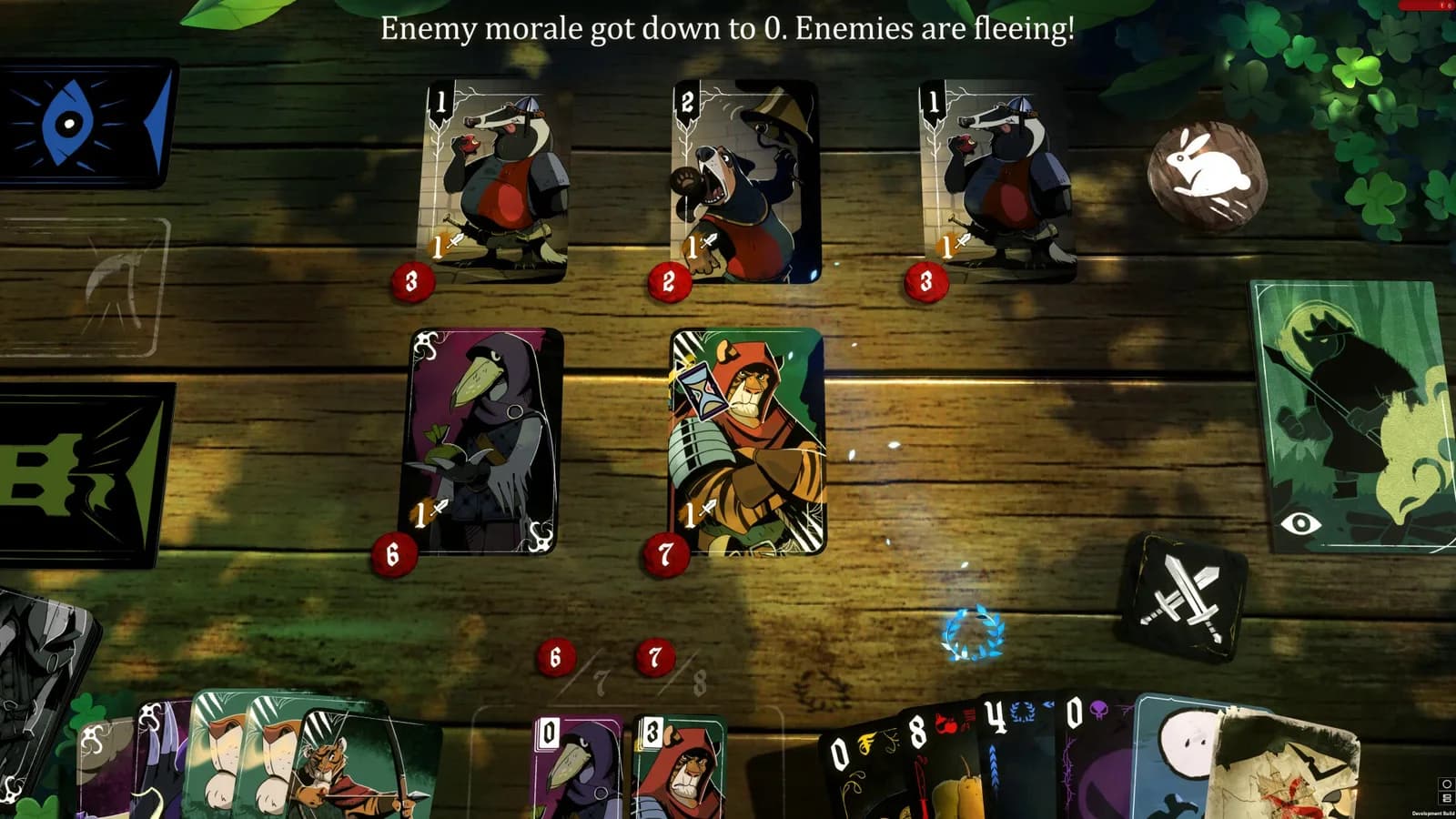
A card can be a threat, an apology or a terrible attempt at flirting. It can also be the reason you cannot find the right words when you need them. Put a hand of cards between two characters and suddenly conversation has something a dialogue menu rarely provides: a shape you can hold, change and occasionally curse.
These five games use that idea very differently. One makes your deck a changing personality. Another gives persuasion its own tactical arena. A third lets you design the cards that will determine someone else’s future. The pleasure is not simply that talking becomes interactive. It is that each game asks a different question about what you are actually doing when you speak.
A note on the selection: This is a publisher-curated list from Risouverse, which makes Blindspot. The numbered order is editorial presentation, not an independent ranking. The scores measure suitability for this particular theme from documented mechanics, not hands-on review scores or player ratings: up to two points for cards’ direct role in social encounters, two for their narrative consequences, and one for the distinctiveness of their design.
Choose your kind of hand
- 1
- Game
- Signs of the Sojourner
- What the cards actually do
- Build a changing conversational deck
- Best reason to choose it
- Understanding people without defeating them
- Conversation-card fit
- 5/5
- 2
- Game
- Griftlands
- What the cards actually do
- Power a separate negotiation deck
- Best reason to choose it
- Tactical arguments with an RPG around them
- Conversation-card fit
- 4.5/5
- 3
- Game
- The Cosmic Wheel Sisterhood
- What the cards actually do
- Become a handmade divination deck
- Best reason to choose it
- Creating the tools that shape another person’s story
- Conversation-card fit
- 4.5/5
- 4
- Game
- Blindspot
- What the cards actually do
- Present authored replies as response cards
- Best reason to choose it
- Choosing a line without managing a deck
- Conversation-card fit
- 3.5/5
- 5
- Game
- Foretales
- What the cards actually do
- Turn actions, encounters and resources into a card adventure
- Best reason to choose it
- Talking your way around trouble, not only through it
- Conversation-card fit
- 4/5
1. Signs of the Sojourner makes your deck a personality
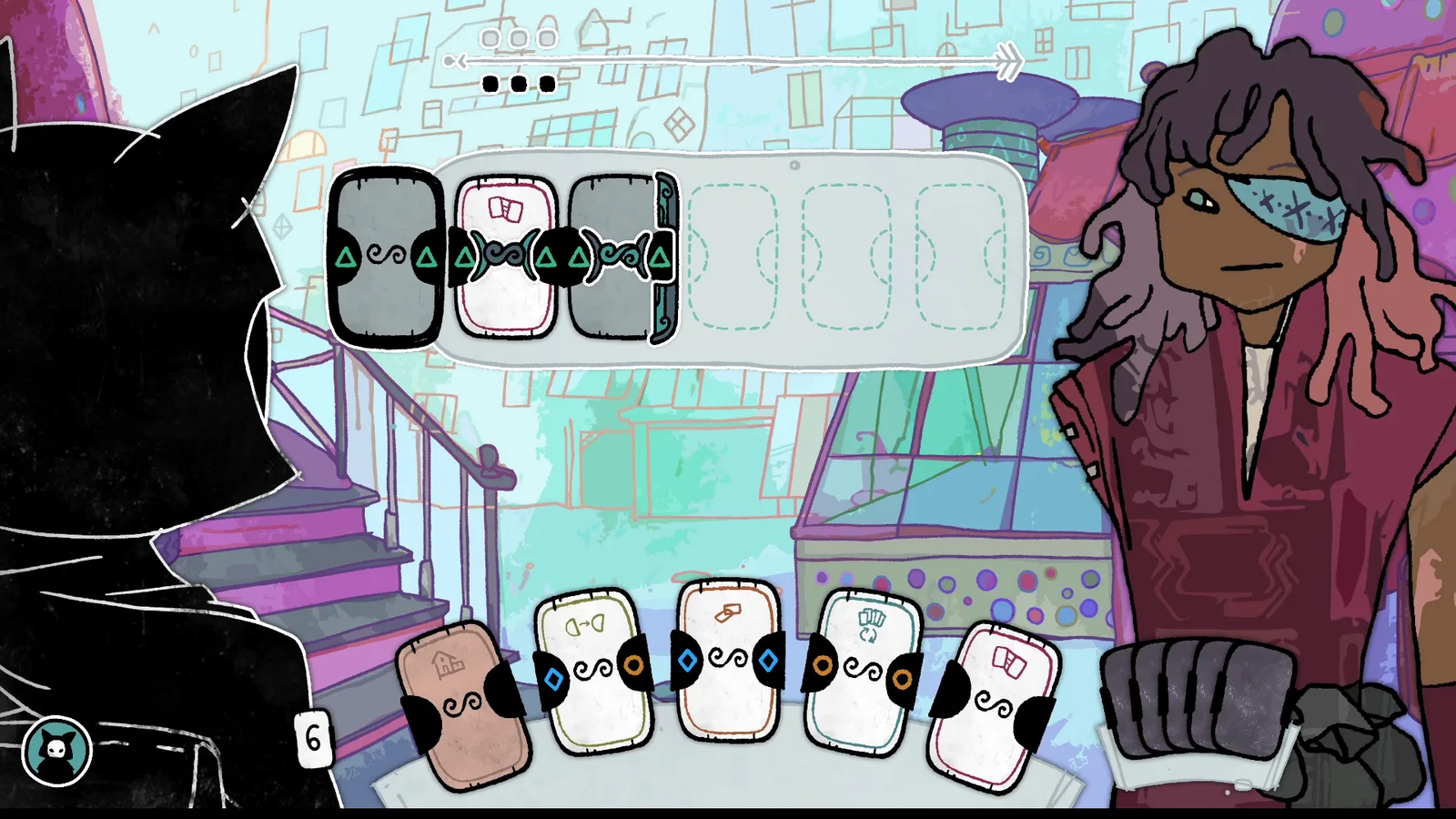
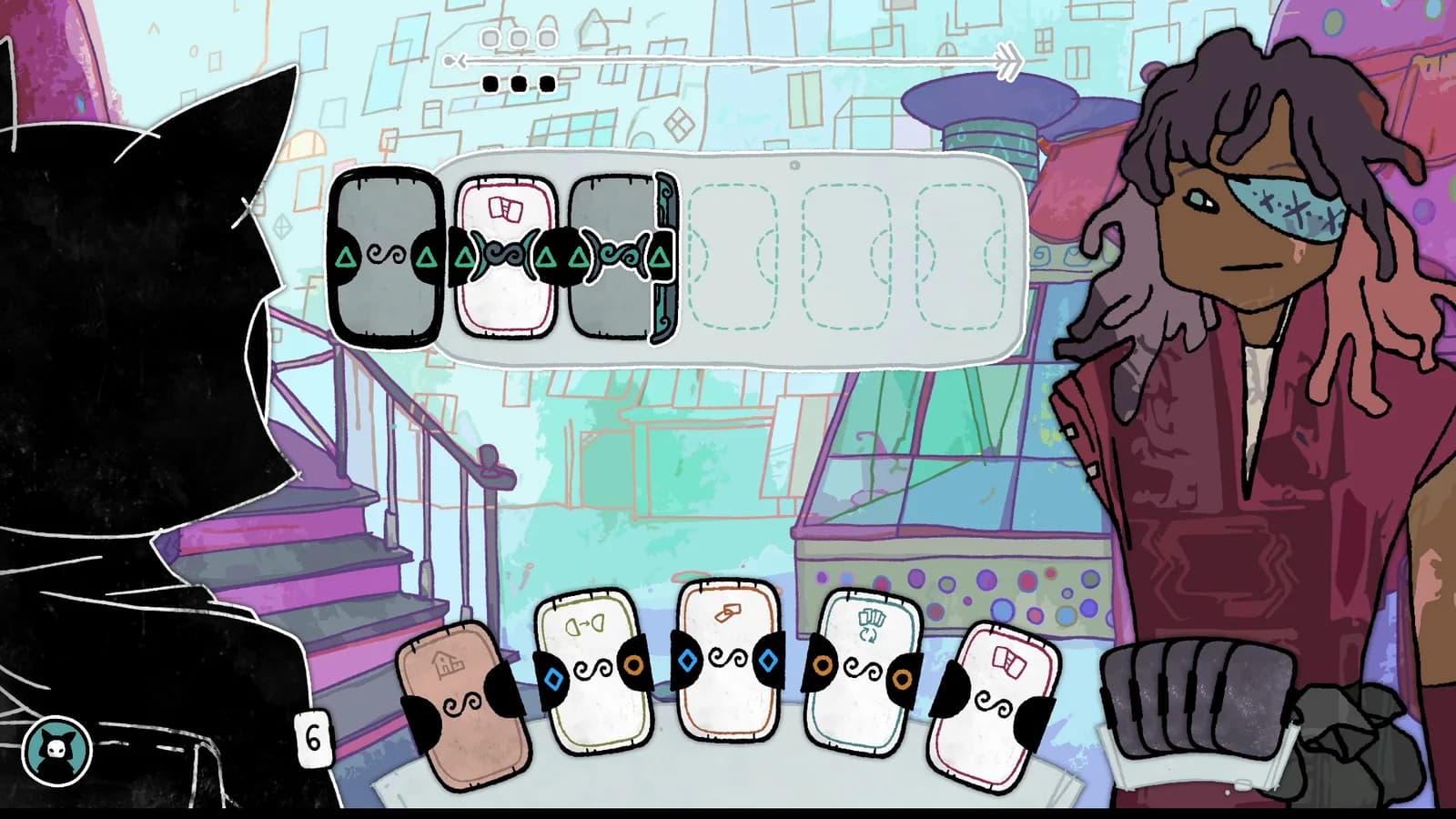
You inherit your mother’s shop. Keeping it stocked means leaving home, meeting strangers and learning how to connect with them. A familiar coming-of-age setup—until the game hands you a deck instead of a list of reassuringly sensible answers.
In Signs of the Sojourner, cards carry symbols that must connect across the conversation. You are trying to keep an exchange going, not knock someone’s health down to zero. As your deck changes through your encounters, so does your ability to communicate. Getting better at speaking to one group can leave you less comfortable with another. Travel changes you; the cards make that more than a line in the script. Echodog Games
That is the lovely, slightly cruel idea at its heart. You cannot carry every possible version of yourself. The perfect reply may not be in your hand, and a conversation that goes badly does not obligingly reset for another attempt. The story carries on. Echodog designed that loss of control deliberately, rather than treating every awkward exchange as a puzzle you should eventually solve. Developer interview
The reward is deckbuilding with an emotional cost, rather than an ever-larger damage number. But these are abstract conversational moves, not sentences you write or select word for word. If you want precise control over your character’s phrasing, this is the wrong sort of eloquence.
Fit: 5/5. The clearest starting point for cards as communication. Windows and macOS on Steam.
2. Griftlands gives a sharp tongue its own deck
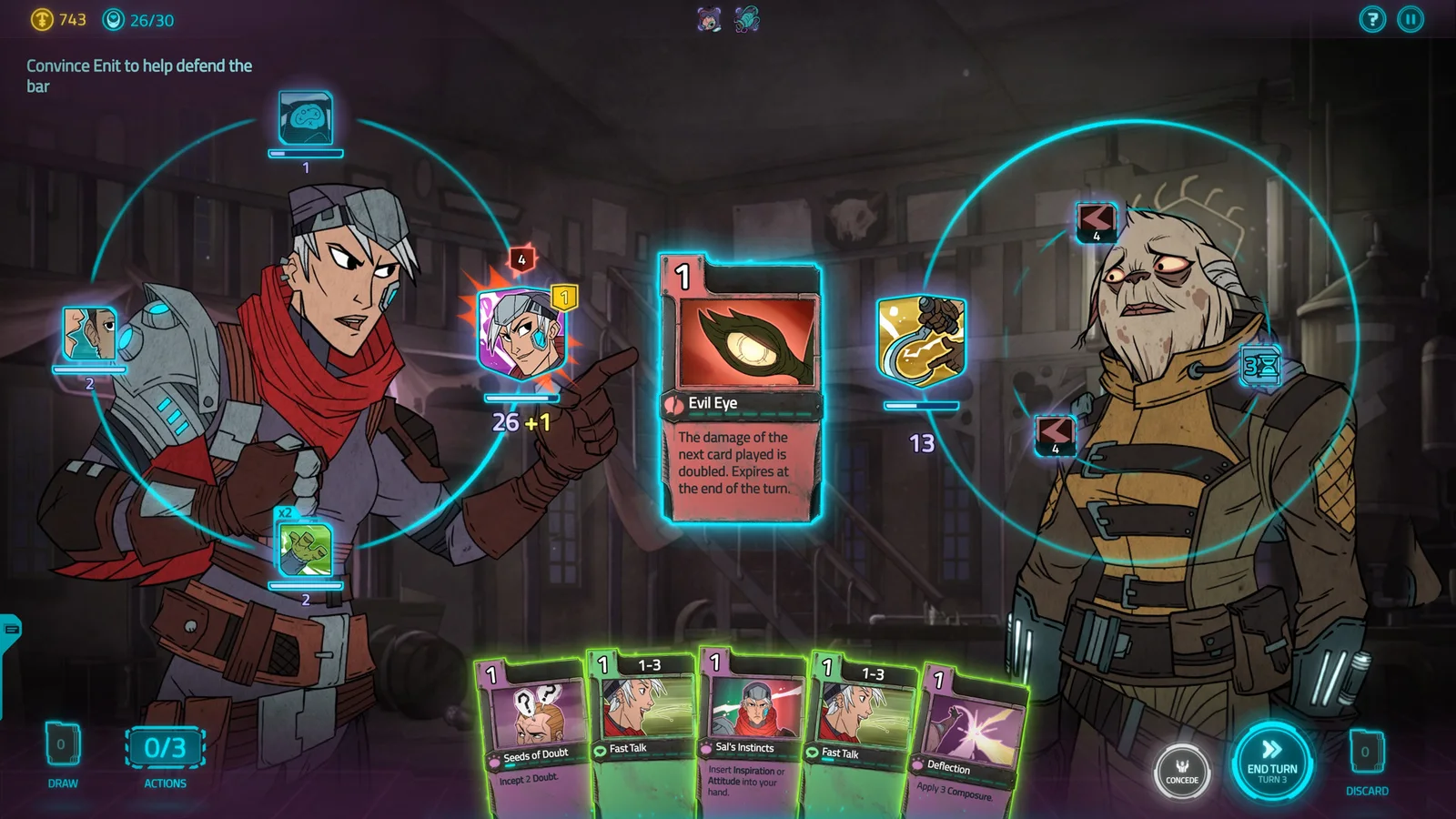
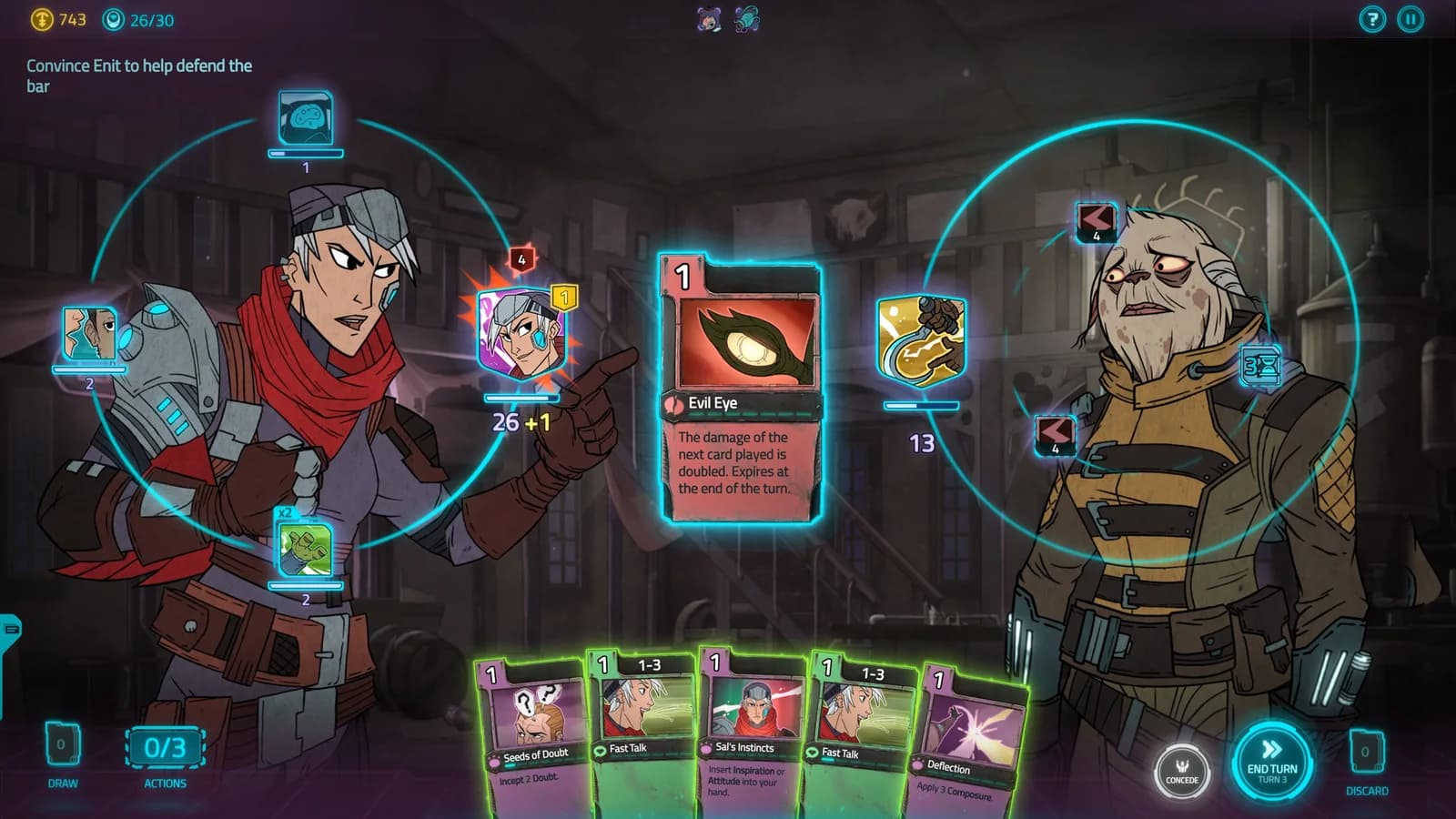
Some games let you choose between talking and fighting, then devote almost all their interesting machinery to fighting. Griftlands has the decency to bring two decks.
One handles combat. The other handles negotiation. Both develop during your run, so a character who can win a brawl still needs a plan for getting their way with words. The distinction matters: these are not attack cards with amusing dialogue printed on them. Negotiation is a separate system, sitting inside campaigns full of jobs, factions and people who may help you—or make life worse. Klei Entertainment, Steam
This is the pick for anyone who likes the sound of a tense conversation but also wants to fuss over a build. Words have tactics. Relationships have practical consequences. Sparing an enemy or angering somebody’s friends can change the social mess you have to navigate next. Three protagonists bring their own campaigns and specialized decks; persuasion is part of a larger, grubby science-fiction career, not a minigame bolted onto a shopkeeper. Game features
The trade-off is right there in those two decks. Griftlands is also a combat roguelite, with repeated runs and plenty of tactical housekeeping. Anyone looking for a leisurely visual novel may feel that an awful lot of administration stands between them and the next good argument.
Fit: 4.5/5. Choose it for negotiation you can build around. Available on Windows, macOS and Linux, with console editions linked from Klei’s official page.
3. The Cosmic Wheel Sisterhood lets you make the cards first
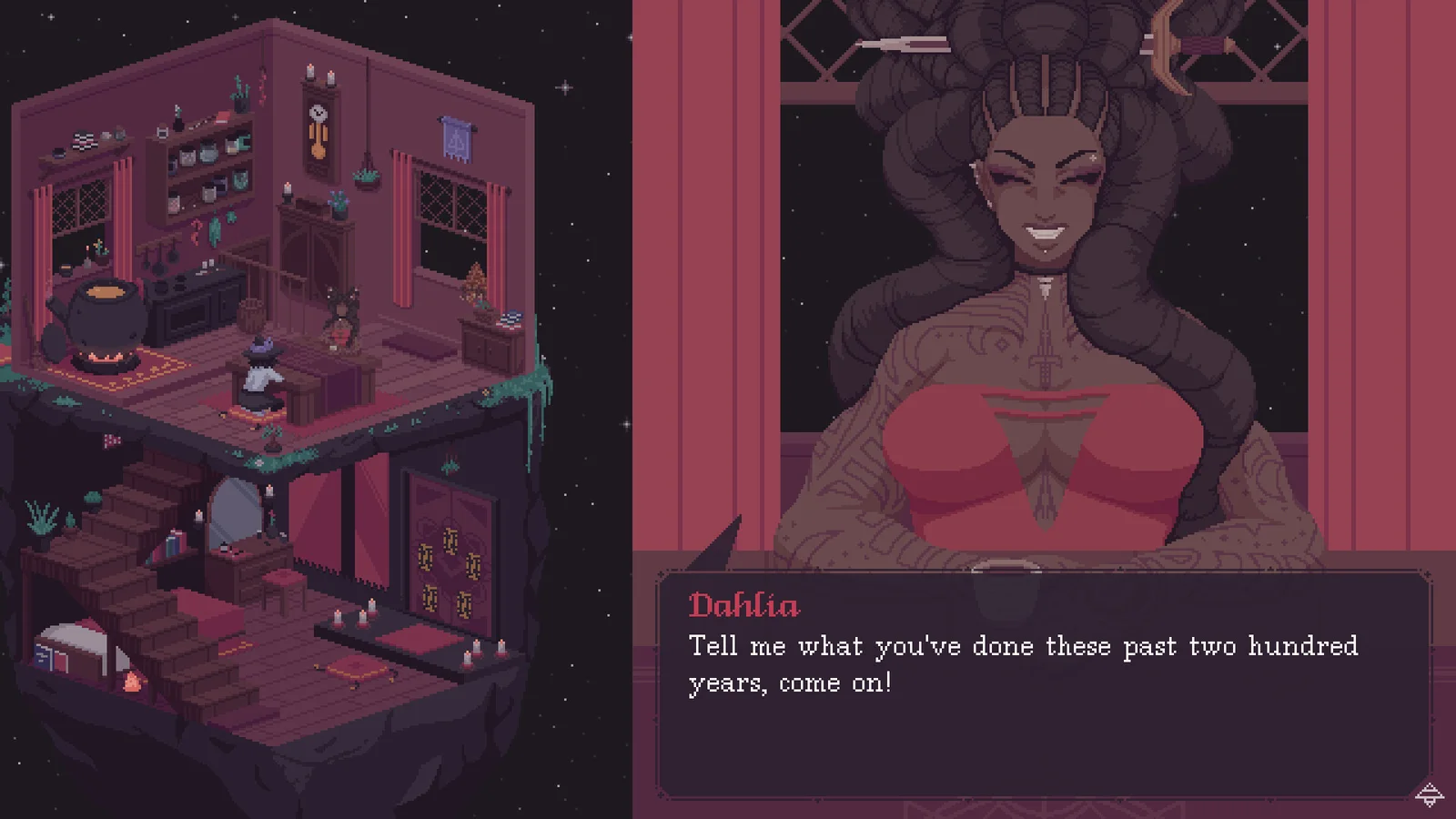
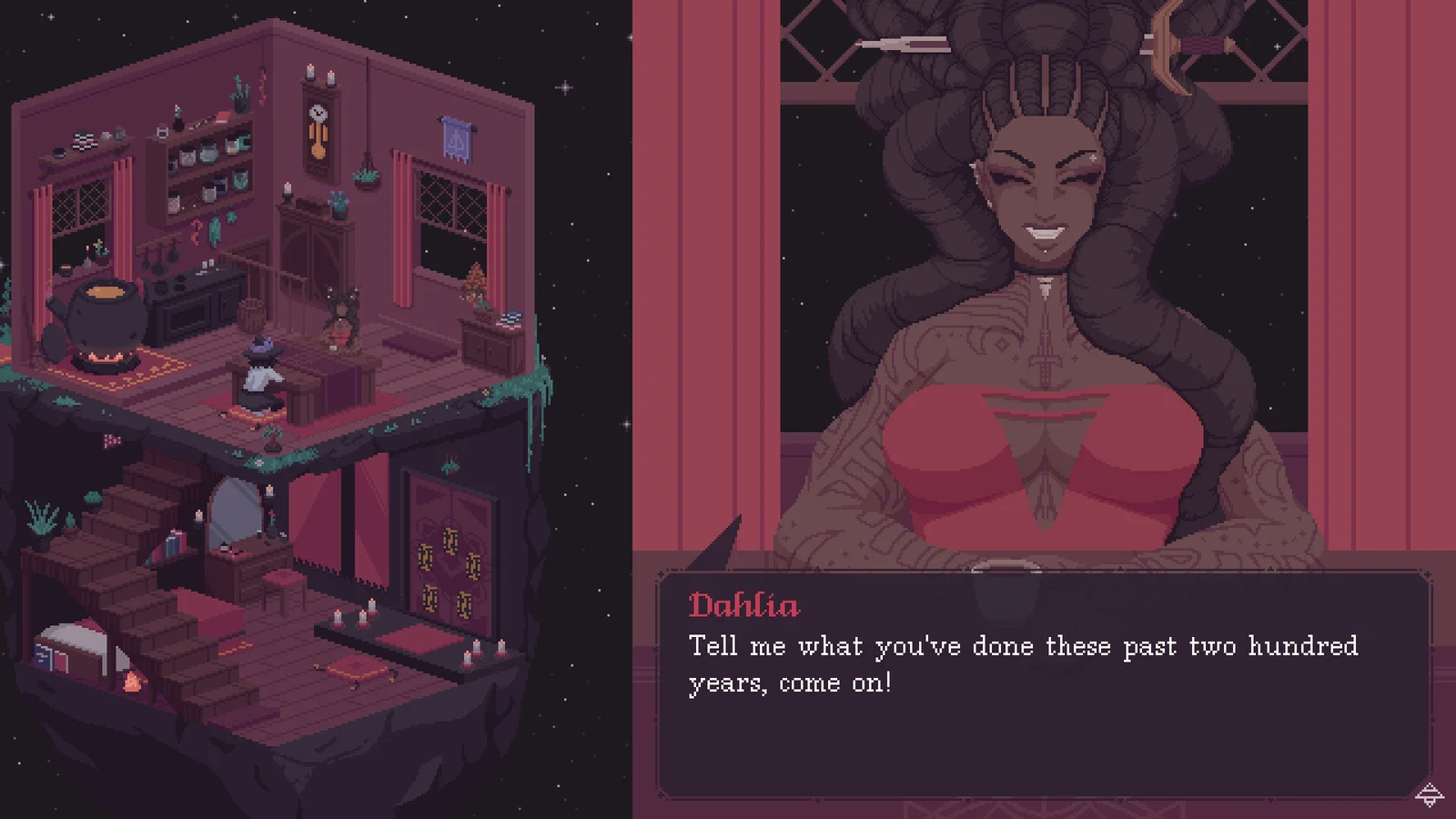
Fortuna is a witch in exile on an asteroid. Her route back into other people’s lives involves a forbidden pact and a new divination deck. Naturally, she has to make the deck herself. Cosmic bureaucracy apparently does not provide stationery.
The Cosmic Wheel Sisterhood gives card creation a very different purpose from optimizing a combat hand. You assemble your own tarot-like cards, then use them in readings for the witches you meet. Those readings help shape characters’ futures and a branching story that grows into coven politics. The object you made is now part of somebody else’s life. Steam
The cleverness lies in that intimacy. A stock card can feel like equipment. A card you have composed feels like something you meant. Deconstructeam describes the system as deliberately mysterious: repeated readings help you understand your deck, but it is not supposed to become a transparent chart of inputs and guaranteed outcomes. That makes it an enticing choice for players who enjoy interpretation—and a questionable one for anyone who wants every consequence spelled out before committing. Developer interview
Do not mistake the dreamy pixel art for a promise of harmless coziness. The story deals with adult themes, including mental health and suicide. Nor is this a conventional card battler: its central craft is divination, not dueling.
Fit: 4.5/5. The strongest choice here for making a personal deck rather than merely collecting one. Windows and Nintendo Switch.
4. Blindspot puts the sentence on the card
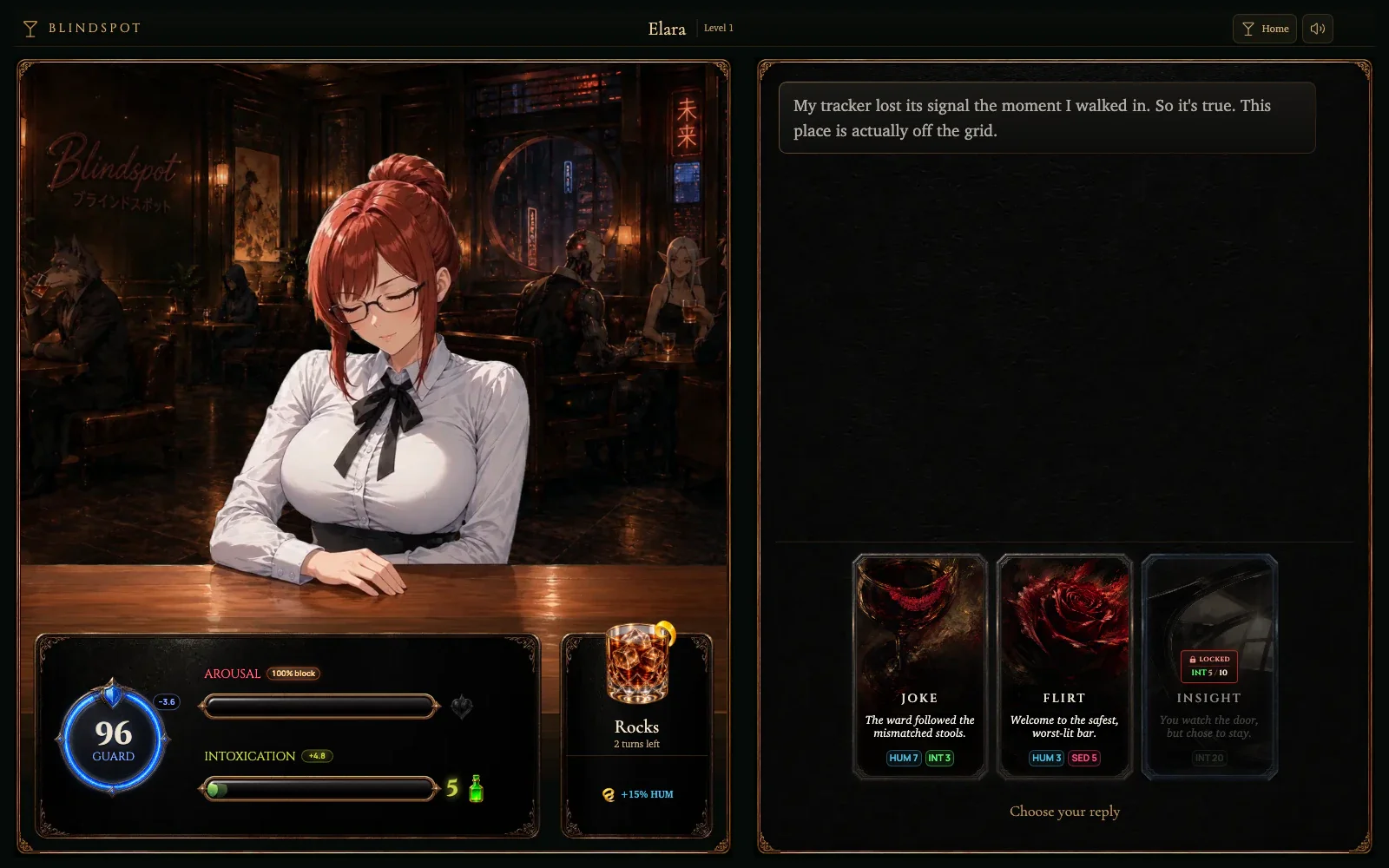
Not every conversation needs a draw pile. Sometimes the interesting problem is simpler: there are three things you could say, and you should probably read all three before trying to be charming.
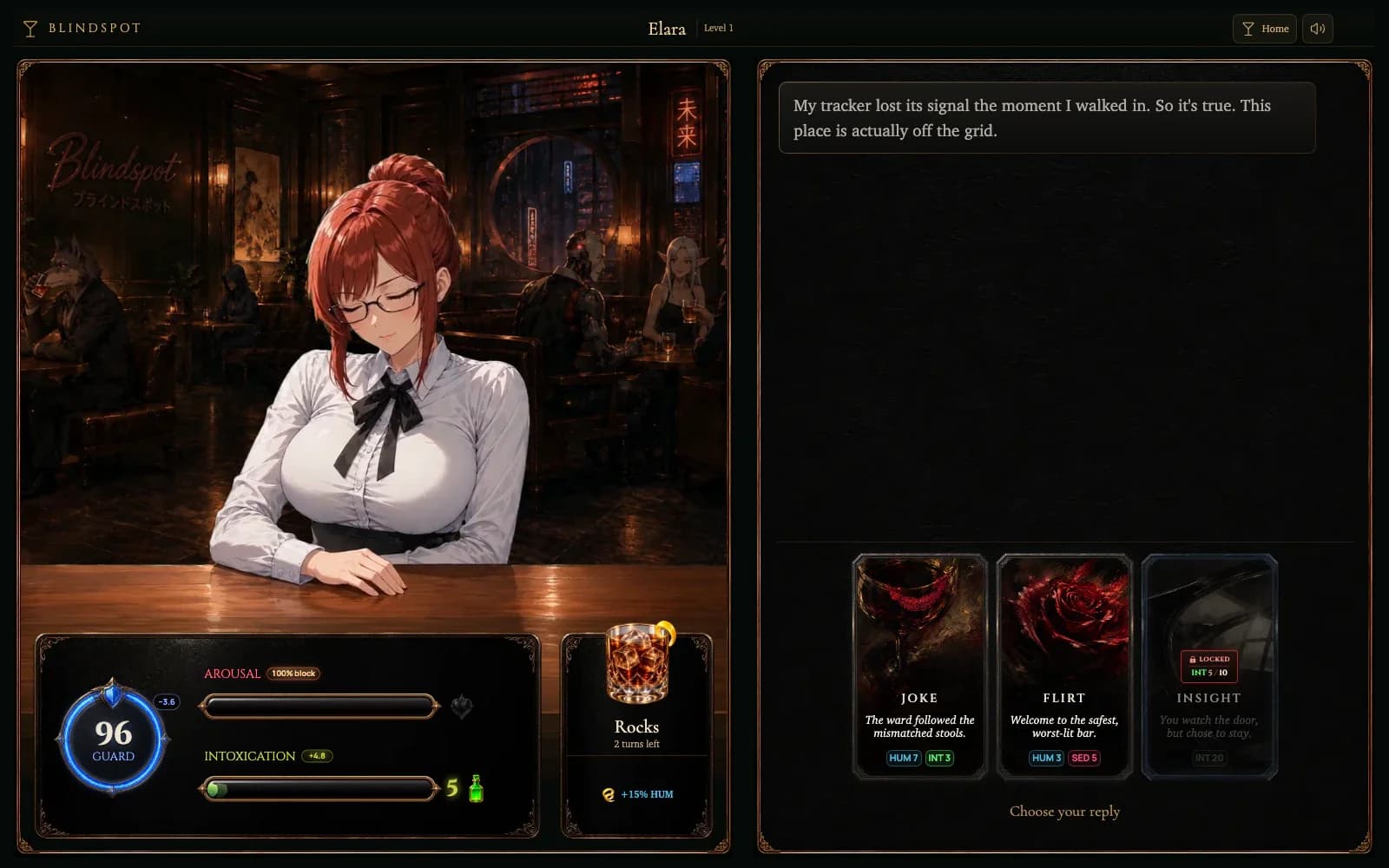
Blindspot takes that approach behind a bar. Its response cards contain authored lines marked Insight, Joke or Flirt. You choose among the lines in front of you rather than collecting cards or engineering a combo. The words themselves stay in the foreground. Beginner’s guide
Cocktails add a second decision. Ingredients have effects to inspect before serving, and drinks change the conditions in which the conversation continues. A response is therefore more than its category label; the guest’s reactions and the current situation matter. The interesting question is not “Which card type is best?” but “Why would I say this now?”
That makes Blindspot a useful counterpoint to Griftlands. One invites you to build a negotiation strategy across a run; the other keeps your attention on the next line and the glass in front of you. It also has a much smaller scope. This is an early browser demo, not a complete campaign, and sign-in is required. The game page
Fit: 3.5/5. A direct response-card interface with cocktail interactions, rather than the deeper deck construction of the other picks. Open the browser demo, or start with the first-conversation guide.
5. Foretales turns the whole predicament into cards
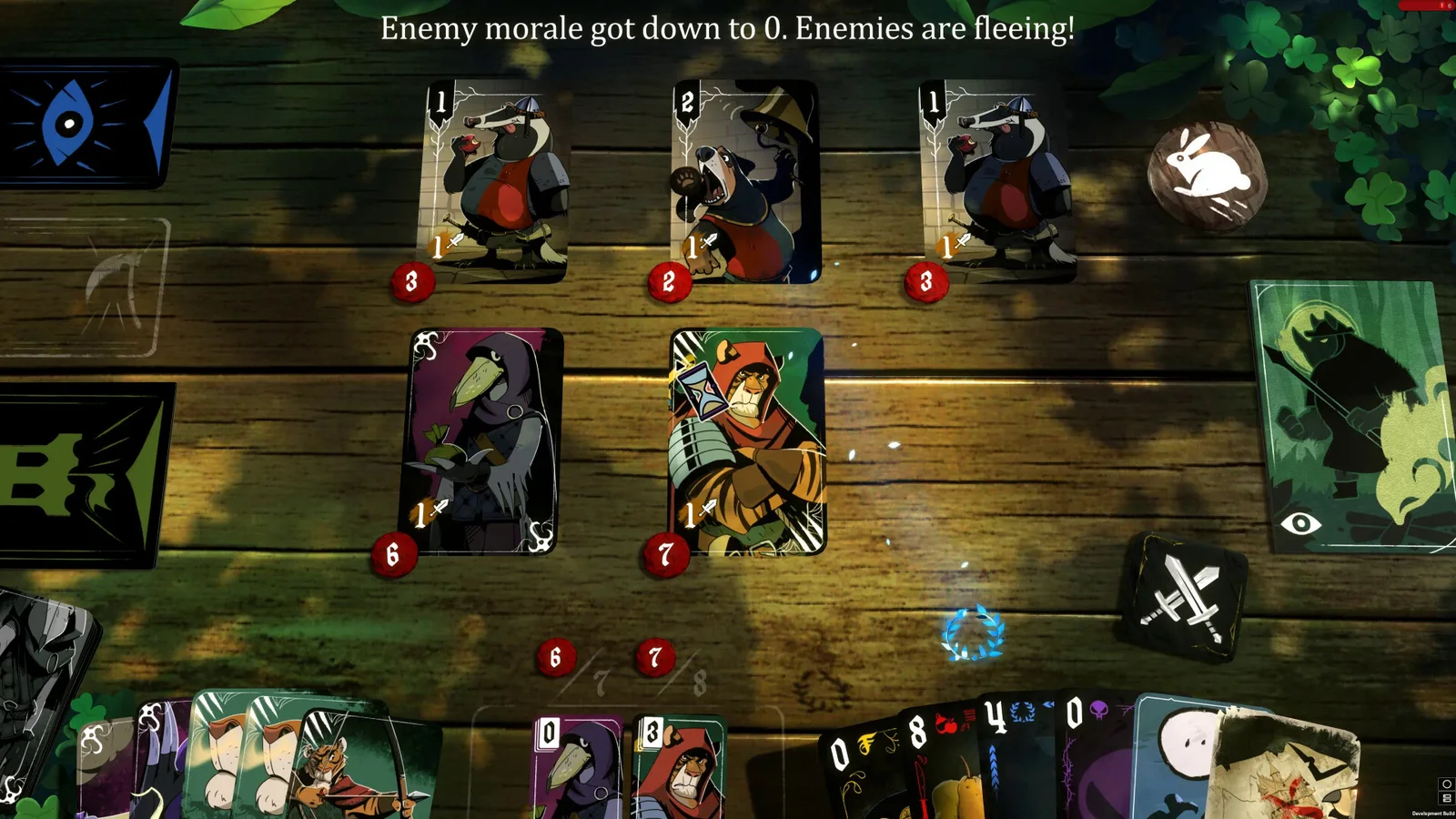
A thief receives a vision of the world’s destruction. This would be an excellent time to develop diplomatic skills.
Foretales puts Volepain and his companions into an adventure where cards represent much more than things to hit people with. They are the language of exploration, resources and action. Combat is an option, but so are stealth and persuasion; the pleasure is working out how to get through a situation without assuming that every obstacle requires a corpse. Dear Villagers
A guard might accept a bribe, intimidation or an appeal to solidarity. Those are not merely alternate adjectives on the same attack. They ask you to use what your party has available and think about the encounter differently. The same card-driven approach carries the story toward branching routes and endings. App Store feature, Steam
Foretales is the broadest interpretation of this list’s theme. You are not usually choosing a fully written line from a hand, as in Blindspot, or matching conversational styles, as in Signs of the Sojourner. You are solving a narrative predicament with cards, and talking is one tool in the kit. That broader canvas is its attraction—and the reason pure dialogue devotees should start elsewhere.
Fit: 4/5. Best for an adventure-game mentality with card-game hands. Available on Windows and Switch, with iPhone/iPad and Android editions too.
Which one should you start with?
For the closest thing to conversation rebuilt from the ground up, choose Signs of the Sojourner. For tactical persuasion, choose Griftlands. If making a strange, personal object sounds more enticing than perfecting a build, The Cosmic Wheel Sisterhood has your table ready.
Blindspot is the smaller, more direct option: read a line, choose a response, consider a drink. Foretales suits the player who wants the cards to spill beyond conversation and become the whole adventure.
Different hands, different kinds of trouble. Fortunately, you do not have to shuffle all five at once.
FAQ
Are all five games deckbuilders?
No. Signs of the Sojourner and Griftlands develop playable decks. The Cosmic Wheel Sisterhood centers on crafting and interpreting divination cards. Foretales is a card-driven adventure. Blindspot presents authored dialogue choices as response cards; that does not make it a collectible-card game.
Which are the closest to interactive visual novels?
Blindspot keeps authored dialogue and character reactions front and center. The Cosmic Wheel Sisterhood pairs extensive narrative choices with card creation and readings. For the broader genre picture, see our guide to interactive mechanics in visual novels.
Can I play one on a phone?
Foretales has iPhone/iPad and Android editions. Blindspot runs in a browser and requires sign-in. Check each game’s entry page for device requirements; a game being available on PC does not automatically make it a mobile game.
Sources & further reading
- Echodog Games
- Developer interview
- Windows and macOS on Steam
- Klei’s official page
- Game features
- Steam
- Developer interview
- Windows and Nintendo Switch
- first-conversation guide
- Open the browser demo
- Dear Villagers
- App Store feature
- Steam
- iPhone/iPad
- Android
- interactive mechanics in visual novels
- Signs of the Sojourner
- Griftlands
- The Cosmic Wheel Sisterhood
- Blindspot
- Foretales
Your shift is waiting.
Blindspot puts you behind the bar in the Risouverse. Talk to your guest, mix drinks, and watch how the conversation changes.
Play BlindspotRomantic Visual Novel · Browser demo · Sign-in required